
The global on-demand delivery market is moving at lightning speed. Whether you are launching a food delivery service in New York, a grocery app in London, or a hyper-local courier service in Dubai, speed to market is your biggest advantage.
To get there, many non-tech founders make a standard choice: they outsource their delivery app development to a third-party IT agency. On paper, it sounds simple. You pay them, they build the app, and you launch. But what happens when the contract ends? What happens if the agency underperforms and you need to switch developers?
If you haven’t built an Exit Handover Map before signing the contract, you might be walking into a massive business trap.
Here is exactly what an exit handover map is, why global startups need it, and how you can skip this headache entirely.
What is an Exit Handover Map?
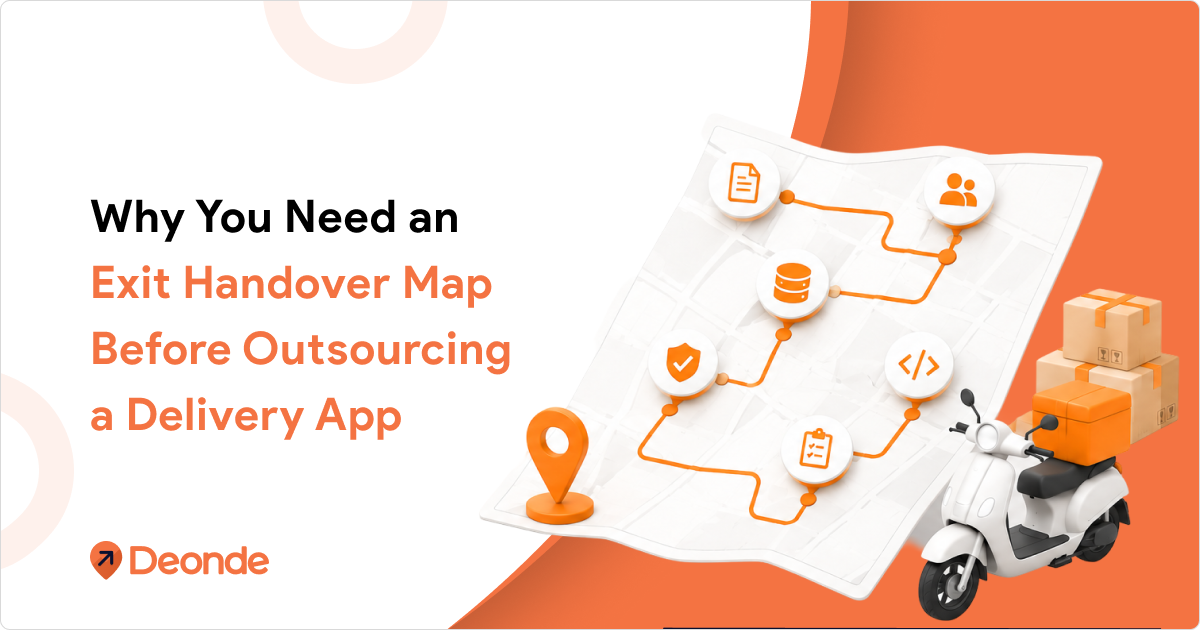
An Exit Handover Map is a strategic, legally binding blueprint agreed upon before development begins. It outlines exactly how the IT agency will transfer full control, ownership, and technical knowledge of the application back to you or your internal team when the working relationship ends.
Without this map, you risk falling victim to vendor lock-in, where the agency essentially holds your app hostage because they control the underlying infrastructure.
The Four Pillars of a Successful Exit Handover Map
A comprehensive exit strategy covers four distinct asset groups. Each pillar represents a critical failure point if left solely in the hands of a third-party vendor.
1. Customer and Order Data Exports
Your data is the lifeblood of your delivery business. This includes customer contact information, order histories, delivery addresses, and frequency metrics. If you transition to a new platform, losing this data means starting from scratch and losing your ability to run targeted marketing campaigns.
What to map out:
- Export Formats: Ensure the vendor allows for comprehensive data exports in universally accepted formats like CSV, JSON, or SQL dumps.
- Data Portability: Under modern privacy frameworks (such as GDPR or CCPA), data portability is a regulatory expectation, but B2B contracts must explicitly define the mechanisms for retrieving it.
- Frequency and Limitations: Define how often you can export data and whether there are API rate limits that would bottleneck a mass migration.
2. Ownership and Recovery Access for Crucial Assets
One of the most common and devastating mistakes we see startups make is allowing vendors to register essential third-party accounts under the vendor’s name or corporate email address.
What to map out:
- Domains and DNS: Your website domain must be registered in your company’s name, with your team holding the primary registrar credentials.
- App Store Accounts: Apple’s App Store and Google Play require developer accounts. If a vendor publishes your white-label app under their developer account, transferring the app to a new account later can disrupt your user base, require new app installations, and lead to lost reviews. Always insist that apps are published under your business’s unique developer accounts.
- Messaging and Communication Services: Services like SMS update, emails, and WhatsApp Business APIs should be owned by your business. If the vendor owns the Twilio account, changing vendors means changing the phone numbers your customers have saved.
3. Current Configuration and Integration Records
A modern delivery app does not exist in a vacuum; it is a web of integrations. If your vendor manages all these integrations natively and you lose access, rebuilding the web can take weeks of developer time.
What to map out:
- Payment Gateways: Document all active configurations for payment processors (e.g., Stripe, PayPal). Ensure you hold the master admin rights and that API keys can be rotated without locking you out of your funds.
- POS and Inventory Integrations: Keep a clear record of how the app connects to your physical Point of Sale system.
- Third-Party APIs: Document any third-party mapping or routing APIs (like Google Maps or Mapbox) so you know exactly which services are billing you and how they are authenticated.
4. A Formalized Transfer Process for Operational Data
Moving databases is a technical hurdle, but transferring operational logic is a human hurdle. Menus, merchant information, dynamic pricing schemas, delivery zones, and driver onboarding documents are highly specific to your business rules.
What to map out:
- Knowledge Transfer: Do not rely on one account manager’s memory to understand how your dispatch algorithm is tuned.
- Schema Documentation: Require a documented layout of your menu structures (categories, modifiers, variations) and delivery geofences.
- Driver Roster: Ensure you have an independent, easily exportable record of driver profiles, background check statuses, and vehicle documentation.
The Smarter Alternative: Skip the Headache with a SaaS Solution
Building a custom delivery app from scratch is expensive, time-consuming (often taking 6 to 9 months), and comes with the heavy burden of managing developers, contracts, and exit handovers.
Why fight for your own code when you can simply plug in and launch?
At Deonde, we provide a powerful, ready-made SaaS delivery solution designed for the global market. Whether you are scaling a multi-vendor food delivery marketplace or a streamlined grocery delivery service, our platform eliminates the traditional outsourcing traps.
Why Choose Deonde Over Custom Outsourcing?
- Instant Go-to-Market: Don’t wait 6 months to launch. With Deonde, you can deploy a fully branded, robust delivery app in a matter of days.
- Zero Vendor Lock-in or Ransom: You are subscribing to a fully maintained, enterprise-grade software ecosystem. No messy code handovers, no hidden release fees.
- Predictable Global Pricing: Traditional agencies are notorious for extending deadlines and inflating budgets. Deonde operates on a transparent SaaS pricing model, giving you complete financial predictability.
- Continuous Tech Upgrades: When you outsource, your app starts aging the day it’s finished. Deonde’s SaaS platform is continuously updated with the latest features, ensuring your business stays ahead of global tech trends without extra development costs.
Ready to Launch the Smart Way?
Your focus should be on acquiring customers and growing your delivery fleet, not arguing with IT agencies over server passwords and source code.
Skip the outsourcing traps. Launch your delivery business globally with a platform built for scale, speed, and security.
Book a Free Demo with Deonde Today and see how fast your business can go live.
