Tired of cooking? Craving your favorite restaurant food? These top food delivery apps in the USA make it easy to order meals, explore new restaurants, and get food delivered to your door.
Whether you’re a busy professional, a student, or a restaurant owner researching delivery trends, this guide will help you understand the market and choose the right platform.
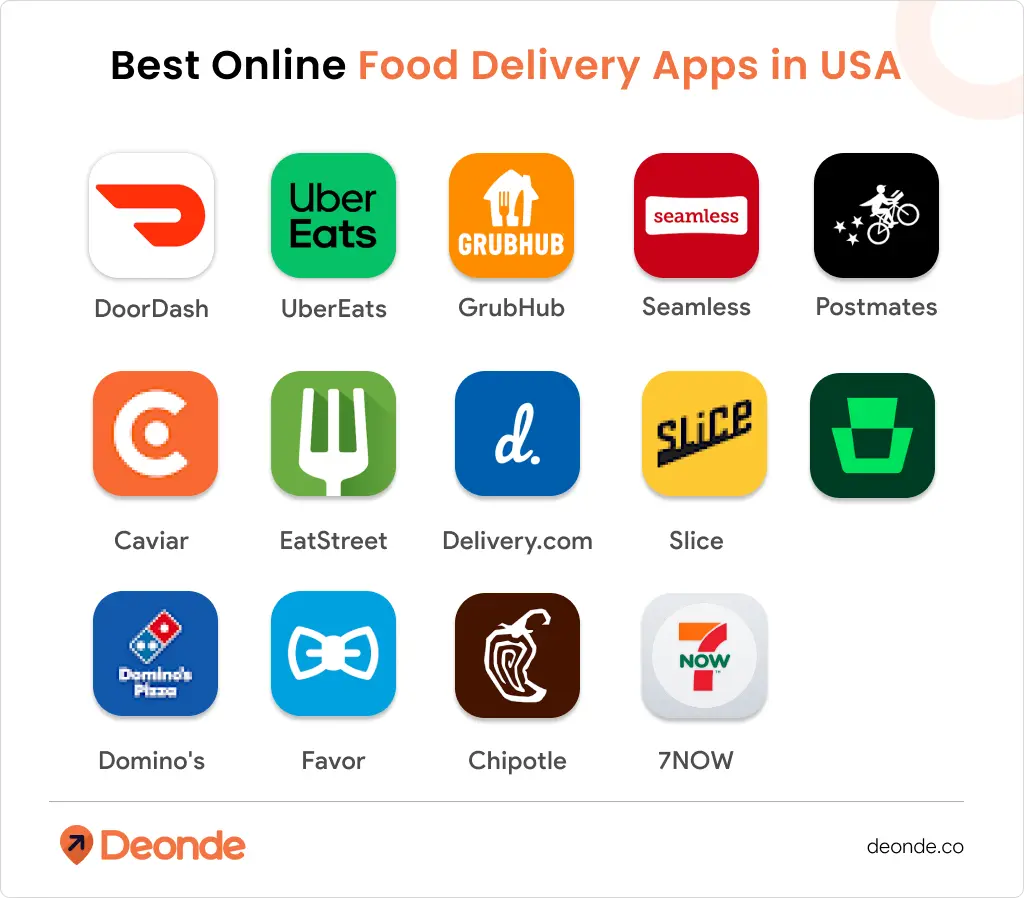
These 14 top-rated food delivery apps in the USA are revolutionizing the way Americans dine. With just a few taps, you can explore diverse menus, place orders, and have your favorite dishes delivered in no time.
Browse these apps and discover the convenience and variety that are transforming the USA dining landscape.
If you’re a restaurant owner, entrepreneurs, and startup founders planning to launch their own food delivery platform.
These platforms can seamlessly integrate your business with popular delivery services, helping you reach new customers and grow your revenue.
Our blog will help you see what trends are going on in the market and market players affording features and their plans.
US Food Delivery Market Share in 2026
The food delivery market share picture in the USA has settled into a clear hierarchy. DoorDash is the runaway leader. Uber Eats is a strong second. Everyone else plays in specific niches or legacy strongholds.
| App | Market Share (2026) | Parent Company | Year Founded |
| DoorDash | 65% | DoorDash Inc. (NYSE: DASH) | 2013 |
| Uber Eats | 23% | Uber Technologies Inc. | 2014 |
| Grubhub | ~8-16% | Wonder Group (acquired 2025) | 2004 |
| Postmates | Part of Uber Eats | Uber Technologies | 2011 |
| Caviar | Part of DoorDash | DoorDash (acquired 2019) | 2012 |
| Seamless | Part of Grubhub | Wonder Group | 1999 |
| All others | ~2% | Various | — |
DoorDash’s 65% share translates to roughly $130 billion to $135 billion in projected gross order volume for 2026.
Uber Eats brings in roughly $80 billion to $90 billion in annual gross order volume.
The rest of the apps on this list — EatStreet, Delivery.com, Slice, ezCater, Domino’s, Favor, Chipotle, and 7NOW — occupy specialized categories that don’t show up in the general market share numbers but serve millions of orders daily.
Quick Comparison: 14 Food Delivery Apps at a Glance
| App | Best For | Subscription | Coverage |
| DoorDash | General food + convenience | DashPass $9.99/mo | 7,000+ US cities |
| Uber Eats | Global travelers + Uber users | Uber One $9.99/mo | 45+ countries |
| Grubhub | Amazon Prime members | Grubhub+ free w/ Prime | 50 states and 4,000+ US cities |
| Seamless | NYC / Northeast | Same as Grubhub+ | Mainly Northeast |
| Postmates | Non-food items | Uber One covers it | 3,500+ US cities |
| Caviar | Premium dining | DashPass covers it | ~30 US cities |
| EatStreet | College towns / Midwest | None | 250+ US cities |
| Delivery.com | Alcohol + laundry + food | Delivery.com Pass | 2,400 US cities |
| Slice | Independent pizzerias | None | 20,000+ shops nationwide |
| ezCater | Office catering / B2B | None | 100,000+ restaurants |
| Domino’s | Pizza delivery | Domino’s Rewards (free) | 7,186 US locations |
| Favor | Texas only | Favor Gold | 400+ Texas cities |
| Chipotle | Burritos, bowls, tacos | Chipotle Rewards (free) | 4,000 US locations |
| 7NOW | Convenience / 24/7 snacks | 7NOW Pass $9.95/mo | 7,500+ 7-Eleven stores |
14 Best Online Food Delivery Apps in United States of America
Each of these apps operates with a fundamentally different strategy. Here’s how they differ, where they came from, and who should use them.
DoorDash
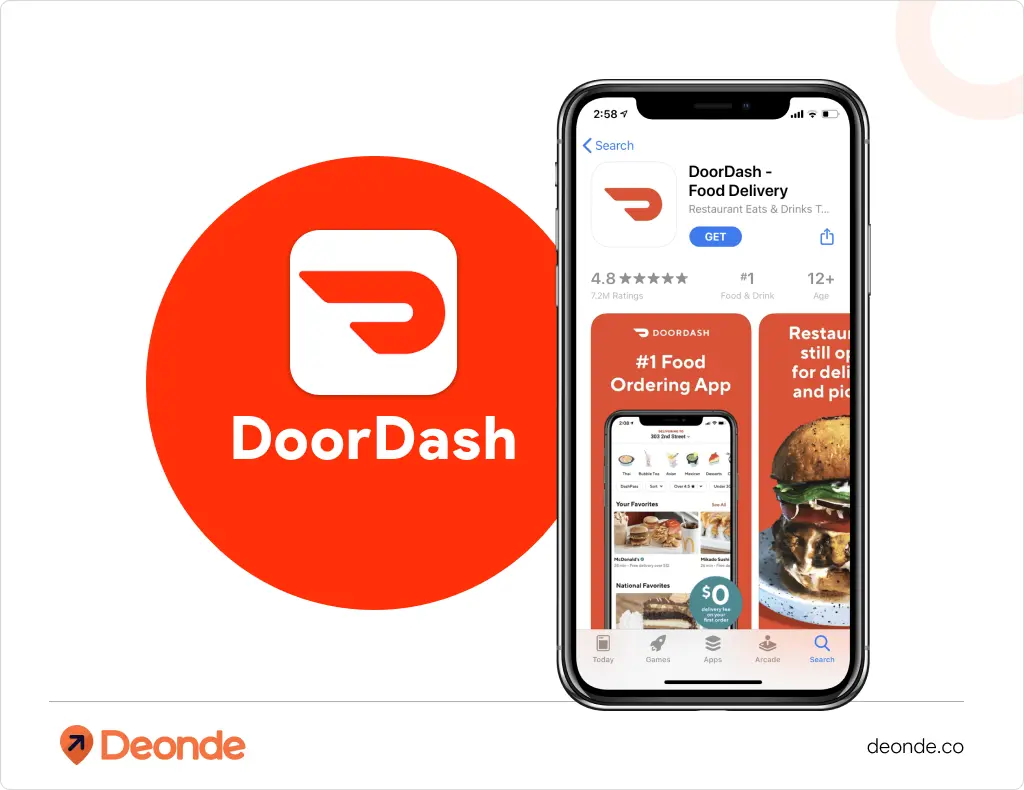
DoorDash is the single largest American online food ordering service in the country, and it’s not close. Founded in January 2013 in Palo Alto as a Stanford student project by Tony Xu, Andy Fang, Stanley Tang, and Evan Moore, the company went public in December 2020 on the NYSE under the ticker DASH.
It now works with 450,000+ merchants across 7,000+ cities and generated $13.7 billion in revenue in 2025 — a 28% year-over-year increase.
The purpose of DoorDash is to connect local businesses with customers through on-demand delivery services.
Pros:
- Largest restaurant network — 450K+ merchants across all 50 states, more than any competitor
- DashPass subscription — $9.99/month saves $4–$5 per order with $0 delivery and reduced service fees
- Best suburban and rural coverage — available in 7,000+ cities, reaches where Uber Eats and Grubhub don’t
- Fast delivery times — average 25–35 minutes in most areas
Cons:
- Higher menu prices — restaurants mark up items 15–20% on the app compared to ordering direct
- Fees stack up without subscription — delivery fee ($3.99 avg) + service fee (~15%) can make a $25 order cost $38+
- Inconsistent pricing transparency — surge pricing during peak hours can surprise customers
Best for: Anyone who wants the widest restaurant selection and fastest delivery times. If you live in a major US city, DoorDash almost certainly has the most options.
Uber Eats
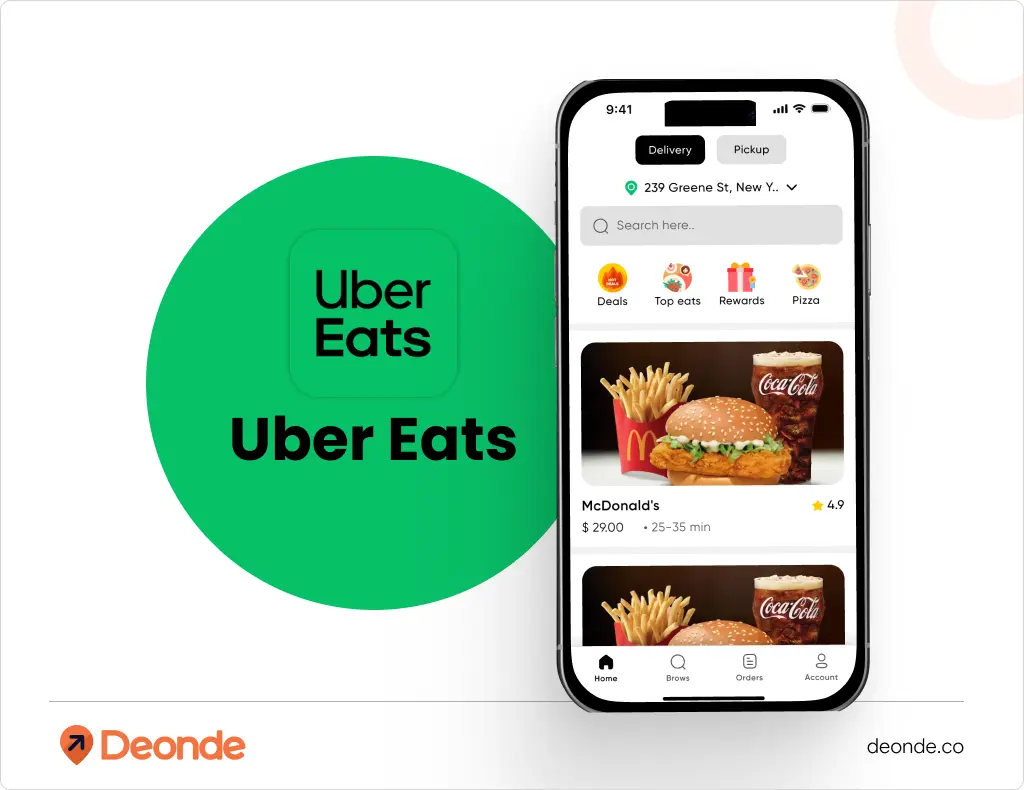
Uber Eats launched in August 2014 as UberFRESH in Santa Monica, California, founded by Travis Kalanick and Garrett Camp.
What started as a lunch-delivery pilot inside the Uber app has grown into a global business operating in 6,000+ cities across 45+ countries, generating $13.7 billion in revenue in 2024 (Business of Apps).
What sets Uber Eats apart is its integration with the broader Uber ecosystem. One Uber One subscription ($9.99/month) covers both delivery orders and Uber rides — making it the only subscription that pays for itself across two services.
For a deeper look at how these platforms work, our guide on how to build an app like Uber Eats breaks down the technology stack and business logic behind multi-sided marketplace platforms.
Pros:
- Uber One covers rides and delivery — rare value combo, saves on both food and transportation
- Superior real-time tracking — uses the same technology Uber built for ride-hailing
- Available in more international markets than any US competitor
- Fastest delivery in dense urban areas — average 30 minutes in major cities
Cons:
- Higher service fees — ~15% service fee vs Grubhub’s ~5–10%
- Restaurant selection is notably smaller in suburban and rural areas compared to DoorDash
- Menu markup — restaurants report Uber charges 20–30% commission, driving up menu prices
Best for: Frequent Uber riders, international travelers, and anyone who wants one subscription for both rides and food.
Grubhub
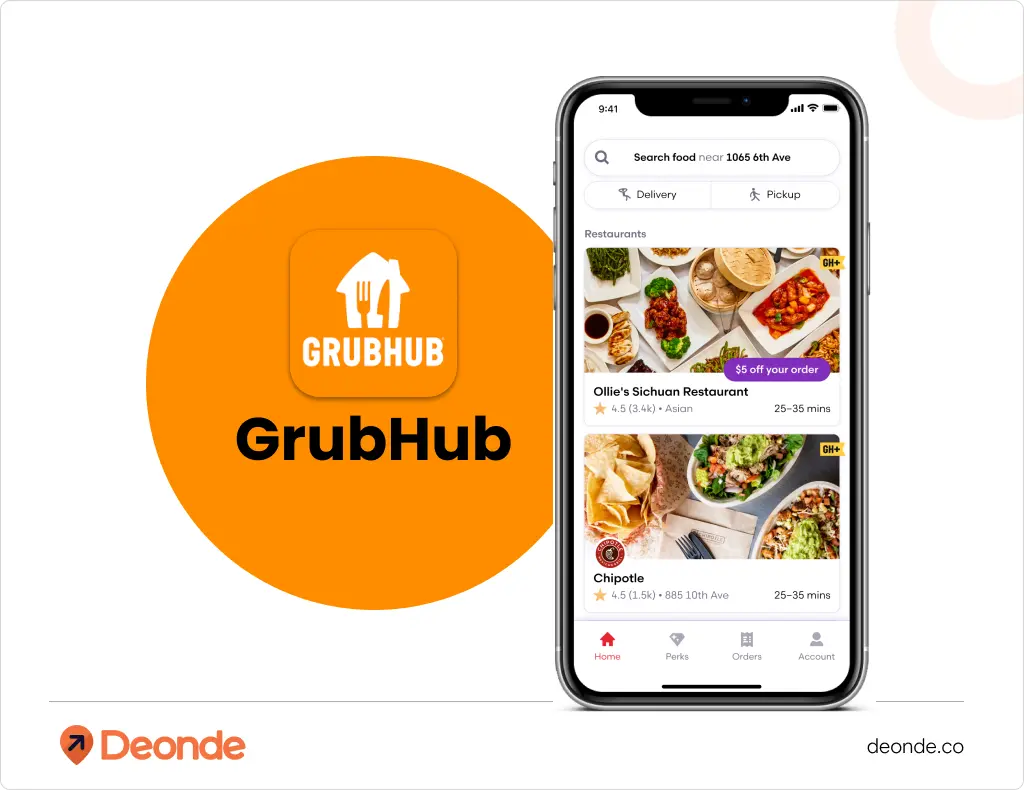
Grubhub is one of the oldest American food app platforms, founded in 2004 in Chicago, Illinois by two software engineers — Matt Maloney and Mike Evans.
The idea came from frustration. Maloney and Evans were working late nights as developers at Apartments.com, tired of calling restaurants, reading paper menus, and swiping credit cards over the phone. They thought: why isn’t there a better way to order food online?
Grubhub went public in 2014 on NYSE under ticker GRUB and merged with Seamless in 2013.
Today it holds 10% market share with 265,000+ restaurants. In 2025, Grubhub was acquired by Wonder Group Inc. for $650 million.
But its biggest advantage remains the Amazon Prime partnership — Grubhub+ is completely free for Prime members.
Pros:
- Small order fees apply — Grubhub charges extra if your order falls below the minimum threshold (usually $10–$12).
- $0 delivery on orders over $12 with Grubhub+
- No small order fee — Grubhub is the only major app that doesn’t charge extra for small orders
- Strong presence in NYC, Chicago, Boston — deep relationships with local restaurants in legacy markets
Cons:
- Smaller restaurant selection than DoorDash or Uber Eats in most markets
- Limited geographic coverage — weaker in suburban and rural areas
- Slower expansion — since the Wonder acquisition, feature development has slowed
Best for: Amazon Prime members who want free delivery without an extra subscription.
Seamless
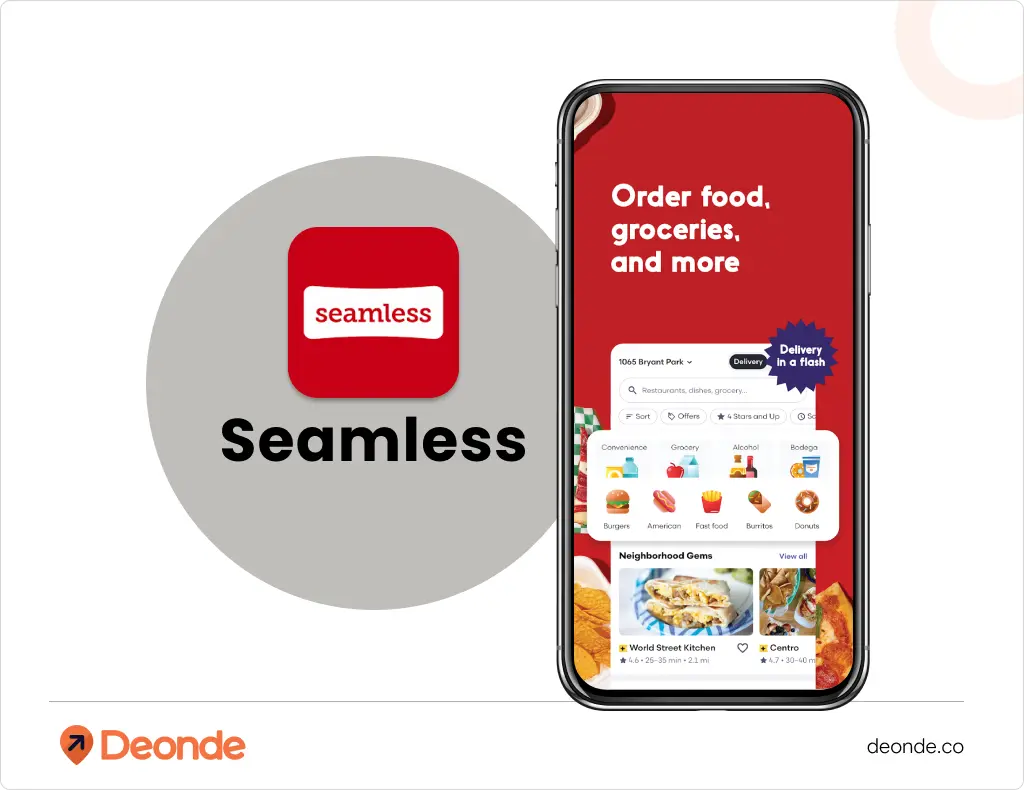
Seamless is owned by Grubhub and operates on the same platform, but it was originally its own company.
Founded in 1999 in New York City, Seamless was one of the very first online food ordering services in America — long before smartphones existed. People ordered through their desktop computers at work, and Seamless would fax the orders to restaurants.
In 2013, Grubhub and Seamless merged in a $50 million deal, combining the two largest online food ordering platforms at the time.
Today, Seamless remains the go-to American online food delivery platform for the NYC metro area and the Northeast corridor.
Pros:
- Deepest restaurant coverage in NYC and the Northeast — more local NYC options than any other app
- Corporate accounts — Seamless is deeply embedded in NYC office lunch culture
- Order history — easy reordering for regulars, especially office lunch routines
Cons:
- Limited brand recognition outside the Northeast
- No unique features vs. Grubhub — effectively the same app with different branding
Best for: NYC and Northeast residents who prefer the Seamless interface over Grubhub.
Postmates
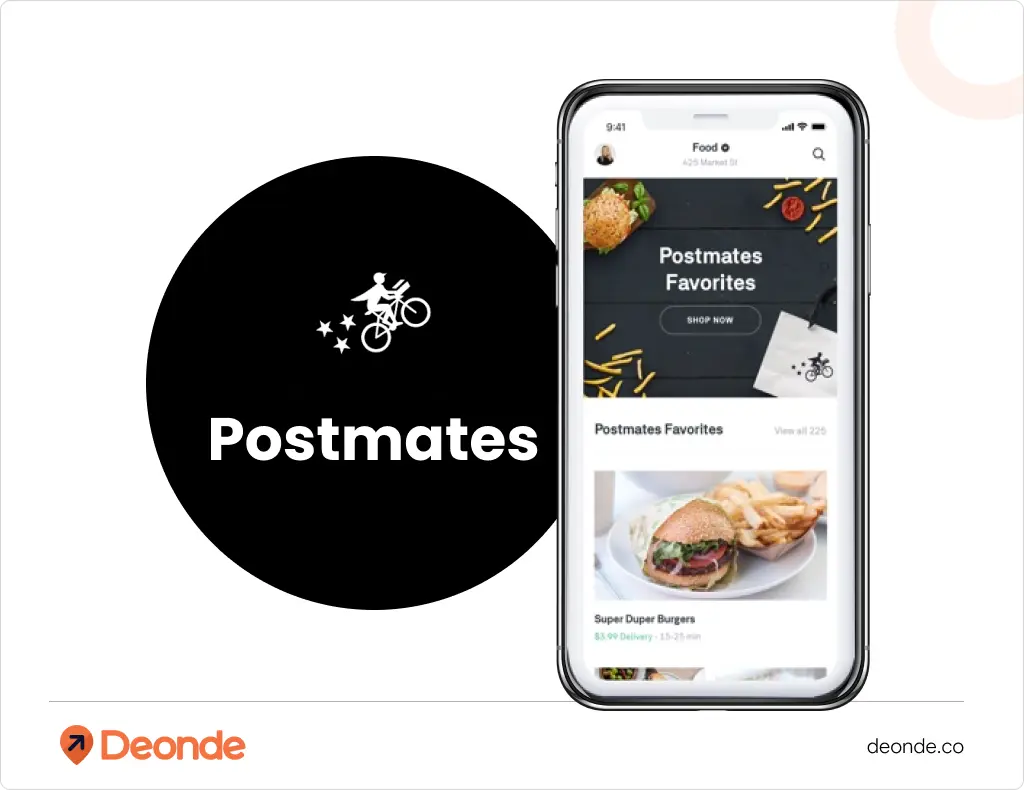
Postmates is an American food delivery app with a twist — it delivers anything, not just food. Founded in May 2011 in San Francisco by Bastian Lehmann, Sean Plaice, and Sam Street, Postmates was originally conceived as an “Uber for couriers” — a platform where you could get anything delivered within your city.
Lehmann, a German entrepreneur who moved to San Francisco, got the idea when he was relocating from Munich to London and struggled to find a simple way to move goods around a city.
Postmates started as a small prototype and grew rapidly. By 2019, it was operating in 3,500+ US cities.
In December 2020, Uber acquired Postmates for $2.65 billion. Today, Postmates still operates as a separate brand, and the Uber One subscription covers Postmates orders too.
Pros:
- Can deliver non-food items — alcohol, convenience store goods, pharmacy, electronics, gifts
- No minimum order on many items
- Uber One subscription works
- Late-night delivery — Postmates has the best coverage for 2 AM cravings
Cons:
- Restaurant selection is smaller than Uber Eats
- Fees on small non-food orders can exceed the item cost
- Blitz pricing — surge fees during peak hours and bad weather
Best for: Late-night cravings for snacks, drinks, or miscellany alongside food.
Caviar
Caviar is a premium dining delivery platform, now owned by DoorDash (acquired in 2019 for $410 million).
Unlike other apps that list every restaurant in your area, Caviar curates its selection, focusing on higher-end, chef-driven restaurants that don’t always appear on mass-market platforms.
Caviar was founded in 2012 in San Francisco and built a reputation for delivering from restaurants that previously refused to offer delivery — places that believed delivery compromised the quality of their food.
Caviar solved this by working closely with restaurants on packaging, presentation, and delivery standards.
Pros:
- Curated selection of upscale restaurants — access to places that don’t deliver anywhere else
- DashPass subscription works on Caviar orders
- Higher-quality packaging and presentation standards from partner restaurants
- Excellent for date nights and special occasions
Cons:
- Smaller restaurant pool — not useful for everyday fast food or cheap eats
- Higher delivery fees reflecting the premium positioning
- Limited city availability
Best for: Date nights, special occasions, or foodies seeking access to top-rated restaurants that typically don’t deliver.
EatStreet
EatStreet was founded in 2010 in Madison, Wisconsin, by two University of Wisconsin students — Matt Howard and Alex Wyler.
EatStreet still operates with a strong Midwest focus, having survived and successfully exited Chapter 11 bankruptcy in July 2025.
They started the company in their dorm room, initially building a platform for ordering food from local Madison restaurants. The name comes from the idea that ordering food should be as easy as walking down the street.
EatStreet still operates with a strong Midwest focus, having survived and successfully exited Chapter 11 bankruptcy in July 2025. Today, it serves over 250 cities with more than 15,000 restaurant partners.
While it’s not a national player, it has built a loyal following in college towns and mid-sized Midwestern cities where DoorDash and Uber Eats sometimes have thinner coverage.
Pros:
- Strong presence in college towns — Madison, Ann Arbor, Bloomington, and similar markets
- Street cred subscription ($9.99/mo) — unlimited $0 delivery
- Local customer support — not outsourced, actual humans in the Midwest answering phones
- Group ordering feature — excellent for offices and group events
Cons:
- Minimal presence on the coasts
- Smaller restaurant selection per city compared to DoorDash
- No national brand recognition
Best for: Residents of Midwest cities and college towns who want a locally-minded alternative to national apps.
Delivery.com
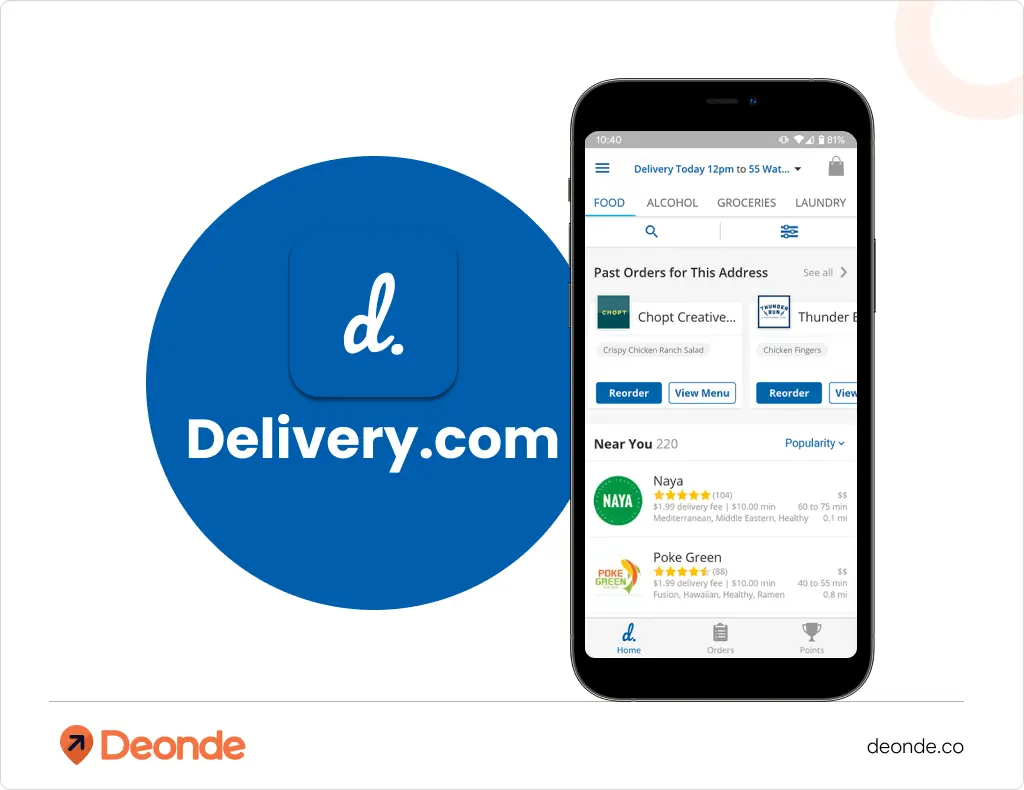
Delivery.com started in 2004 in New York City as a simple food delivery website and has since evolved into a multi-category delivery platform.
What makes Delivery.com unique is that alongside restaurant delivery, it handles alcohol delivery, grocery delivery, laundry, and even dry cleaning — all from a single app.
The company operates in over 2,400 US cities and has built a strong reputation for alcohol delivery in particular, operating in nearly 40 states where liquor delivery is legal.”
Pros:
- Multi-category delivery — food, alcohol, laundry, dry cleaning from one app
- Delivery.com Pass ($9.99/mo) — unlimited $0 delivery across all categories
- Strong in urban neighborhoods where variety matters more than raw selection
- Delivery Points loyalty rewards program
Cons:
- Restaurant selection per city is thinner than DoorDash/Uber Eats
- Category variety dilutes food-specific features
- Less brand recognition than the big players
Best for: Anyone who wants to bundle food delivery with alcohol or local errands in one order.
Slice
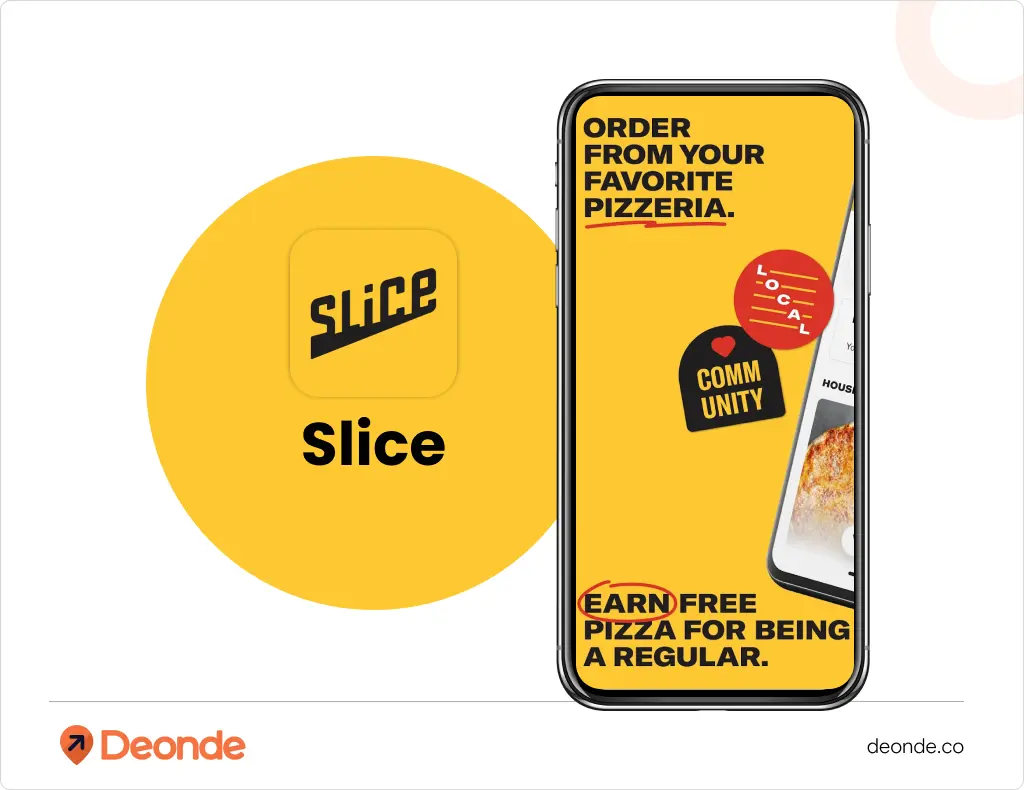
Slice is not a general-purpose food delivery app — it focuses exclusively on pizza, specifically independent pizzerias.
Founded in 2010 in New York City by Ilir Sela, Slice was built with a mission: help independent pizza shops compete with national chains like Domino’s and Pizza Hut.
The idea came from Sela’s observation that local pizzerias were getting crushed by national chains in the digital ordering space.
Chains had their own apps and websites, while independents were still taking orders over the phone. Slice gave them a modern ordering platform, and today it partners with over 20,000+ independent pizza shops across all 50 states.
What makes Slice special is its fee structure — instead of taking a massive percentage commission, it charges restaurants a simple flat fee per order (typically $2 to $3) plus a low monthly membership, compared to the 15–30% commissions taken by DoorDash and Uber Eats. For customers, it’s completely free to use with no subscription.
Pros:
- Supports local, independent pizzerias — not chains
- Lower fees for restaurants — only 15%, versus 25–30% on DoorDash
- Free to use — no subscription required
- Slice Rewards — earn points on every order
Cons:
- Pizza only — not useful for any other cuisine
- Limited coverage in smaller towns
- No national chain listings — no Domino’s, Pizza Hut, or Papa John’s
Best for: Pizza lovers who want to support independent local shops instead of national chains.
ezCater — Corporate Catering Specialist
ezCater is a U.S.-based B2B catering platform. Founded in 2007 in Boston, Massachusetts, by Stefania Mallett and Briscoe Rodgers, ezCater was created to solve the hassle of ordering food for office meetings and corporate events.
Today, ezCater connects businesses with thousands of restaurants and caterers for group orders, workplace meals, and catering. It is designed specifically for offices, team lunches, meeting catering, and employee meal programs — not individual dinner orders.
Pros:
- Designed specifically for group orders and catering.
- Flexible scheduling for advance orders.
- Centralized billing and reporting for businesses.
- Customer support for business users.
Cons:
- Not useful for individual, immediate delivery.
- Minimum order requirements may apply.
- Focused mainly on workplace and daytime catering needs.
Best for: Office managers, HR teams, and anyone ordering food for groups.
Domino’s — The Pizza Delivery Giant
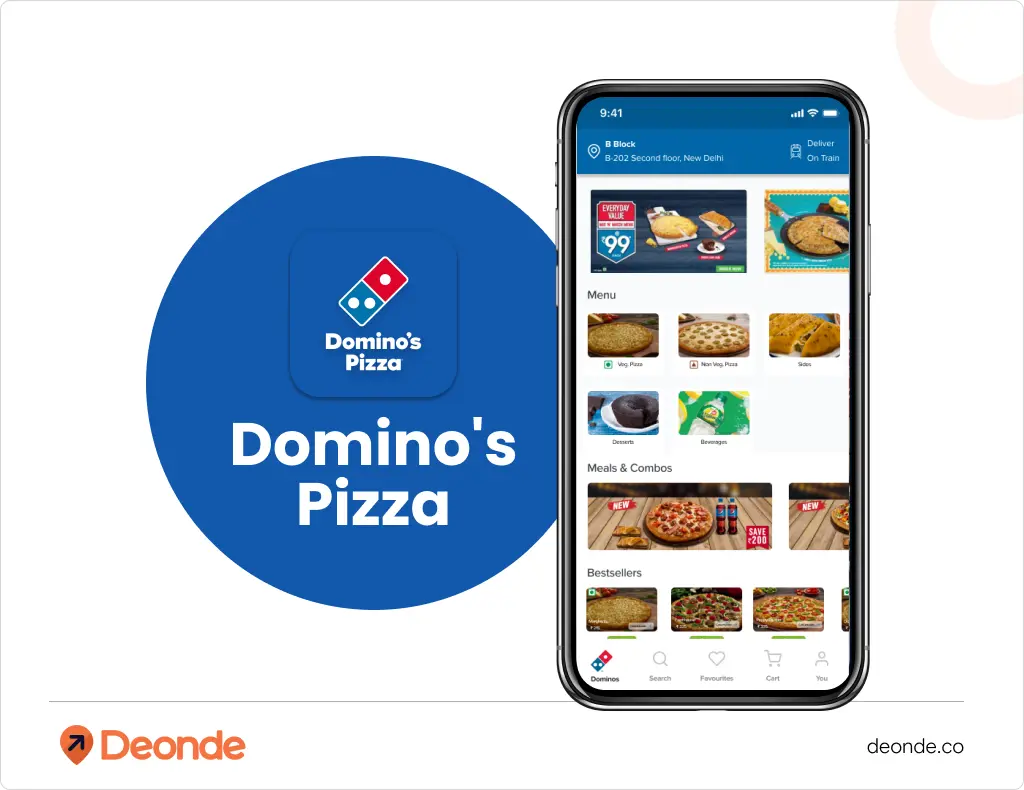
Domino’s is not a third-party delivery app — it’s a pizza chain that built its own delivery empire. But Domino’s Pizza USA App deserves a spot on this list because it completely changed how Americans think about food delivery.
Founded in 1960 in Ypsilanti, Michigan by Tom Monaghan and his brother James, Domino’s started as a single pizza store called “Dominick’s.” The name was later changed to Domino’s, and the company pioneered the 30-minute delivery guarantee in the 1970s and 80s — a promise that forever changed consumer expectations for food delivery speed.
Today, Domino’s controls 32.9% of the US QSR pizza delivery market and about 19.6% of carryout. Its standalone app drives the majority of its domestic digital sales.
Customers order through Domino’s own app (or website), and Domino’s handles delivery with its own employees using company-managed logistics.
Though once an industry holdout, Domino’s now reaches even more customers by listing its delivery items through the Uber Eats Marketplace.
Pros:
- Cheaper than third-party apps — no 25–30% commission baked into prices
- Domino’s own drivers — consistent service quality, company-trained
- Industry-leading order tracking — “Domino’s Tracker” shows every step from oven to door
- Fastest average delivery — 23 minutes from order to door
Cons:
- Pizza, chicken, and sides only — limited menu scope
- Must order direct for best prices and deals
- Only available within delivery radius of Domino’s locations
Best for: Pizza delivery at the most competitive price with the most transparent tracking.
Favor: Texas Food Delivery — The Lone Star App
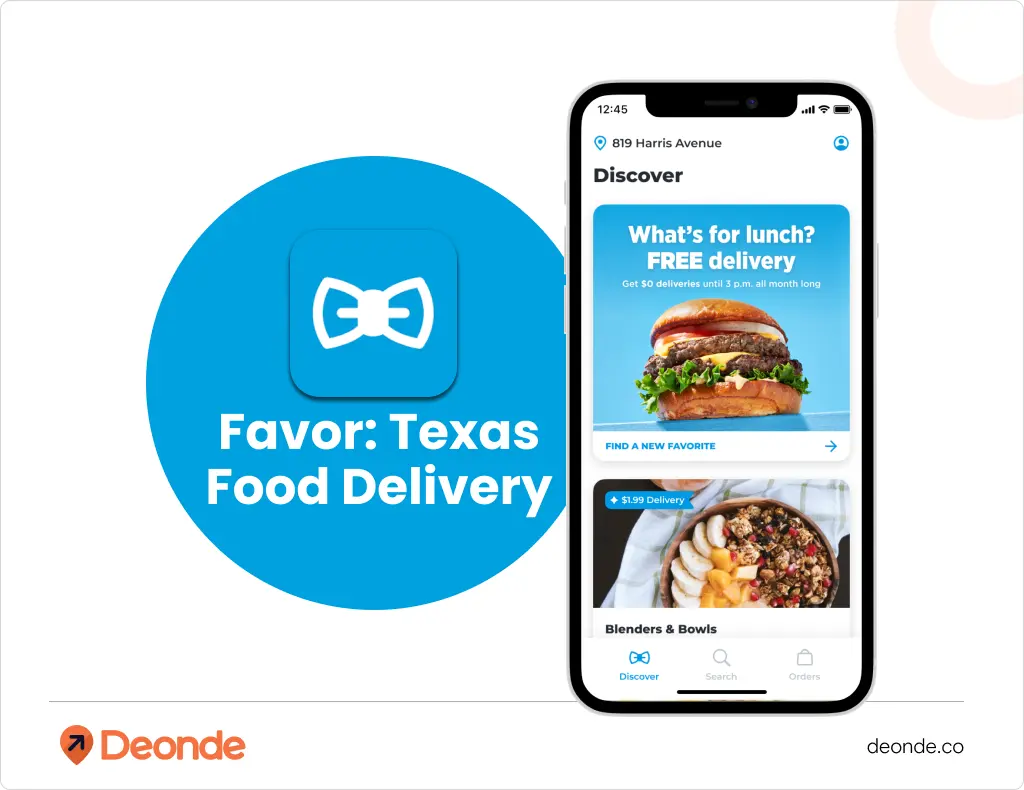
Founded in 2013, Favor is a leading on-demand delivery service in the United States, renowned for its fast and reliable delivery, typically within 45 minutes.
The service covers a variety of deliveries, including food, groceries, and other essentials, with a primary focus on meeting the needs of the U.S. market.
By collaborating with local restaurants and businesses, Favor boosts their visibility and helps expand their customer base.
Its commitment to speed, reliability, community engagement, and ongoing innovation has allowed Favor to carve out a strong presence, particularly in Texas, positioning it for sustained growth in the ever-evolving on-demand delivery industry.
Pros:
- Unique Runner model — because you can text your Runner directly, you can easily ask them to add or swap items while they are at the merchant.
- Favor Gold ($9.99/mo) — $0 delivery fees plus a $10 monthly H-E-B coupon.
- First US delivery app to reach profitability (2018).
Cons:
- Texas only — entirely useless outside the state.
- No multi-merchant orders — you cannot combine a restaurant meal and H-E-B groceries in the same order; they require separate orders.
- Delivery fees can be higher than national apps.
- Smaller restaurant selection per city than DoorDash.
Best for: Texans who want restaurant food plus H-E-B grocery delivery, as long as they don’t mind placing separate orders for each.
Chipotle
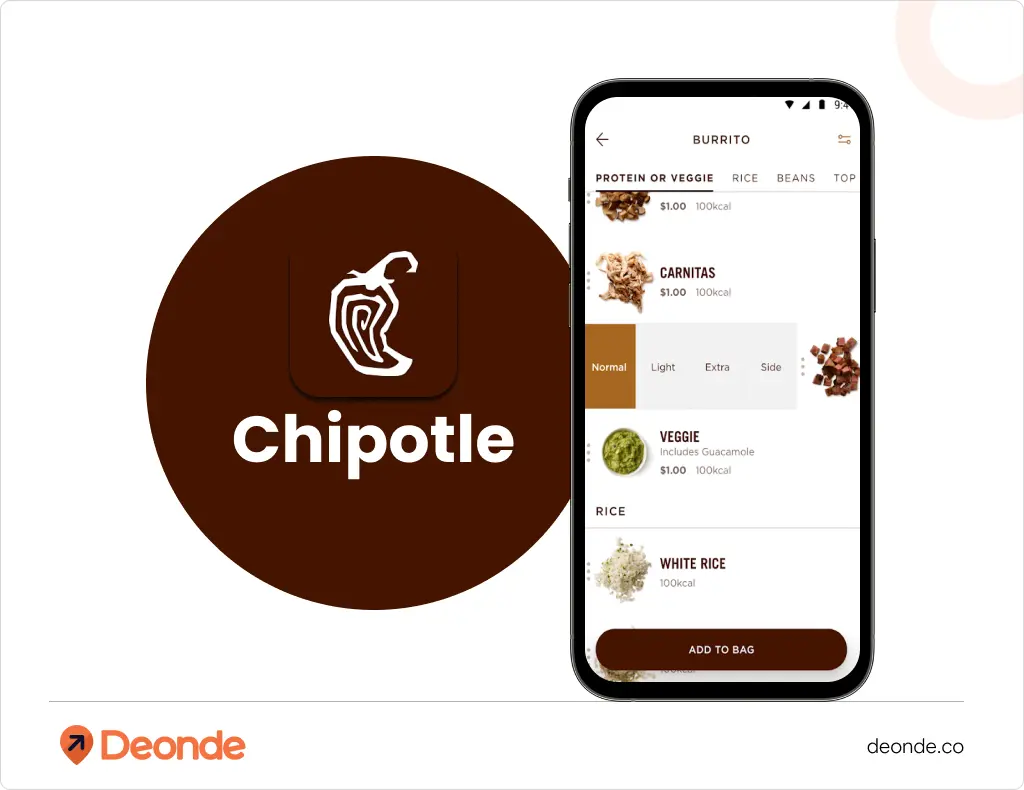
Chipotle is a popular fast-casual restaurant chain known for its burritos, bowls, tacos, and salads. Founded in 1993 by Steve Ells in the United States (Denver, Colorado), its original name was Chipotle Mexican Grill. In 2009, they shortened their name to simply ‘Chipotle.’ This name change, along with the introduction of online ordering, has proven to be successful, further solidifying Chipotle’s position as a leading brand in the fast-casual dining industry.
Chipotle operates in the fast-casual segment, offering a more upscale dining experience than traditional fast food. It emphasizes using fresh, high-quality ingredients, including naturally raised meats and locally sourced produce whenever possible.
Pros:
- Faster and cheaper than ordering through DoorDash — no third-party markup.
- Generous rewards program — earn points on every order toward free food.
- Exclusive app-only menu items and promos.
- Order customization saved as favorites — one-tap reordering.
Cons:
- Chipotle only — one restaurant, one menu.
- Relies on third-party couriers — delivery is handled by various partners (DoorDash, Uber Eats, Grubhub) and even drones in some markets (Zipline), so the experience depends on those external services.
- Not available outside Chipotle operating hours.
Best for: Anyone who orders Chipotle even semi-regularly — the app pays for itself in rewards and convenience.
7NOW
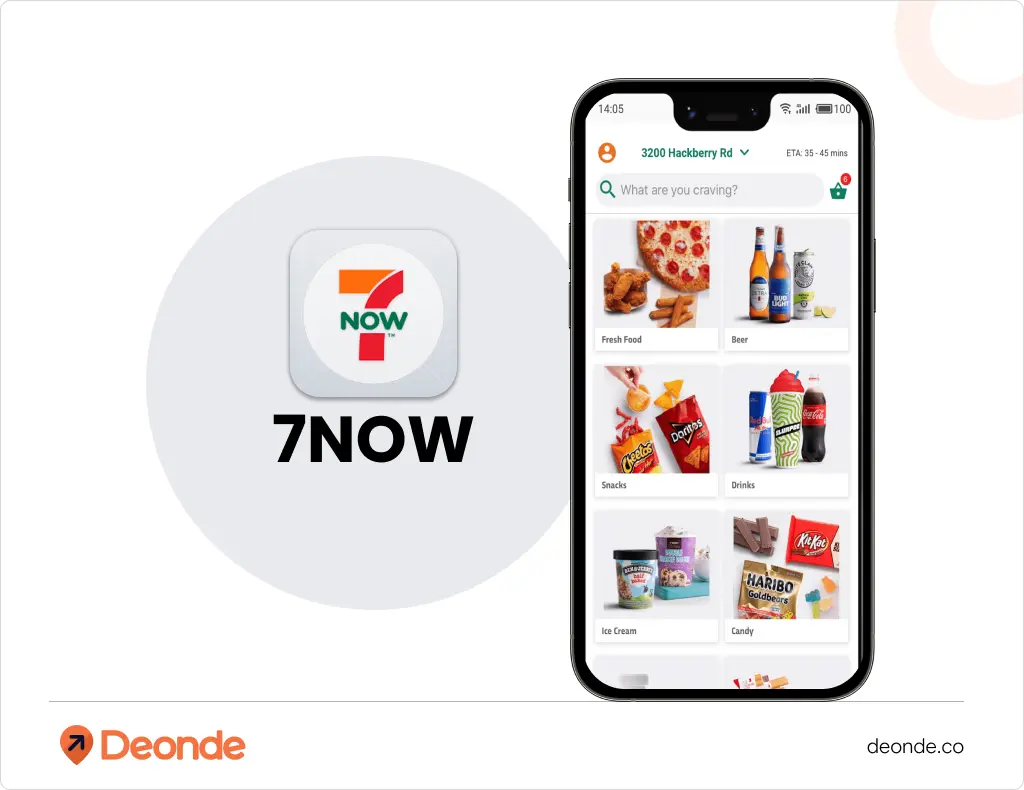
7NOW is 7-Eleven’s proprietary delivery app. Launched in 2019, it delivers from over 9,000 7-Eleven locations across 48 states, promising 30-minute delivery on everything in the store — snacks, drinks, hot food, groceries, and alcohol.
7-Eleven invented the convenience store concept in 1927 (originally called “Tote’m” stores), and 7NOW brings that convenience to your doorstep. Operating 24/7, it’s the only app on this list that guarantees around-the-clock delivery — useful for late-night emergencies, road trip supplies, and cravings that can’t wait until morning.
Pros:
- Truly 24/7 delivery — no other app guarantees late-night coverage like this.
- 30-minute delivery window (on average).
- Delivers alcohol, hot food, and grocery items from the same store.
- 7-Eleven Cash rewards — 5% back on purchases (and 10% for Gold Pass subscribers).
Cons:
- Local restaurant delivery is still expanding — while recently added, it is only available in select locations.
- Not available in all 7-Eleven locations yet.
- Delivery radius limited — must live near a participating store.
Best for: Late-night emergencies, road trip supplies, and convenience store cravings delivered to your door.
Which Food Delivery App Has the Best Deals and Rewards?
If you’re asking which app saves you the most money, the answer depends on how you order — but here’s the honest breakdown of each subscription.
DashPass ($9.99/mo) — Best for sheer volume of use. With DoorDash’s 67% market share, you’ll find the most options with $0 delivery. Average savings per order: $4–$5. Also works on Caviar orders.
Uber One ($9.99/mo) — Best value if you also take Uber rides. The dual benefit (rides + delivery) makes it the only subscription that pays for itself across two services. Also covers Postmates.
Grubhub+ (Free with Amazon Prime) — Best for people who already pay for Prime. At $0 additional cost, it’s the cheapest way to unlock free delivery — but the smaller restaurant network limits its usefulness in some markets.
Favor Gold ($9.99/mo) — Best for Texans who also shop at H-E-B. The free delivery on both restaurant and grocery orders, plus the $10 monthly H-E-B coupon, makes it regionally unbeatable.
Slice Rewards (Free) — No subscription needed. Earn points on every pizza order and redeem for discounts. The simplest rewards program on this list.
The honest answer: If you only order occasionally, skip all subscriptions — you’ll lose money on the monthly fee. But if you order at least 3–4 times per month, any of these subscriptions will save you $15–$25 monthly.
The Future of Food Delivery — And Why It Matters
The food delivery industry is entering its next phase. The era of “all apps must be everything” is fading. What we’re seeing instead is a clear split: national giants like DoorDash and Uber Eats dominating general delivery, while niche and regional players (Slice, Favor, ezCater, 7NOW) win by being deeply useful for one specific thing.
The biggest trend reshaping the market? Restaurants are increasingly launching their own direct-ordering platforms. Domino’s built its own. Chipotle built its own. Even smaller chains and independents are waking up to the math: losing 25–30% of every delivery order to DoorDash is unsustainable long-term.
Many are turning to food delivery software to build branded ordering experiences that keep their margins — and their customer data — in-house. A commission-free ordering system is becoming the standard ask from restaurant groups that want to compete with delivery apps without handing over a third of every sale.
If you’re an entrepreneur or restaurant group watching this shift, the opportunity is clear: build your own branded delivery channel before the existing apps lock down your market.
A white-label delivery platform lets you own the ordering experience, keep your customer relationships, and bypass the 30% commission that eats into your margins. A multi-vendor food delivery marketplace takes it further — letting you become the next DoorDash in your region.
If you’re a consumer, the takeaway is simpler. Pick one subscription app for daily use (DoorDash for variety, Uber Eats for rides+food bundle, Grubhub if you have Prime), Slice for local pizza, ezCater for office orders, and Favor or 7NOW for Texas or late-night needs. That’s four apps — not fourteen — and you’re covered for every possible delivery scenario.