
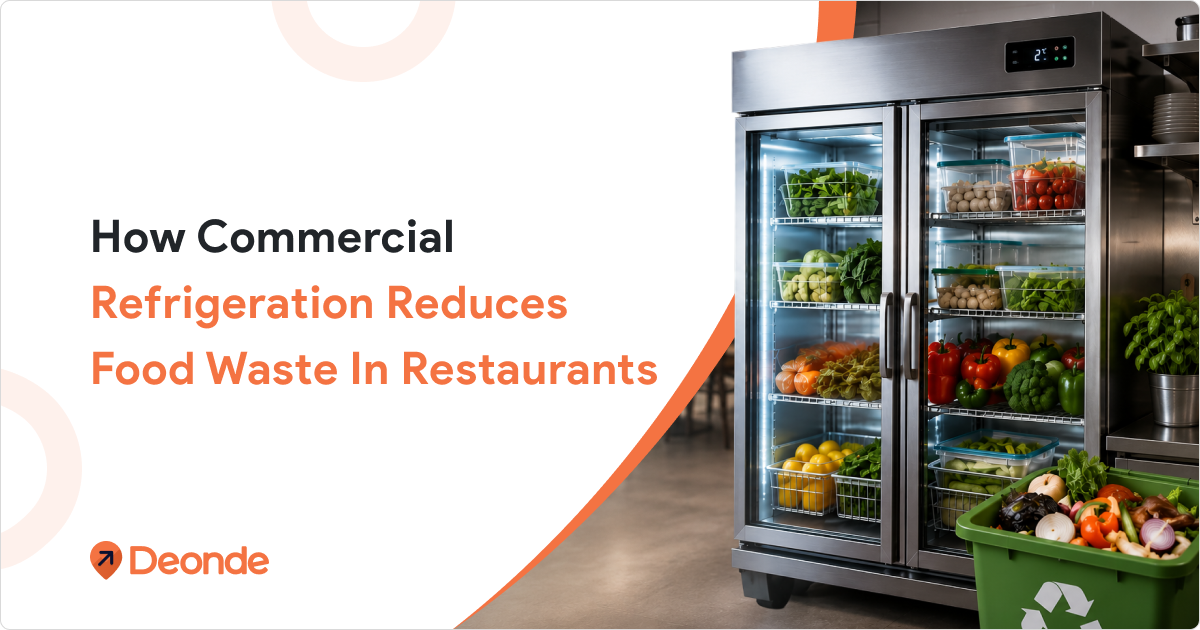
Restaurants lose money every time food spoils before it’s used. In many kitchens, the biggest reason for this waste is not bad planning — it’s poor refrigeration.
Good commercial refrigeration helps restaurants keep food fresh, store items correctly, and meet safety standards. It also lowers energy costs and boosts kitchen efficiency.
The link between commercial refrigeration and food waste reduction is clear. It often decides whether a month is profitable or a loss. Pairing this with an online ordering system helps restaurants match demand with supply and cut waste further.
Food waste costs the U.S. restaurant industry about $162 billion each year. Restaurants waste between 4% and 10% of what they buy before it reaches the plate. This waste means lost profits—money spent on ingredients that end up in dumpsters instead of on plates.
Why Food Waste Is a Bigger Problem Than Most Restaurant Owners Realize
Food waste hits restaurants in three ways:
- higher food costs,
- lower profits, and
- more strain on staff and operations.
When ingredients spoil early, kitchens must reorder more often, pay more for replacements, and sometimes change menus at the last minute.
Beyond cost, wasted food also damages a restaurant’s reputation for quality and consistency.
The Scale of Restaurant Food Waste in 2026
Globally, food losses exceed $1 trillion according to fda data. In the U.S., the retail food sector loses $28.7 billion annually to food waste (ReFED). Restaurants sit at the intersection — perishable inventory, high turnover, and tight margins amplify every dollar of waste into a much larger hit on profitability.
How Food Waste Directly Erodes Restaurant Profit Margins
Consider math. A restaurant generating $1.5 million in annual revenue with a 32% food cost spends roughly $480,000 on ingredients each year. If 7% of that food is wasted, that’s $33,600 thrown away annually. But the damage compounds.
Waste costs you the labor spent receiving, prepping, and storing it. It costs you the storage space. And it costs you the opportunity to redirect that spend toward marketing efforts like restaurant promotion ideas that drive traffic.
Smart Storage Practices That Cut Waste at the Source
Good equipment only goes so far without good habits behind it. The kitchens that waste the least tend to run their cold storage with the same discipline they run their line during service.
A few practices make an outsized difference:
Rotate stock with FIFO
First in, first out isn’t just a warehouse term — it’s one of the most effective habits for preventing spoilage. New deliveries go to the back; older stock moves to the front so it gets used before it turns.
Label everything
Date every container the moment it’s prepped or opened. Staff should quickly see what to use today. This saves time instead of searching through unmarked containers during service.
Zone by temperature and type
Keep raw proteins separate from ready-to-eat items, and group ingredients by how quickly they turn. Good fresh produce management starts with making your most perishable stock your most visible.
Don’t overpack the fridge
Cold air needs room to circulate. Cramming shelves full blocks airflow, creates warm pockets, and can spoil food that’s technically still within date.
Seal and cover everything properly
Uncovered food loses moisture, absorbs odors, and spoils faster, even at the correct temperature.
How Proper Commercial Refrigeration Reduces Food Waste
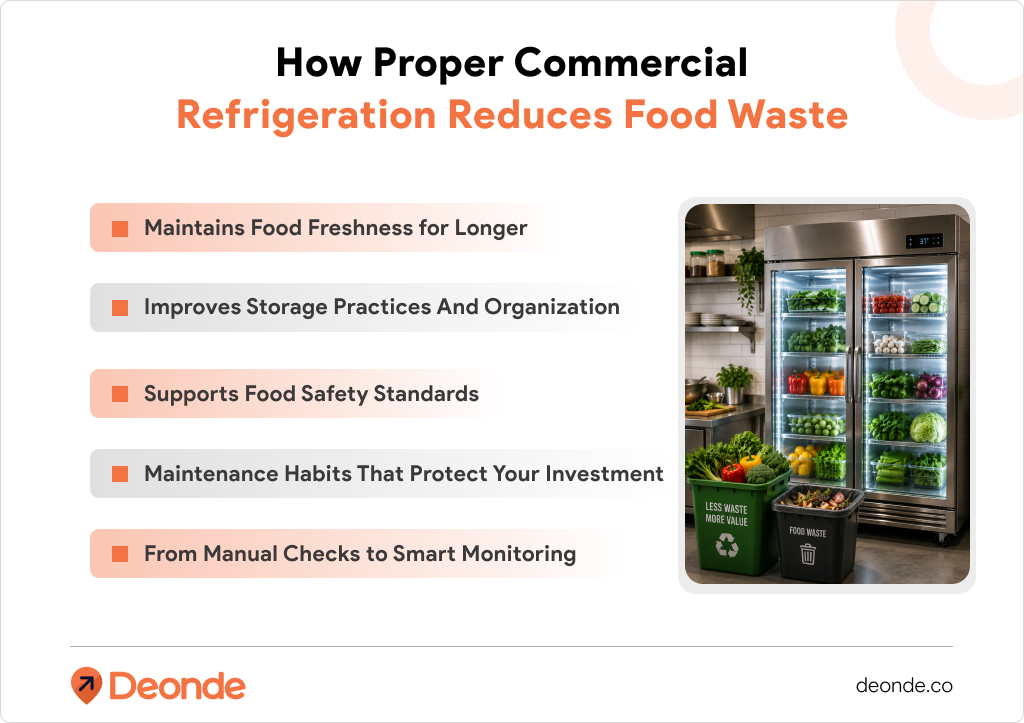
Maintains Food Freshness for Longer
Commercial refrigerators and freezers keep exact temperatures that home units often can’t match. When temperatures stay stable, perishable items like meat, dairy, seafood, and produce remain fresh for their entire shelf life. This helps prevent early spoilage.
Consistent cooling slows bacterial growth and keeps food fresh. This means fewer items are wasted before use.
Improves Storage Practices And Organization
Good refrigeration encourages better storage habits. With the right equipment, kitchens can:
- Separate raw and cooked foods to avoid cross-contamination.
- Use clear bins and labels so staff can see what needs to be used first.
- Follow FIFO (first in, first out) more easily because items are visible and organized.
When food is stored properly, it is easier for kitchen staff to track what is available and what must be used soon, which reduces the chance that items get forgotten and spoiled.
Supports Food Safety Standards
Health regulations require restaurants to store food at specific temperatures to prevent foodborne illness. Proper commercial refrigeration helps kitchens meet these standards consistently.
When food is kept at safe temperatures:
- The risk of bacterial growth is reduced.
- The chance of food-related complaints or incidents drops.
- Staff can follow clear temperature logs and checks with confidence.
Meeting food safety standards not only protects customers but also prevents large batches of food from being discarded due to suspected contamination.
Maintenance Habits That Protect Your Investment
Even the best refrigeration unit needs upkeep. A poorly maintained unit is a common hidden cause of food waste in restaurants.
Small mechanical issues often go unnoticed. They let the temperature rise slowly until something goes wrong.
Build these habits into your kitchen’s routine:
– Clean condenser coils monthly: Grease and dust build up in any commercial kitchen. This makes the compressor work harder and reduces cooling efficiency.
– Check door gaskets often: A worn or torn seal lets warm, humid air in, even if the door seems closed.
– Defrost freezers on schedule: Excess frost builds up, insulating the evaporator coil. This makes the unit work harder but cool less.
– Schedule professional servicing every three to six months: A technician can spot refrigerant leaks, worn parts, and calibration problems before they lead to a breakdown.
– Track equipment age: Older compressors and thermostats can struggle with temperature changes. A single overnight failure in a full walk-in can ruin a large part of your inventory in just one shift.
From Manual Checks to Smart Monitoring
Traditional temperature logs depend on people remembering to check thermometers every few hours. This can lead to unnoticed issues, like a slow leak or an ajar door, especially overnight. That gap is exactly what modern refrigeration monitoring is designed to close.
Wireless sensors in walk-ins, reach-ins, and prep coolers now track temperature all the time. They send an alert if anything goes out of range, instead of waiting for the next scheduled check.
For a busy kitchen, that difference can mean catching a failing compressor at 2 a.m. instead of discovering a ruined walk-in at 6 a.m. prep.
This same shift toward real-time visibility is what makes inventory management such a natural complement to good refrigeration.
When your storage data links to the system that tracks stock levels, orders, and usage, refrigeration turns from a simple storage box into a key part of a connected kitchen operation.
A restaurant inventory software solution can bring that same real-time visibility to the rest of your kitchen — turning good refrigeration habits into a system your whole team can rely on, not just the person who remembers to check the thermometer.
How Energy-Efficient Refrigeration Lowers Costs
Modern commercial refrigeration units are designed to be more energy-efficient than older models. Upgrading to energy-efficient equipment can reduce electricity bills while improving temperature control.
Key benefits include:
- Lower monthly energy costs.
- More stable temperatures, which protect food quality.
- Less strain on compressors and motors, leading to fewer breakdowns.
- Better insulation and door seals to avoid cold air loss.
Over time, the savings from reduced energy use and lower food waste can offset the initial investment in better equipment.
Practical Tips For Choosing Energy-Efficient Refrigeration
When selecting commercial refrigeration for your restaurant, consider the following:
1. Right size for your kitchen
Choosing a unit that is too small will force it to run constantly, while a unit that is too large wastes energy cooling unused space. Measure your available space and estimate your storage needs before buying.
2. Check energy ratings and certifications
Look for units with recognized energy-efficiency ratings or certifications. These models are tested to use less power while maintaining performance. Over time, they save money on electricity and reduce heat load in the kitchen.
3. Prefer models with smart features
Modern refrigeration units often come with:
- Digital temperature controls.
- Alarms for temperature fluctuations.
- Self-defrost functions to reduce manual maintenance.
These features help staff maintain ideal conditions with less effort and reduce the risk of human error.
4. Consider layout and workflow
Place refrigeration units where staff can access them easily without blocking walkways or other equipment. Good workflow reduces the time doors are open, which helps maintain stable internal temperatures.
Maintenance Tips to Keep Refrigeration Efficient
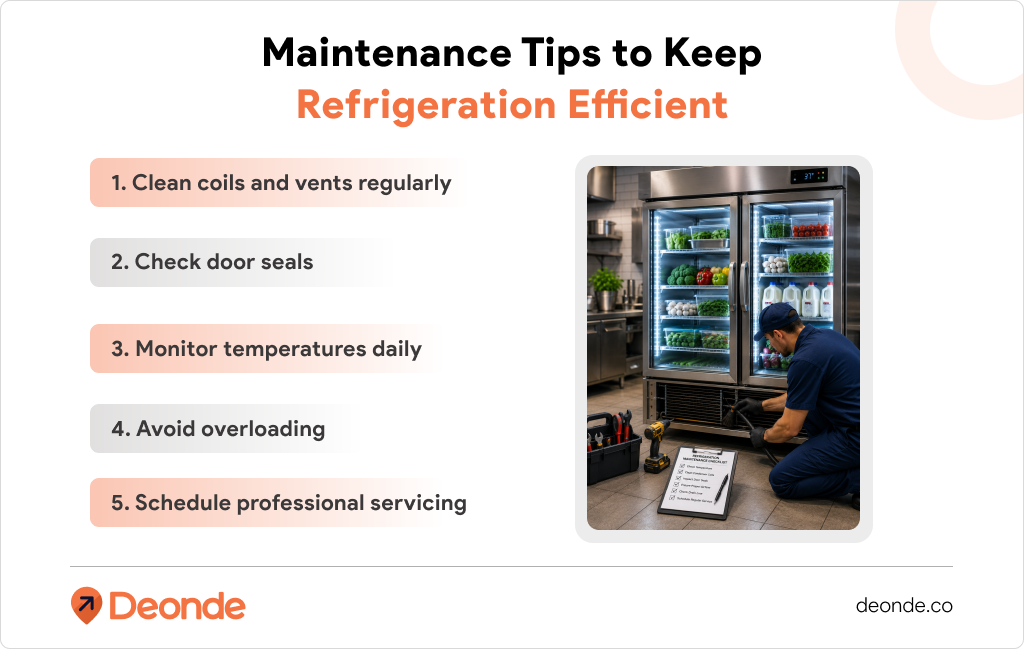
Even the best equipment will waste energy and spoil food if it is not maintained properly. Follow these simple practices:
1. Clean coils and vents regularly
Dust and grease on condenser coils reduce efficiency and force the unit to work harder. Clean coils and vents on a set schedule to maintain proper airflow.
2. Check door seals
Worn or damaged door seals allow cold air to escape, which raises energy use and affects temperature stability. Inspect seals regularly and replace them if they are cracked or loose.
3. Monitor temperatures daily
Use a thermometer or built-in digital display to check refrigerator and freezer temperatures at least once per day. Keep a simple log so staff can spot trends and address issues early.
4. Avoid overloading
Overloading blocks airflow inside the unit and makes it harder to maintain even temperatures. Store items with enough space for air to circulate.
5. Schedule professional servicing
Arrange regular maintenance checks with a qualified technician. Professional servicing can catch small problems before they become expensive repairs or cause food loss.
Impact On Kitchen Efficiency And Profitability
When refrigeration works well, the entire kitchen runs more smoothly:
- Staff spend less time managing spoiled stock.
- Chefs can plan menus with confidence that ingredients will last.
- Managers face fewer emergency reorders and waste-related losses.
- Energy bills become more predictable and controllable.
Together, these improvements support better margins, more consistent quality, and a more professional operation.
Conclusion
Reducing food waste in a restaurant rarely comes down to one dramatic fix.
It’s about making small, steady choices:
- Keeping every unit at the right temperature.
- Rotating stock before it spoils.
- Choosing efficient equipment over cheap options.
- Maintaining it to prevent small issues from becoming costly.
Refrigeration sits at the center of nearly all of it.
Get it right, and you’ll see clear rewards: lower food costs, fewer failed inspections, a smaller environmental impact, and a faster kitchen. Plus, more of what you buy ends up on customers’ plates instead of in the trash.
Proper commercial refrigeration is not just about keeping food cold. It is a key part of reducing food waste, improving food safety, and running a more efficient and profitable kitchen.
By choosing energy-efficient equipment and using simple maintenance, restaurants can keep food fresh longer, cut costs, and build a more sustainable operation.
For restaurant owners and cloud kitchen operators, choosing the right refrigeration is key. It helps control food costs, reduces waste, and boosts profits.