
You walk into a restaurant and something just feels right. Not the food — you haven’t tasted it yet. It’s the music at the right volume, the warm lighting, the way the host greets you like they know you. You sit down. You already know you’ll come back.
That feeling isn’t an accident. Someone designed it that way. That’s what people mean by vibe commerce — making sure every part of your business feels a certain way on purpose, instead of leaving it to chance. It’s what makes customers stick with a brand instead of forgetting it the second they walk out the door.
Here’s what a lot of business owners miss: your pricing is dialed in, your ads are targeted well, your delivery runs on time. And customers still leave anyway. They try you once or twice, then vanish. The problem usually isn’t in your numbers. It’s in how your brand makes people feel.
Quick gut-check before we start: if your product were exactly the same as a competitor’s, would people still pick you? If you’re not sure, keep reading — this is for you.
What Is Vibe Commerce, in Plain Terms?
Vibe commerce just means designing every part of the customer experience — your site, your packaging, how your staff talks to people — so it creates a specific feeling. Not just a transaction. A feeling.
It’s not about what you’re selling. It’s about how people feel while they’re buying it and after.
Old-school branding is mostly about logos and colors. This is more about the overall mood someone gets from dealing with you — from the first ad they see to the box on their doorstep.
Old question: “What do you need?” New question: “How do you want to feel?”
Why This Actually Matters
People see a ton of ads and offers every single day. Prices are competitive everywhere. Most products do basically the same thing as their competitors. So when everything looks the same on paper, people stop comparing specs and just go with whatever feels right.
And this isn’t just a nice idea — there’s real data behind it. A study by Motista, looking at over 100,000 retail customers, found that people who feel emotionally connected to a brand stick around 306% longer in terms of value than customers who are just “satisfied” — about 5 years versus 3.4 years.
Separate research from Harvard Business Review found emotionally connected customers are worth about 50% more than satisfied ones.
Bottom line: brands that make people feel something don’t have to fight on price. They just win the loyalty instead.
The 4 Things That Actually Build This
You don’t get a great “vibe” by accident. It takes a few deliberate habits.
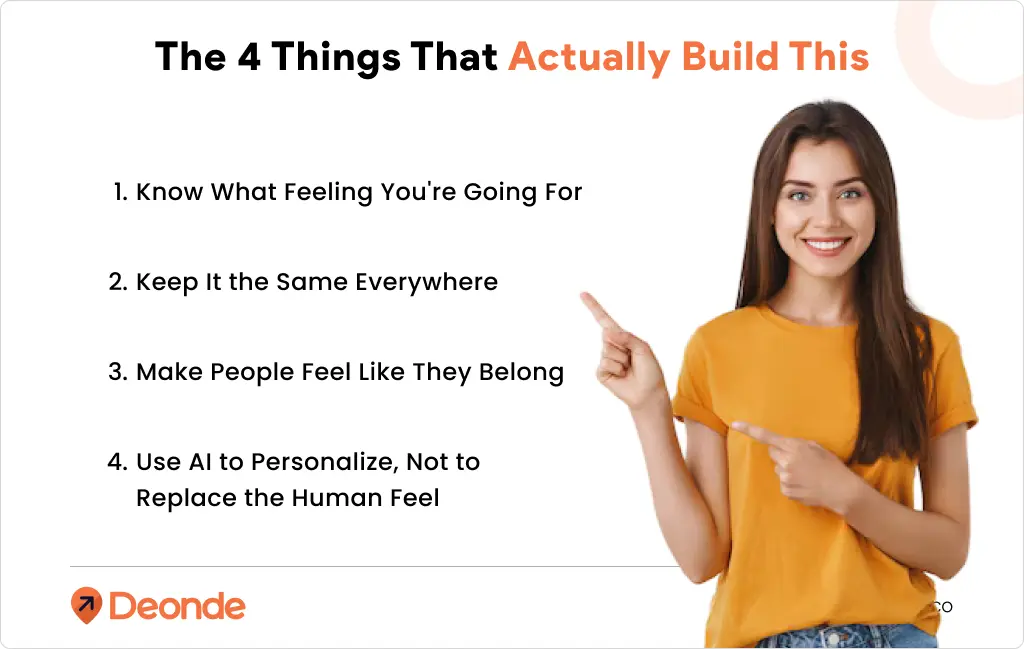
1. Know What Feeling You’re Going For
Before you can sell a feeling, you have to know which one. Calm and simple? Fun and loud? Warm and nostalgic? This isn’t your company mission statement — it’s just: what do you want people to feel when they think of you?
Every decision — how you write an ad, what your packaging looks like — should get run through one question: does this match the feeling we’re going for? If it doesn’t, skip it.
2. Keep It the Same Everywhere
The quickest way to ruin the feeling is being inconsistent. If your Instagram is fun and casual but your support emails sound like a lawyer wrote them, people notice — and it breaks the spell.
Same mood on your website, your packaging, your social posts, your emails, even your return policy. Every single interaction either adds to the feeling or takes away from it. There’s no in-between.
3. Make People Feel Like They Belong
The brands people love most don’t just have customers — they have communities. Hoka runners talk about the brand to strangers without being asked. When people feel like they’re part of something, not just buying a product, they stick around a lot longer.
4. Use AI to Personalize, Not to Replace the Human Feel
AI can now help you personalize things at a scale that just wasn’t possible a few years ago — recommendations that feel handpicked, emails that adjust based on what someone actually does.
The trick is using it to make people feel more looked after, not to make things feel more automated. If it’s done right, customers feel like the whole thing was made just for them.
Brands That Get This Right
Glossier wasn’t really selling makeup — it was selling the feeling of belonging to a beauty community that likes real skin, not filtered perfection. The pink packaging, the Instagram full of real customers instead of models — all of it points at one feeling. People don’t just buy from Glossier. They feel like they’re part of it.
Otherland and Boy Smells, two candle brands, aren’t really selling scents. They’re selling a mood. Their sites feel like stepping into a whole little world, and even opening the box feels like an experience. It’s a clean, simple example of the whole idea.
TikTok Shop does this at a massive scale. People buy a cozy sweater or a kitchen gadget not because it’s the best one out there, but because it feels right the moment they see it.
Other easy examples: Apple, Patagonia, Chick-fil-A. All of them sell something totally normal and functional. People stay loyal because of how it feels to be their customer.
How to Actually Build This in 4 Steps
Works no matter your budget.
1. Figure out your brand’s personality
If your brand were a person, who would they be? Pick five words that describe them. Check everything you post against those five words — if it doesn’t fit, don’t post it. This becomes your simple filter for every decision going forward.
2. Walk through your own customer experience
Go through every step — from someone finding you, to ordering, to getting their stuff, to asking for help. Notice where the good feeling drops off. Usually it’s the boring stuff — order confirmations, shipping updates, receipts — because nobody bothers to fix those. Fix those first.
3. Make it consistent everywhere
Rewrite your emails. Redesign your packaging. Update how your team talks online. The goal: someone hits three totally different parts of your business and it still feels like the same brand each time. That’s what turns a one-time buyer into someone who keeps coming back.
4. Let AI help you do it at scale
Set up emails that match your tone and respond to what people actually do. Use recommendations that understand taste, not just “people also bought.” Just don’t let it feel robotic.
Where This Falls Apart for a Lot of Businesses
Here’s the part most articles like this skip: you can only keep things consistent on parts of your business you actually control.
If most of your restaurant’s orders come through a third-party delivery app, you can nail the vibe in your actual restaurant and still lose the plot online — because the checkout screen, the confirmation text, the delivery tracking all belong to someone else’s app, not yours. You can’t shape a feeling on a screen you don’t own.
That’s usually why a place can feel amazing in person and completely forgettable the second someone orders online. The fix isn’t trying harder on design — it’s owning the app or site the ordering actually happens on.
Wrapping It Up
Building a brand people actually care about starts with one shift: stop just selling the product, start paying attention to how you make people feel.
Figure out what feeling you’re going for. Keep it consistent everywhere you can control it. Use AI to help it reach more people without losing the personal touch.
Back to that gut-check from earlier: if your product were identical to a competitor’s, would people still choose you? If you’re not sure yet, now you know exactly where to start.
Quick Questions
1. Isn’t this just branding with a new name?
Not really. Branding is your logo, colors, and voice. This is about the actual feeling someone gets from every single interaction with you — the ad, the box, the email, all of it.
2. Does this only work for big online brands?
Nope — it might actually be easier for a small or local business. Fewer moving parts means it’s easier to keep things consistent everywhere.
3. Where do I even start if I don’t have a big budget?
Start with the boring stuff — order confirmations, receipts, shipping texts, support replies. It’s usually cheap to fix, and it’s where the good feeling quietly disappears first.