
You’re the absolute best at what you do. Your friends and family rave about your cookies, pies, and doughnuts. Customers nearby consistently choose you for their birthday cakes, drawn by your creative flair.
Imagine how incredible it would be to turn that passion into a thriving business. Maybe you already have!
Whether you’re a passionate home baker or a local shop owner, taking your bakery online opens new doors. It lets you reach more customers, automate orders, and grow your brand beyond your neighborhood.
Establishing an online bakery provides a wonderful avenue to spread the joy of your creations to many more people. Here, we’ll show you how to build an online store and share your delicious creations with the world.
Many people have a knack for baking, but fewer build a successful business from their passion. Traditionally, starting a bakery has been an expensive endeavor due to factors like time constraints, rising commercial real estate costs, and high maintenance.
Turning a passion project into a business isn’t easy without the proper guidance and resources. Though a brick-and-mortar shop was once crucial, that’s not the case anymore.
To succeed, learn from the best, get the basics right, crunch your numbers early, and most importantly, start from home with low investment.
Let’s turn your passion into a profitable, scalable, and delightful online bakery business.
Why Start an Online Bakery Business?
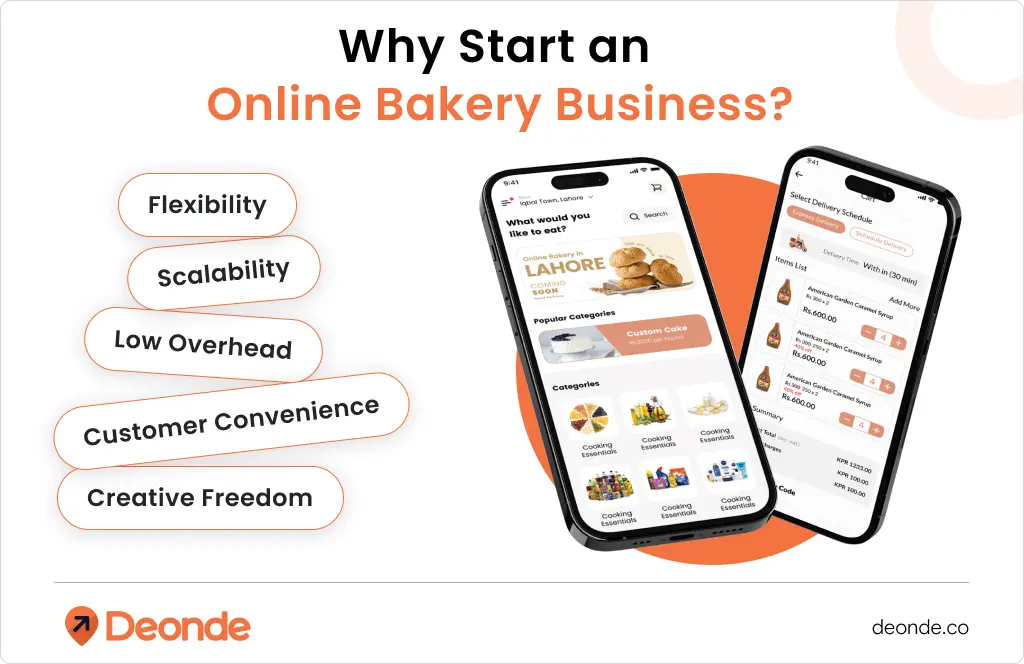
The online bakery business model offers unique opportunities for entrepreneurs. Unlike a traditional brick-and-mortar bakery, an online model lets you reach customers beyond your local area, reduce overhead, and leverage the power of online ordering. Here’s why this business is worth pursuing:
- Flexibility: Operate from your home kitchen (where regulations allow) or a commercial space, giving you control over your schedule.
- Scalability: Reach customers locally, regionally, or even nationally through shipping or delivery. Learn more about scalability to grow your business efficiently.
- Low Overhead: Eliminate costly storefront expenses like rent and utilities.
- Customer Convenience: Online ordering makes browsing, ordering, and paying easy from anywhere.
- Creative Freedom: Experiment with unique flavours, designs, and products to stand out.
The global bakery products market is estimated at USD 655.46 billion in 2025 and is expected to reach USD 854.63 billion by 2030, growing at a CAGR of 5.45% during the forecast period
Who Should Start an Online Bakery Business?
An online bakery business is ideal for:
- home bakers who are passionate about creating delicious treats and want to turn a hobby into a career.
- Existing bakery owners are looking to expand their reach by moving online.
- Entrepreneurs who want to start a small bakery business with minimal upfront investment.
- Creative individuals who love experimenting with recipes, designs, and branding.
- Tech-savvy bakers are comfortable managing online orders and digital marketing.
How to Start an Online Bakery Business: A Step-by-Step Guide
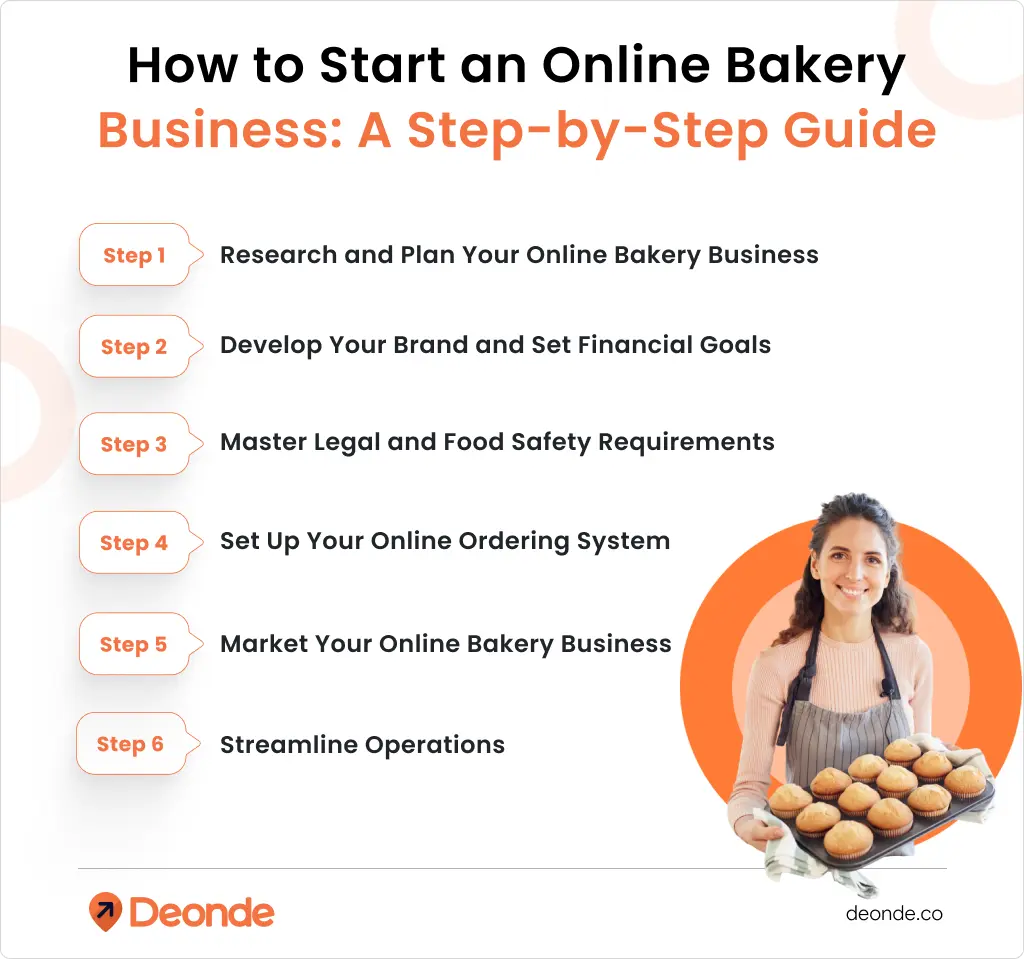
Step 1: Research and Plan Your Online Bakery Business
Before you preheat the oven, you need a solid foundation. A well-thought-out bakery business plan is crucial to avoid common pitfalls like underestimating costs or failing to understand your market.

- Define Your Niche:
- Who are you serving? Identify your target audience: busy professionals, families, or dessert enthusiasts looking for unique treats like gluten-free cupcakes or artisanal sourdough.
- What makes you stand out? Consider specialising in vegan pastries, custom cakes, or locally sourced ingredients to differentiate your brand.
- Why does this matter? A clear niche helps you attract loyal customers and stand out in a competitive market.
- Research the Market:
- Analyze competitors’ online bakeries to understand their offerings, pricing, and customer reviews.
- Use tools like Google Trends or social media platforms like X (formerly Twitter) to see what baked goods are trending (e.g., “cronuts” or “charcuterie cakes”).
- Identify opportunities, such as catering to dietary restrictions or offering subscription boxes for regular deliveries.
- Choose Your Products:
- Start with a small, focused menu to manage costs and ensure quality. For example, offer three signature items: cupcakes, cookies, and a specialty cake.
- Consider trends like plant-based desserts or low-sugar options to attract health-conscious customers.
- Test recipes to ensure consistency and taste. Gather feedback from friends or family before launching.
- Source Quality Ingredients:
- Use fresh, high-quality ingredients to create memorable flavors that keep customers coming back.
- Partner with local suppliers for unique ingredients, like organic flour or seasonal fruits, to enhance your brand story.
- Price Strategically:
- Calculate your total cost per item (ingredients, packaging, labor). A common goal is to have your food costs be about 25-35% of your final retail price. Price your items accordingly to ensure profitability.
- Research competitors’ prices to stay competitive without undervaluing your products.
Step 2: Develop Your Brand and Set Financial Goals
Your brand is the heart of your bakery; it’s what customers will remember when they’re craving a treat. Think of iconic brands like Krispy Kreme or Levain Bakery; their logos, colours, and vibes are instantly recognizable, and yours should be too.
- Create a Brand Identity:
- Choose a memorable name and logo that reflects your bakery’s personality.
- Develop a unique selling proposition (USP). For example, focus on vegan pastries, gluten-free cakes, or custom wedding desserts. Your USP will help you stand out.
- Financial Goals:
- Calculate startup costs: ingredients, packaging, website development, and delivery logistics.
- Estimate monthly expenses and revenue projections. For example, if you sell 100 cakes monthly at $30 each, that’s $3,000 in revenue, subtract costs to determine profitability.
- Explore funding options, such as small business loans or crowdfunding, to cover initial expenses.

Step 3: Master Legal and Food Safety Requirements
Failing to comply with regulations is one of the biggest mistakes when opening a bakery. Here’s how to stay compliant:
- Business License: Register your business as a sole proprietorship, LLC, or corporation, depending on your goals.
- Food Safety Permits: Obtain a food handler’s permit and ensure your kitchen meets health department standards. Home-based bakeries may need a cottage food license depending on your state or country.
- Insurance: Get liability insurance to protect against potential issues like foodborne illness claims.
- Labelling: Include ingredient lists, allergen warnings, and nutritional information on your packaging, as required by law.
- Taxes: Register for sales tax collection if your area requires it for online sales.
Step 4: Set Up Your Online Ordering System
A seamless online ordering system is the backbone of your online bakery. Customers expect a user-friendly experience, fast checkout, and reliable delivery or pickup options.
- How to Set Up Your Online Store:
- Choose a Platform like Deonde, which is perfect for integrating online ordering with in-person sales.
- Design Your Website: Include high-quality photos of your baked goods, clear product descriptions, and pricing. Add an “About” page to share your story and a “Contact” page for inquiries.
- Payment Processing: Secure payment gateways like Stripe or PayPal to used to accept credit cards, Apple Pay, and other methods.
- Shipping and Delivery: Decide if you’ll offer local delivery, curbside pickup, or nationwide shipping. For shipping, invest in sturdy, insulated packaging to ensure your baked goods arrive fresh. Research carriers like USPS or FedEx for cost-effective options.
Step 5: Market Your Online Bakery Business
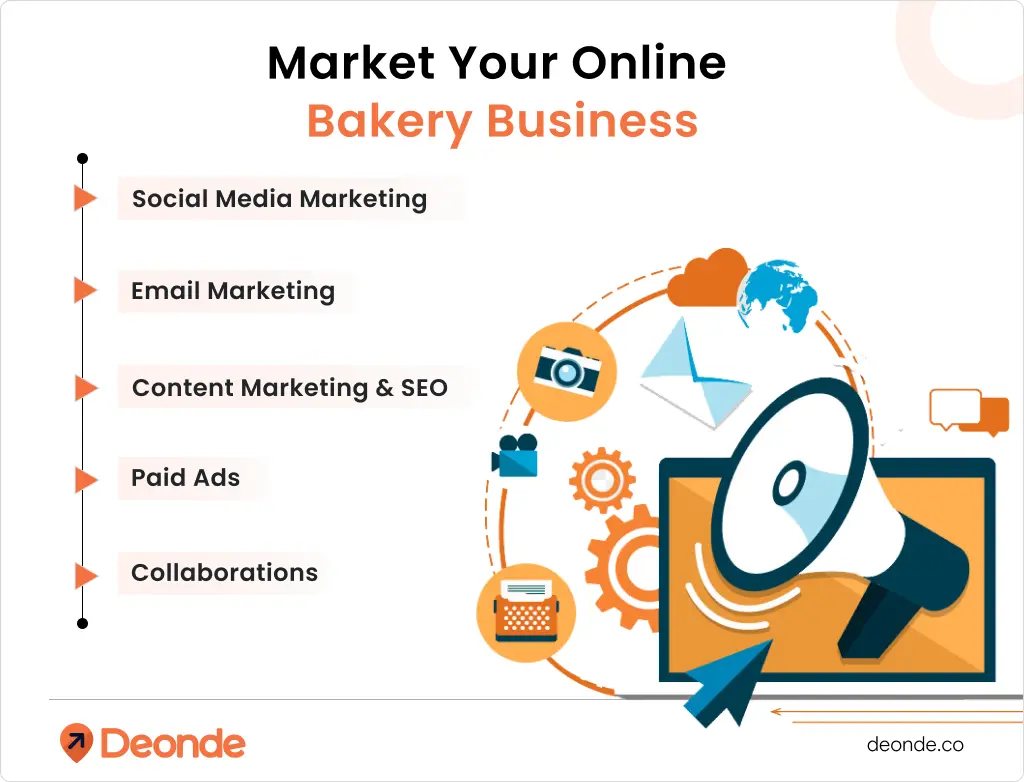
To grow your online bakery, you need a robust marketing strategy. Here’s how to attract customers:
- Social Media Marketing:
- Platforms like Instagram and Pinterest are perfect for showcasing your baked goods, posting mouthwatering photos, behind-the-scenes videos, and customer testimonials. Use hashtags like #OnlineBakery, #BakeryBusiness, and #CustomCakes.
- Email Marketing:
- Build an email list to send promotions, new product announcements, and seasonal specials.
- Content Marketing & SEO:
- Create blog content like “How I Started My Online Bakery Business” or “What Makes a Bakery Successful” to attract organic traffic. Use keywords like “online bakery business,” “bakery business online,” and “how to start a small bakery business” to improve search rankings.
- Paid Ads:
- Run targeted ads on Google or social media to reach local customers searching for baked goods.
- Collaborations:
- Partner with local businesses, such as coffee shops or event planners, to cross-promote your products.
Pro Tip: Offer a loyalty program to encourage repeat customers.
Step 6: Streamline Operations
Efficiency is key to a successful bakery. As orders grow, streamline your processes:
- Order Management: Use software like Deonde to track orders, inventory, and customer data.
- Production Schedule: Plan your baking schedule to avoid burnout. For example, bake in batches early in the morning to fulfil same-day orders.
- Customer Service: Respond promptly to inquiries and handle complaints professionally. A happy customer is a repeat customer.
What Makes a Bakery Fail? Common Pitfalls to Avoid
To ensure your online bakery business thrives, avoid these biggest mistakes:
- Poor Planning: Skipping a bakery business plan can lead to financial missteps or unclear goals.
- Inconsistent Quality: Customers won’t return if your baked goods vary in taste or appearance.
- Ignoring Regulations: Non-compliance with health codes can result in fines or shutdowns.
- Overpricing or Underpricing: Set prices that reflect your costs and market value. Underpricing devalues your brand, while overpricing can deter customers.
- Neglecting Marketing: Even the best baked goods won’t sell without visibility. Invest time and money in promoting your online bakery.
What Makes a Bakery Successful?
Here are the key factors that contribute to a thriving online bakery business:
- High-Quality Products: Consistently delicious and visually appealing baked goods keep customers coming back.
- Strong Branding: A memorable brand builds trust and loyalty.
- Excellent Customer Service: Quick responses, personalized touches, and reliable delivery create a positive experience.
- Adaptability: Stay on top of trends, like offering vegan or keto options, to meet customer demands.
- Financial Management: Track expenses, revenue, and profit margins to ensure long-term sustainability.
What Makes the Most Money in a Bakery?
To maximize profits, focus on high-margin products and services:
- Custom Cakes: Wedding cakes, birthday cakes, and specialty designs command premium prices.
- Subscription Boxes: Monthly dessert boxes encourage recurring revenue.
- Catering for Events: Offer bulk orders for parties, weddings, or corporate events.
- Classes or Kits: Sell baking kits or host virtual baking classes for additional income streams.
Conclusion: Take Your Bakery Online and Rise Beyond Borders
Whether you’re a passionate home baker dreaming of your first sale or a seasoned bakery owner ready to expand your reach, moving your bakery business online is a game-changer. It’s not just about selling baked goods, it’s about building a brand, reaching new markets, and creating experiences that people remember with every bite.
An online bakery business allows you to grow at your own pace, test new ideas, automate orders, and build a loyal digital customer base. From niche selection and branding to legal compliance and marketing, this guide equips you with the tools to launch and grow a successful online bakery.
The future of baking is digital. And the opportunity to turn your passion or physical store into a scalable online business has never been more accessible.
Start today. Bake bold. Sell smart. And turn your love for baking into a thriving, future-ready brand.

FAQ
Q1: Do I need a commercial kitchen for an online bakery?
A1: Not always. Many areas allow home-based bakeries under “cottage food laws.” Check your local regulations for specific requirements.
Q2: How much does it cost to start an online bakery?
A2: It varies. Starting from home can be low-cost, mainly for ingredients and basic web setup. A detailed financial plan will help you estimate your specific expenses.
Q3: How do I ensure baked goods stay fresh during shipping?
A3: Use sturdy, insulated packaging with gel packs or dry ice. Offer expedited shipping for perishable items and provide clear storage instructions.
Q4: What are budget-friendly marketing tips for an online bakery?
A4: Use free social media platforms with great photos. Build an email list for direct communication. Collaborate with local businesses and engage in online communities.