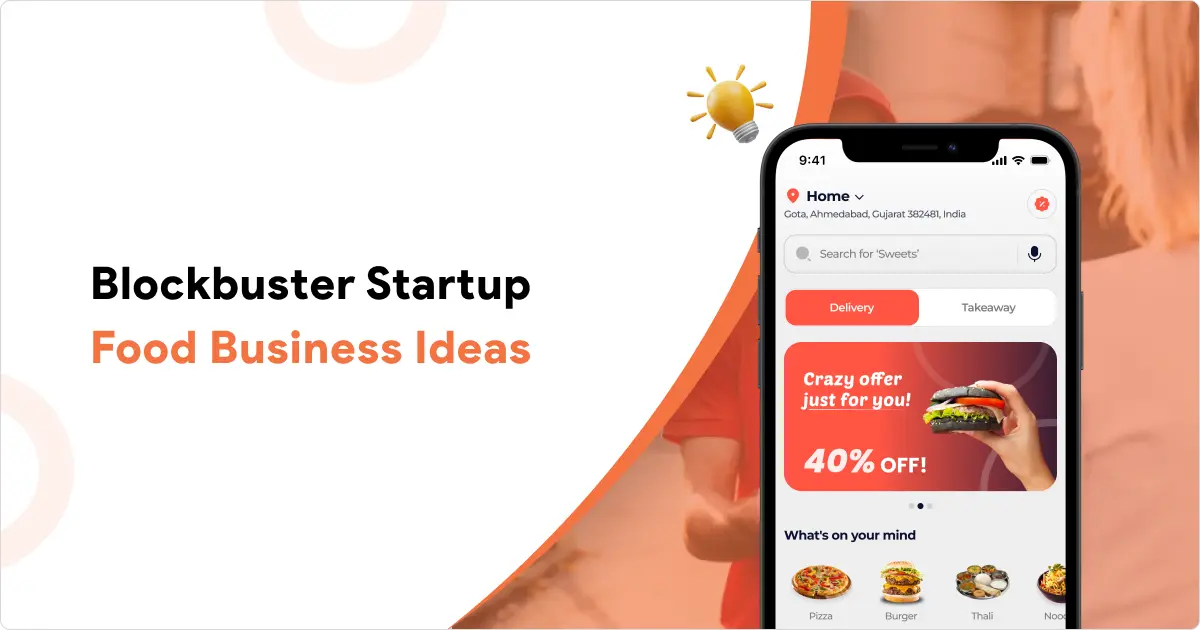
Food business is nowadays where it is turning out to be a basic need for the bachelors and our very own families. When we don’t have the mood to cook at home, all we do is order from any food delivery platform!
Starting a food venture today is no longer just about cooking skills—it’s about understanding demand, costs, and execution. In 2026, startup food business ideas are evolving with changing lifestyles, digital habits, and consumer expectations.
If you are looking to start a business in the food industry, these 8 unique food startup ideas will give you a new direction.
This guide is written to help aspiring founders explore food startup opportunities with clarity—not hype. It’s based on real-world trends, consumer behavior, and proven business models.
You’ll find ideas suitable for beginners, side hustlers, and serious founders looking to build sustainable food brands. Each section focuses on feasibility, demand, and long-term potential.
Let’s explore what truly works in 2026
Is It Affordable To Build An On-Demand Food Delivery Application Like Zomato & Swiggy?
Food Consumption Reality in 2026
Getting food during the weekdays is a big task, which leads to pressure as we Millennials are more often bachelors. And yes, we have a considerable number of Bachelors who are not often into cooking, and this online delivery system helps us out in various ways in these busy days, and we are able to find time for ourselves as well.
Instead of complex food models, people now naturally incline towards small, familiar food options like ice candy, home-made cakes, healthy salads, millet-based snacks, meal prep items, popcorn, hot dogs, or even a small food shop nearby.
These food ideas match daily consumption habits and help people save time while still enjoying fresh and comforting food. This is why such simple food businesses are becoming more relevant and practical in today’s lifestyle-driven food culture.
8 Best Startup Food Business Ideas in 2026
The market is shifting away from massive restaurants toward lean, hyper-focused models. If you are analyzing startup business food ideas that offer scalability without massive overheads, the following list provides a roadmap for sustainable growth.
1. Ice Candy & Gourmet Popsicles
The market for frozen treats is shifting from mass-produced sugar sticks to artisanal, fruit-forward experiences.
This concept revolves around “Guilt-Free Indulgence.” By utilizing real fruit pulps, coconut water, and organic sweeteners, you tap into the health-conscious demographic.
Due to the extremely low initial investment requiring little more than freezing equipment, this stands out as one of the most practical small food business ideas for students or bootstrapping entrepreneurs who want to test the market with minimal risk.
Why this works:
- Low production cost
- Easy to scale from home or cloud kitchen
- High impulse purchase rate
Frozen desserts are projected to reach USD 166.7 billion by 2030, globally 2030, driven by demand for on-the-go snacks and premium flavors.
Startup Inspiration: Skippi Ice Pops (India) or Popbar (Global) — Started small, now massive brands.
2. Home-made Cakes (The Bento Revolution)
Custom, home-made cakes appeal to customers for one simple reason: trust and personalization. People are willing to pay more for a taste that feels homemade rather than generic.
For creative entrepreneurs exploring flexible food startup business ideas at home, this model is the perfect entry point, as it allows you to operate a professional bakery brand without the burden of high commercial rent.
Why this works:
- High markup
- Repeat orders from birthdays, gatherings, and celebrations
- Word-of-mouth referrals boost local growth
Startup Inspiration: Theobroma started as a small family business before becoming a nationwide chain.
3. Healthy Salad Subscription Business
This model succeeds because it removes daily decision fatigue for the customer. Predictable demand allows founders to control procurement and reduce waste.
Corporate professionals are willing to pay a premium for health, but they lack the time to prepare it. By offering a subscription-based model, you turn a one-time purchaser into a recurring revenue stream.
Why this works:
- Subscription ensures predictable revenue
- Reduces food waste and over-production
- Appeals to urban professionals
Startup Inspiration: Caviar or Sweetgreen. Built entirely on the concept of fresh, sustainable bowls.
4. Millet-Based Snacks
With 2026’s focus on “return to roots” nutrition, millets are no longer alternative grains—they are mainstream superfoods. Launching a packaged goods brand (FMCG) focused on Ragi chips or Jowar puffs is one of the most unique startup ideas food industry veterans are betting on.
Millets are being recognized globally for health benefits, sustainability, and versatility. Turning millets into chips, bars, or baked treats taps into healthy snacking demand.
Why this works:
- Shelf-stable and scalable
- Appeals to health-conscious buyers
- Perceived as premium yet affordable
Demand for whole-grain and ancient grain snacks is increasing by 10–12% yearly in many markets.
Startup Inspiration: Soulfull (Tata Soulfull) or Kiru Millet Revolutionized traditional grains into modern tasty snacks.
5 Meal Prep Business
Meal prep is no longer a niche fitness trend; it’s a daily necessity for busy professionals and students who want healthy convenience.
Why this works:
- Predictable planning and cost control
- Repeat customers every week.
- Works well with subscription or bundle pricing
Ready-to-eat and pre-prepared meal segments are expected to grow above 7% CAGR by 2030 as eating habits shift.
Startup Inspiration: Food Darzeea and HelloFresh — Proved that people value the convenience of pre-planned nutrition over cooking from scratch.
6 Popcorn Business
Often overlooked, gourmet popcorn is a high-volume, low-cost product. By elevating the standard kernel with flavors like Cheese, Caramel, or Truffle, you create a premium snacking experience.
Popcorn is more than movie food. With flavored, gourmet, and even healthy variants, it’s becoming a snack category with broad appeal.
Why this works:
- Low startup cost
- Easy experimentation with flavors
- Good margins on flavored popcorn
Flavored popcorn sales have been growing double digits in urban markets due to OTT viewing culture and snack demand.
Startup Inspiration: Garrett Popcorn Shops (Chicago/Global) or Joe & Seph’s (UK) — Turned popcorn into a luxury gourmet gift item.
7 Hot Dog & Sausage Stand
In a cluttered market, specialization is key. A Quick Service Restaurant (QSR) model focused solely on premium Hot Dogs or Sausages offers speed and consistency that multi-cuisine restaurants cannot match. This lean business model reduces staff costs and kitchen complexity.
A hot dog or sausage stand focuses on simplicity and speed — two things customers always pay for in street food scenarios.
This lean business model reduces staff costs and kitchen complexity.
Why this works:
- Limited inventory, quick turnaround
- Works in high-footfall locations
- Simple training and low labor
Street food economics show 35–60% gross margins when operations are streamlined.
Startup Inspiration: Nathan’s Famous or Rollover — Proved that a single product focus can create a massive franchise.
8. Small Food Shop
A small food shop — offering reliable daily meals — taps into habit buying rather than one-time sales.
While big-box retail dominates, there is a resurgence of the “Neighborhood Deli.” A curated small food shop selling fresh sourdough, artisanal dips, and locally sourced dairy creates a community hub that online apps cannot replicate.
Why this works:
- Everyday demand
- Builds a local loyal customer base
- Easy to optimize over time
Local food retail continues to outperform boutique food brands in smaller cities due to repeat habitual purchases.
How Does This Even Work For The New Millennials Who Manage To Get Their Meal In The Office?
We have generally observed that the Human being is quite impatient. Hence, he/she demands more and more when in need and is never quite happy with it. So it is the case with the Office worker who gets bored by eating the same meal in the office mess, and somewhat bored with it.
However, as a food delivery startup, all we are supposed to do is ‘to bring the deliciousness back to the lives of working professionals’. It overall diminishes the hassle of food delivery. This business model clicks the right chords. This way, we can easily able to satisfy them to an extent.
1. All they need is to create an ID on the website or get themselves registered with the platform itself.
2. Every day after they arrive at the office, they will get a notification from the applications that are built by the company itself. Also, this will provide them with the menu for the day and will let the customer choose from the list.
3. Interested users will very likely get to place an order within the given periods and pay the amount via the available payment gateway. Hola, your order is easily placed with us, and you shall receive your order within the offices at a time at the respective offices at a given time.
Possible Sources of Income
Every entrepreneur in this world is more concerned about the returns he/she is going to get after the amount they are going to invest in the following idea. So is the case with the food business; the margin on food is always a concern for everyone related to or connected with it. Hence, it is still advisable to have multiple streams of revenue. However, everyone who starts as a customer has in mind that am I going to charge with the delivery fees as people or customer doesn’t find this relevant with the quality of food they are going to receive.
This is often advisable that consult or find customers from the same office to lower your logistics charges, which you are going to use it in the transportation.
These are the primary revenue models that such a startup can incorporate
1. Online Advertisements
Online advertisements are an essential tool which is booming in this age of technology. It is exactly where everyone is connected to the internet and find everything out of it. Be it from the shoes to the hair, bend everything they see here. And what better place than placing advertisements in these platforms which seeks the most amount of ads. Ads rather than those of any old-fashioned types, which are much more complicated and pricier.
2. Offline Advertisements
On the other hand, it is very costly, and nowadays as people more online, this idea may not prove likely. This is very much outdated than the other platforms in which online advertisements have taken over.
Conclusion
The food business in 2026 is all about smart ideas and quick service. You don’t need a big budget or a fancy restaurant to become successful.
Just pick one simple idea from this list, like the salad subscription or millet snacks. Start small from your home or a small shop, and focus on keeping the taste good.
Success comes to those who take the first step today. So, don’t wait for the perfect time, just start your journey now!
Other Popular Blogs
- Why Monthly Subscription Based Food Ordering And Delivery Solution Is In Demand?
- How Does Monthly Subscription Based Online Grocery Ordering Software Work?
- What Is Monthly Subscription Based (SaaS) Online Grocery Ordering Software?
- Five Reasons why moving to SaaS will be the best investment you make this year