Brazil is one of the biggest food delivery markets in the world. Millions of people order food online every day. Brazil’s online food delivery market generated approximately 6,715.7 million USD in 2024 and is expected to reach 11,695.4 million USD by 2030. It is the largest food delivery market in Latin America — accounting for over 70% of the region’s total volume.
For any restaurant owner or food entrepreneur looking at Brazil, knowing the top food delivery apps in Brazil is the first step. Some apps are huge — they serve thousands of cities. Others focus on one thing, like fast drinks or healthy meals.
In this guide, you will learn about the 15 best food delivery apps in Brazil. For each app, we cover when it started, how it works, and why people use it.
Why the Brazil Food Delivery App Market Is Different
Brazil has a population of over 213 million, with 87% to 89% living in urban areas. Smartphone penetration is high. Internet access is improving. These factors make Brazil a natural fit for on-demand delivery Brazil businesses.
The market is also unusual in one way. One app — iFood holds over 80% of the digital ordering market. No other country in Latin America has such concentrated dominance. That changes the dynamics for restaurant owners and new platforms entering the space, mirroring broader shifts documented in recent global food delivery market trends and research.
If you are building a food delivery business in Brazil, understanding this concentration helps you decide: join the dominant platform, build your own branded app, or use both. Learn more about third-party vs direct restaurant ordering before you decide.
Top 15 Food Delivery Apps in Brazil — Quick Overview
| # | App | Category | Best For |
| 1 | iFood | Multi-restaurant marketplace | Widest restaurant choice |
| 2 | Rappi | Super app | Food + grocery + instant delivery |
| 3 | Aiqfome | Regional marketplace | Smaller cities outside São Paulo |
| 4 | Zé Delivery | Beverage delivery | Beer, drinks, cold beverages |
| 5 | Keeta | New entrant marketplace | High discounts, competitive pricing |
| 6 | Daki | Quick commerce | Groceries in 15 minutes |
| 7 | Delivery Much | Regional marketplace | Mid-size cities, value orders |
| 8 | Food To Save | Anti-food waste app | Surplus meals at discounts |
| 9 | McDonald’s (Méqui) | Brand-owned app | McDonald’s orders only |
| 10 | Burger King Brasil | Brand-owned app | BK orders, loyalty points |
| 11 | Habib’s | Brand-owned app | Brazil’s biggest fast food chain |
| 12 | Bob’s Brasil | Brand-owned app | Local burger chain orders |
| 13 | QueroDelivery Labs | White-label ordering | Independent restaurant owners |
| 14 | Liv Up | Healthy food delivery | Organic, clean-label meals |
| 15 | Papila | Local discovery app | Neighborhood restaurant ordering |
The 15 Best Food Delivery Apps in Brazil (2026) to Dominate the Market

We’ve listed the 15 best food delivery apps in Brazil based on our research that offer speed, convenience, and variety. Whether you’re looking for a full-course dinner or a quick snack, these platforms deliver more than just food—they deliver comfort.
1. iFood
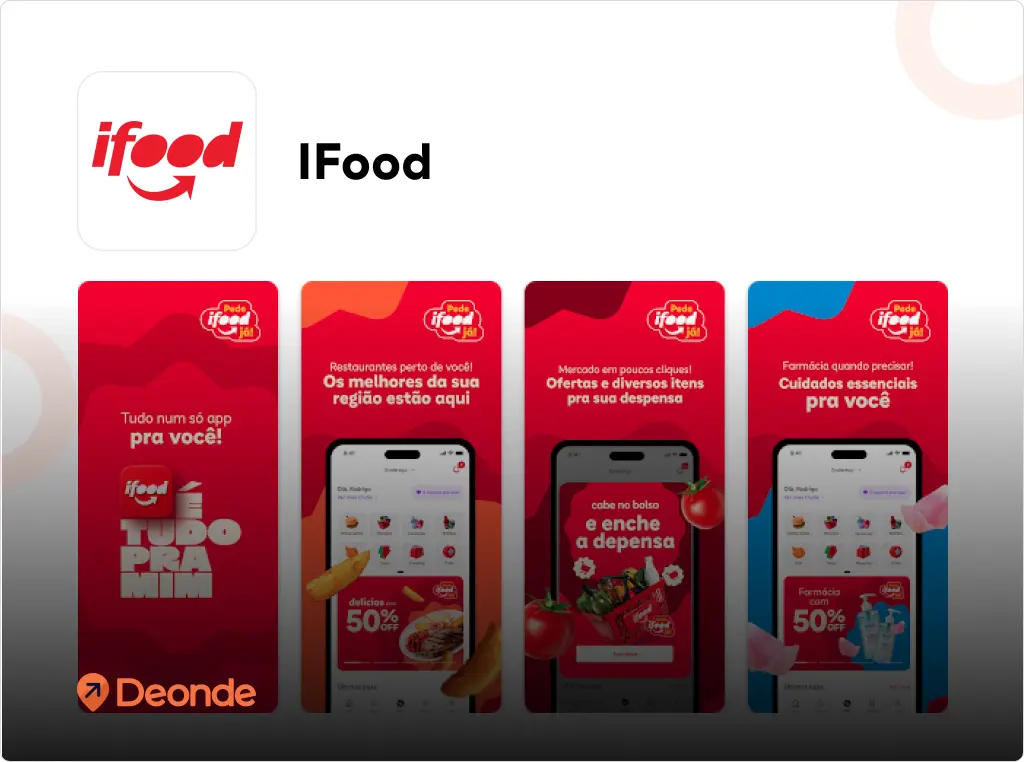
iFood Brazil is the undisputed market leader. It holds over 80% of Brazil’s food delivery app market share. As of 2024, it operates in more than 1,500 cities, works with over 400,000 restaurant and merchant partners, and processes over 100 million orders per month.
iFood was founded in 2011 in Osasco, São Paulo. It is jointly owned by Dutch investment firm Prosus (a subsidiary of South Africa’s Naspers) and Brazilian company Movile. In FY2024, the platform generated revenue of $1.2 billion USD. If you want to break down its monetization levers and commission structures, you can take a look at our breakdown of the iFood business model and how it generates revenue.
In May 2025, iFood and Uber announced a strategic partnership. Uber users in Brazil can now order food directly through iFood from within the Uber app. This integration makes iFood even harder to compete with.
For restaurant owners: Listing on iFood gives you access to the largest customer base in Brazil. But expect to pay commissions of 12–27% depending on your category and region. That is why many restaurants now pair iFood with their own direct ordering system to protect margins.
2. Rappi Brazil
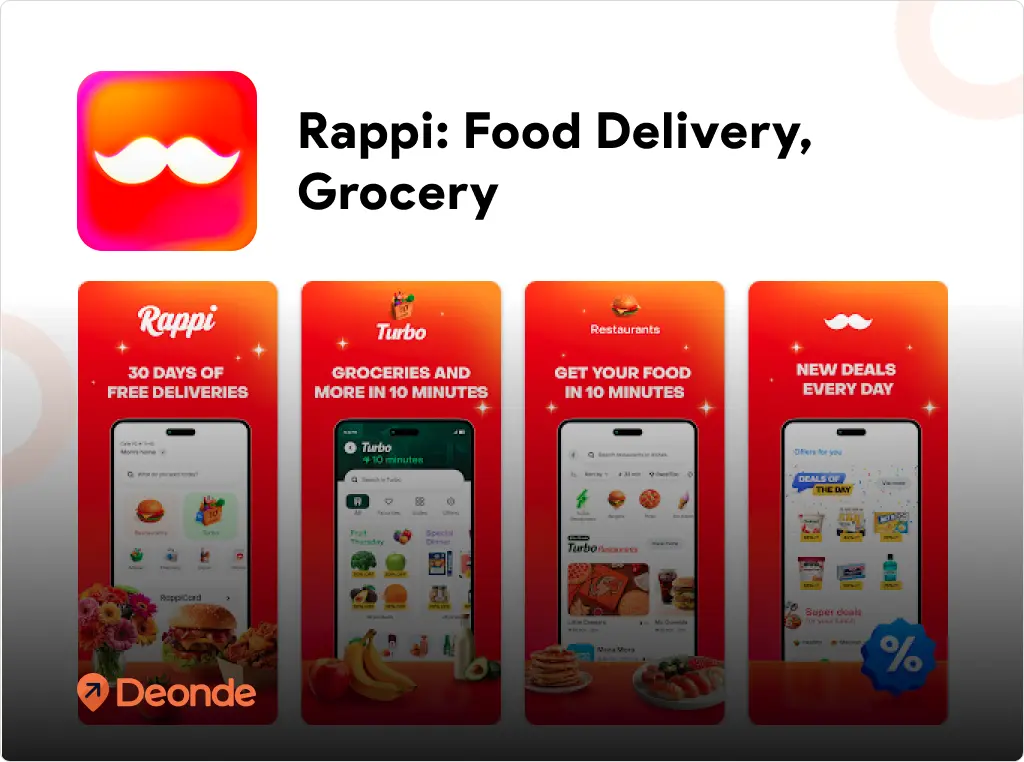
Rappi was started in 2015 in Colombia by three friends: Simon Borrero, Sebastian Mejia, and Felipe Villamarin. The name ‘Rappi’ comes from the Spanish word for ‘fast.’
Rappi is a Colombian-founded super app that operates across Latin America. In Brazil, it functions as a high-growth on-demand delivery platform covering food, groceries, pharmaceuticals, and even cash withdrawal services.
Rappi holds a smaller share of Brazil’s food delivery market compared to iFood. But its strength is breadth — it is one of the few platforms in Brazil that genuinely competes as a super app, rather than purely a food ordering service.
Rappi introduced its own express delivery vertical — Rappi Turbo — targeting grocery delivery within 10 minutes. This puts it in direct competition with quick commerce players. Learn more about the Q-Commerce business model that powers this segment.
3. Aiqfome
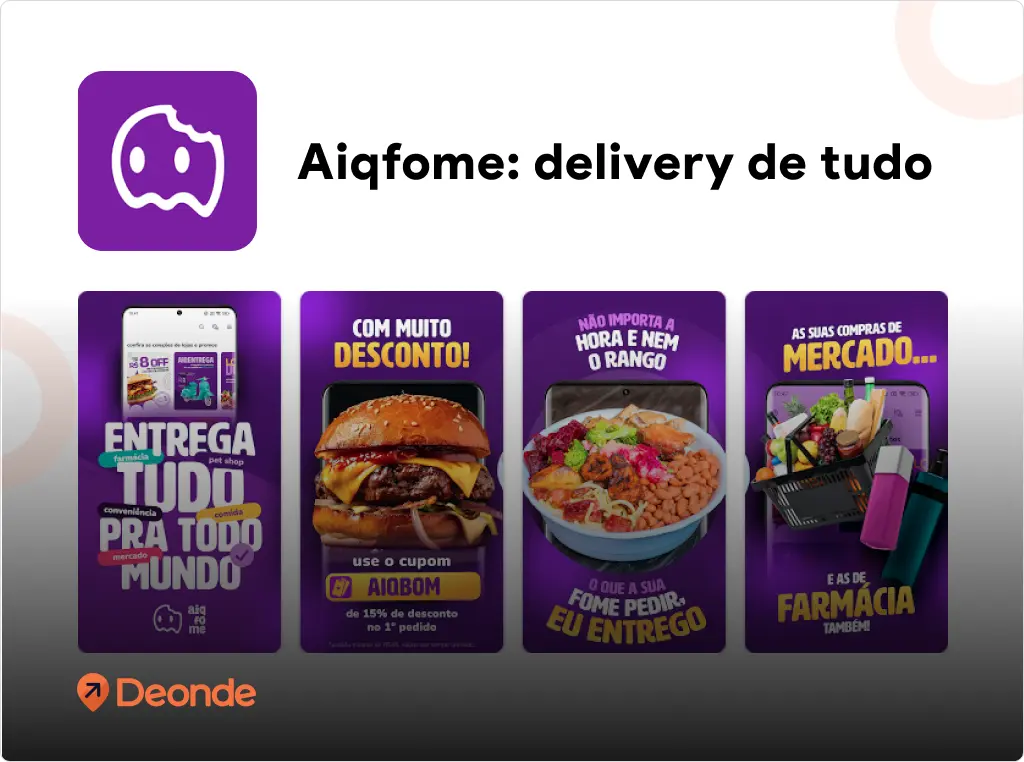
Aiqfome is the second-largest food delivery app in Brazil by active users. It operates in over 700 cities — primarily mid-sized cities that iFood underserves or charges higher commissions in.
The app targets regions in the South and Southeast of Brazil. Its lower commission structure attracts independent restaurants that find iFood’s fees difficult to absorb. Aiqfome processes several million orders monthly, making it a serious contender outside the major metro areas.
For restaurant owners in smaller Brazilian cities: Aiqfome is worth serious consideration as a primary channel — not just a backup to iFood.
4. Zé Delivery

Zé Delivery was created in 2016 by AB InBev — the world’s biggest beer company. The app delivers drinks to your door. Beer, wine, soft drinks — all at the same price as a supermarket.
Zé Delivery specializes in beverage delivery — primarily beer, soft drinks, and cold snacks. It was created by AB InBev, the world’s largest brewer. This gives the app a direct supply chain advantage that no other platform in Brazil can match.
In Brazil, beverage delivery is a standalone, high-frequency category. Zé Delivery has built its entire product experience around delivering cold drinks fast — often within 30 minutes. It is not a full food delivery platform. But for drinks-focused businesses, it is a strong channel to be listed on.
5. Keeta Brazil
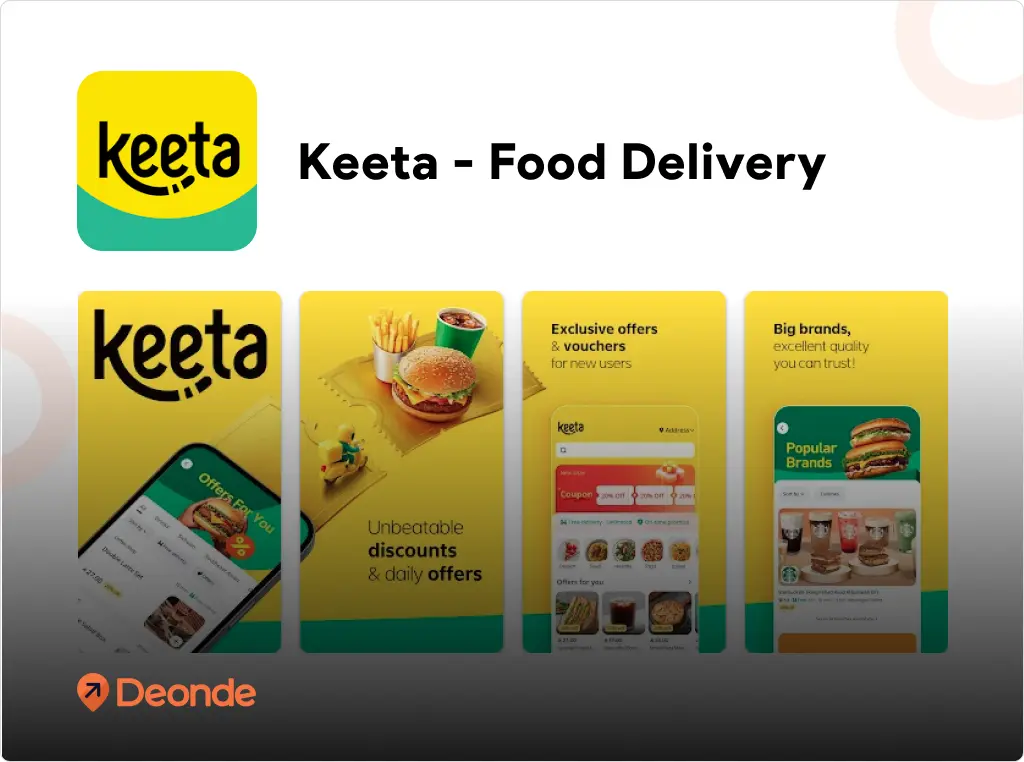
Keeta is a food delivery app launched in Brazil by Meituan — China’s dominant food delivery company. Meituan invested over $1 billion USD in its Brazilian expansion. Keeta entered Brazil in 2024, targeting São Paulo first with aggressive discounts and zero delivery fee promotions.
Keeta’s entry is significant. Meituan has deep experience scaling delivery platforms in high-density urban markets. Its technology — particularly logistics routing and driver dispatch systems — is among the most advanced globally.
Keeta is currently building market share. For restaurants, it represents a new channel with potentially lower commissions than iFood during its growth phase.
6. Daki — Groceries in 15 Minutes
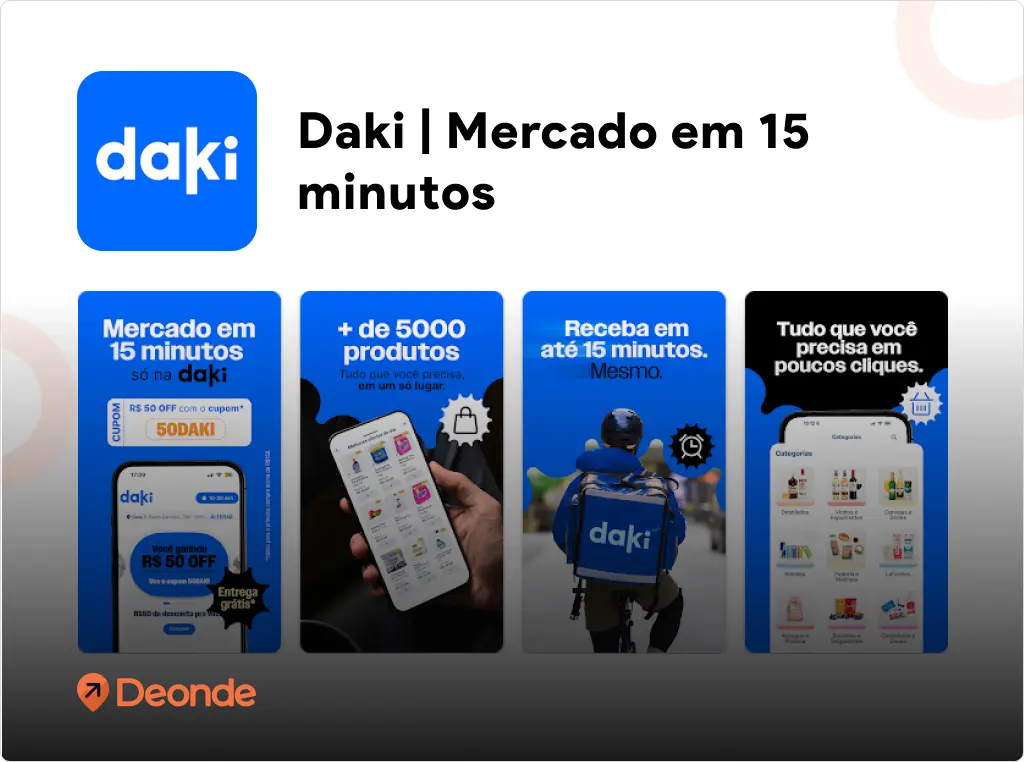
Daki was started in January 2021 by three people: Alex Bretzner, Rafael Vasto, and Rodrigo Maroja.
Daki is a Brazilian quick commerce startup. It operates dark stores — small fulfilment warehouses in residential areas — and promises grocery delivery in under 15 minutes.
This model is identical to what Blinkit and Zepto do in India, and what Gopuff does in the United States. Daki is one of the leading pure-play quick commerce platforms in Brazil’s food delivery app landscape. It is not a restaurant marketplace — it focuses only on everyday grocery and essentials delivery.
The growth was very fast. Orders grew 8 times in just the first two quarters. In December 2021 — only 11 months after starting — Daki was worth $1.2 billion. That made it one of the fastest companies ever to reach that value in the Americas.
7. Delivery Much
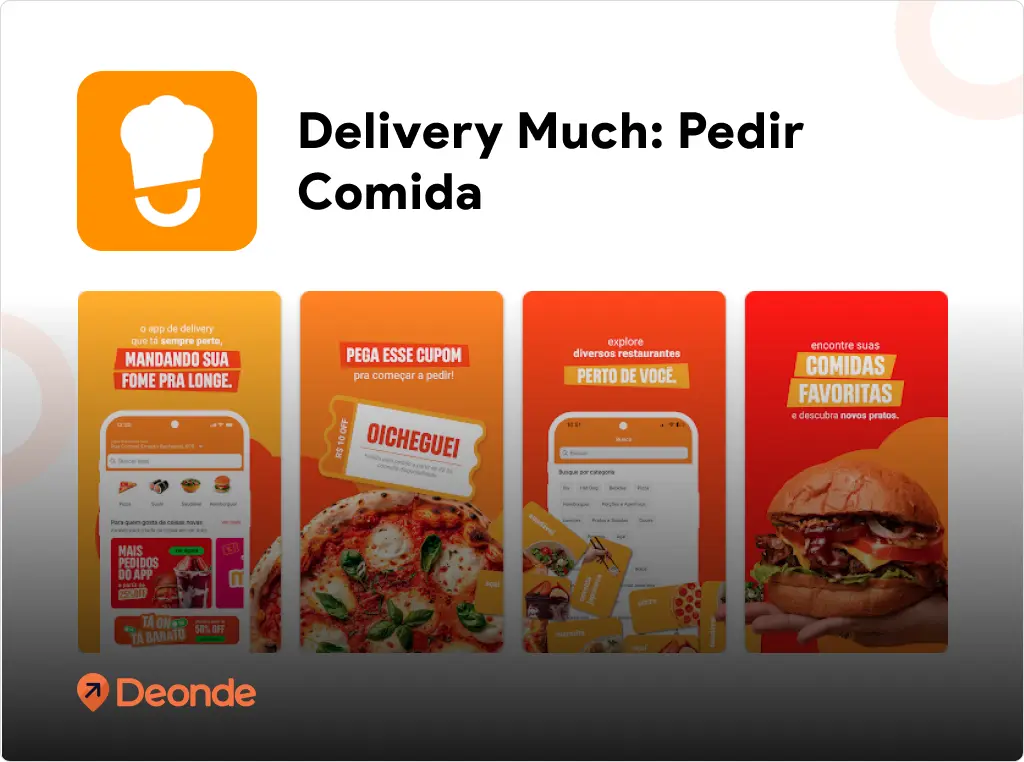
Delivery Much is a Brazilian online food delivery platform operating in mid-sized cities. It focuses on the interior of Brazil — the states and towns that the national platforms have historically served poorly.
The platform has a strong local presence in the South, Southeast, and Midwest regions. Restaurants on Delivery Much typically serve a lower average order value. But the lower competition in these regions means higher visibility per listing.
8. Food To Save
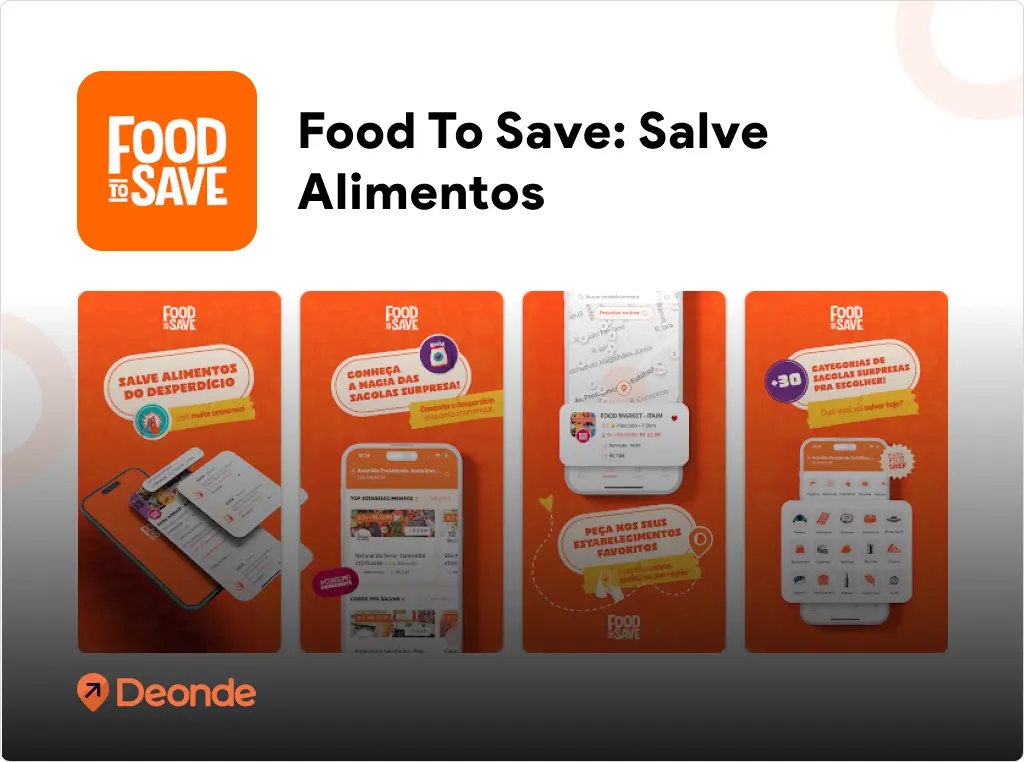
Food To Save is an anti-food waste marketplace. Restaurants and cafes list unsold meals at the end of the day — typically at 50–70% discount. Customers buy these “surprise bags” and pick them up directly from the outlet.
This model reduces food waste and creates a new, low-cost customer acquisition channel for restaurants. Food To Save is growing fast in São Paulo, Rio, Curitiba, and other major cities. It is not a replacement for your primary delivery channel — but it is a smart way to move surplus stock without discounting your brand.
9. McDonald’s Brazil (Méqui App)
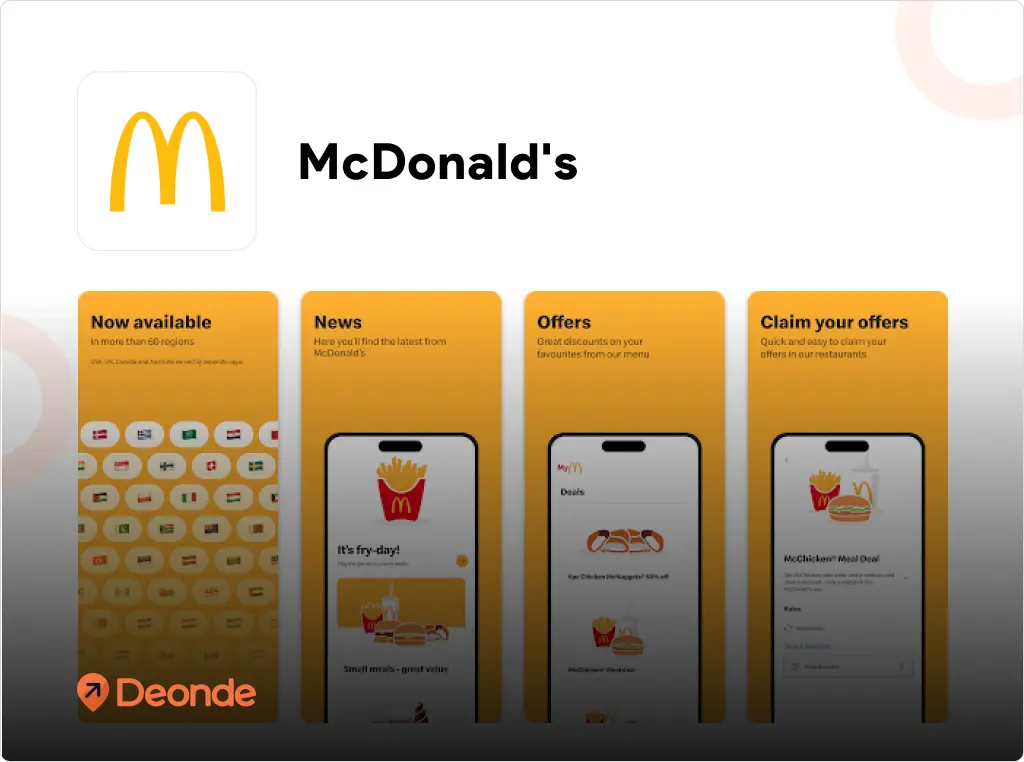
McDonald’s Brazil runs its own branded delivery app — called Méqui. This is one of the clearest examples of a large food brand owning its customer relationship rather than relying solely on third-party platforms.
The Méqui app offers exclusive deals, loyalty points, and a pre-ordering feature. McDonald’s Brazil has invested heavily in its own ordering infrastructure — and the result is a loyal, repeat customer base that orders directly, not through iFood.
This is the direction most serious food brands are moving. Owning your app means owning your customer data. If you want to build a branded app like this, a mobile app ordering system from Deonde gives you a launch-ready solution without building from scratch.
10. Burger King Brasil App
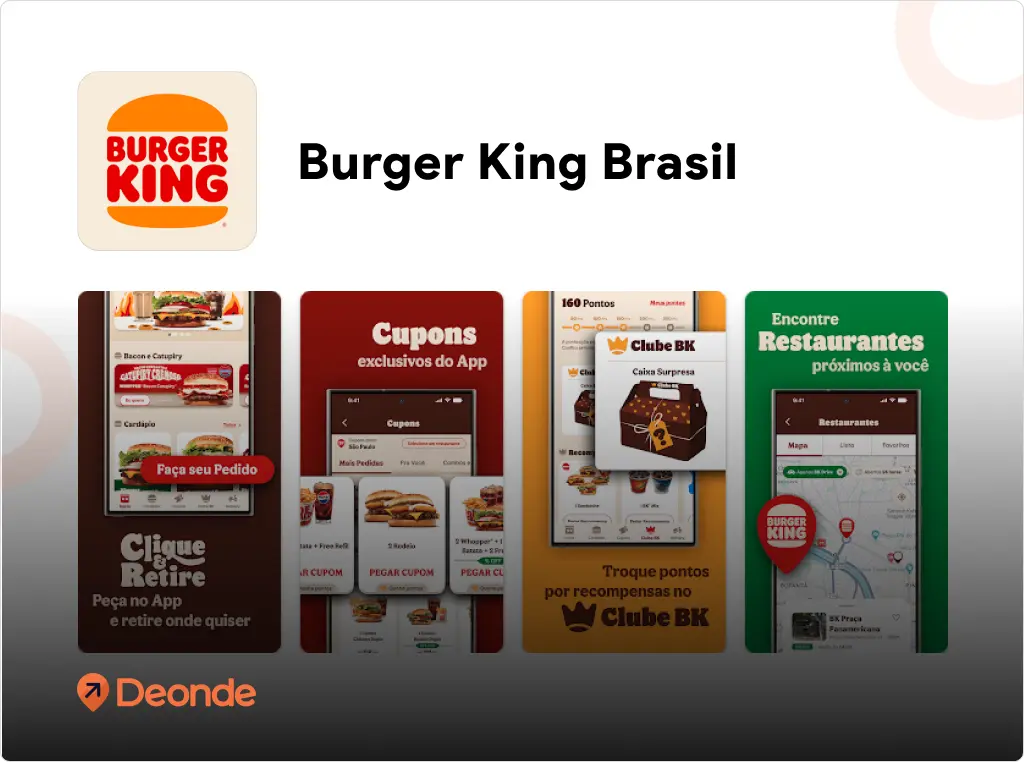
Burger King Brasil’s app focuses on delivery and in-store mobile ordering. It offers exclusive app-only promotions and a points-based loyalty program. Like McDonald’s, BK Brasil is building a direct customer relationship that does not depend on third-party commissions.
The Burger King Brazil app has exclusive deals and promotions. It is one of the most active fast food apps in the country when it comes to digital marketing campaigns.
11. Habib’s App
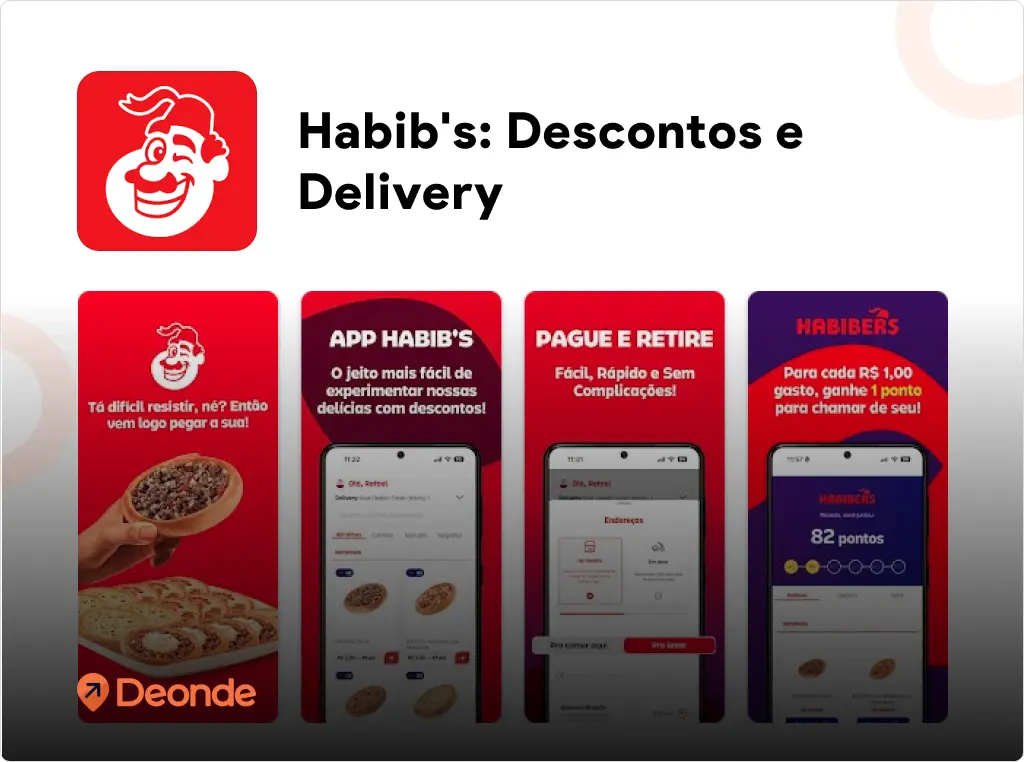
Habib’s is one of Brazil’s largest homegrown fast food chains. It serves Arab-Brazilian cuisine — esfihas, kibes, and pastéis — at low price points. The Habib’s app handles delivery, table reservations, and loyalty rewards.
Habib’s is a strong example of an affordable fast food brand that built its own ordering infrastructure. Its app allows it to run promotions without paying platform commissions on every order.
12. Bob’s Brasil App
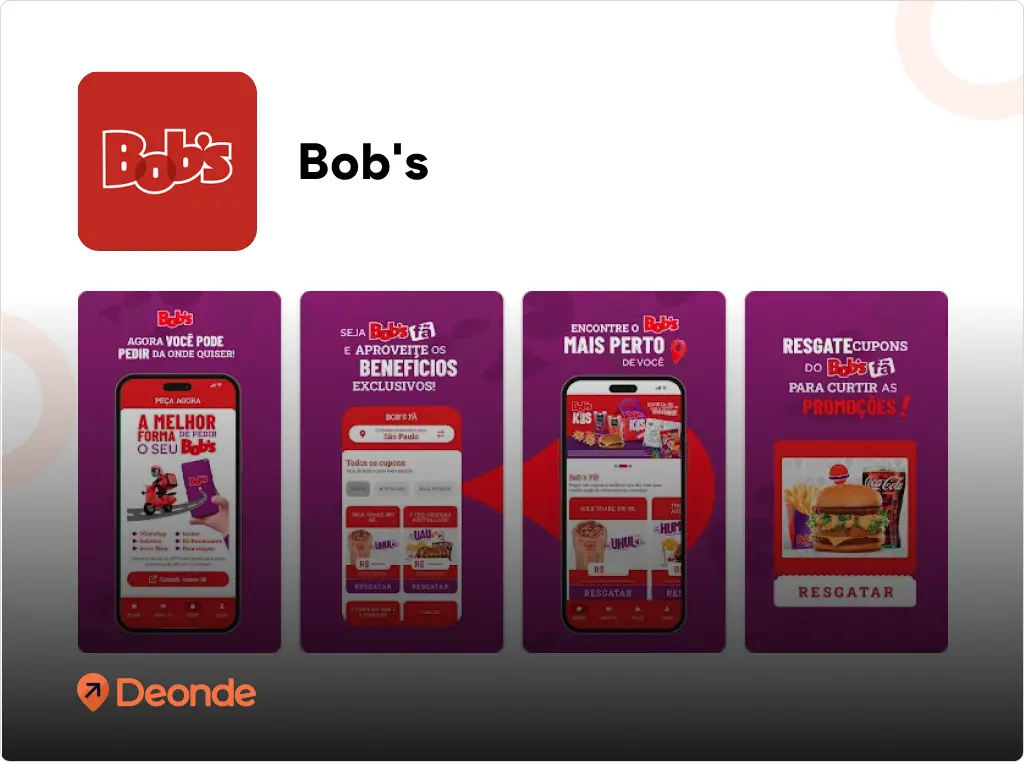
Bob’s is a Brazilian burger chain founded in Rio de Janeiro in 1952. It is one of Brazil’s most recognised fast food brands. The Bob’s app offers delivery, coupons, and a digital menu — supporting both home delivery and in-store ordering.
13. QueroDelivery Labs
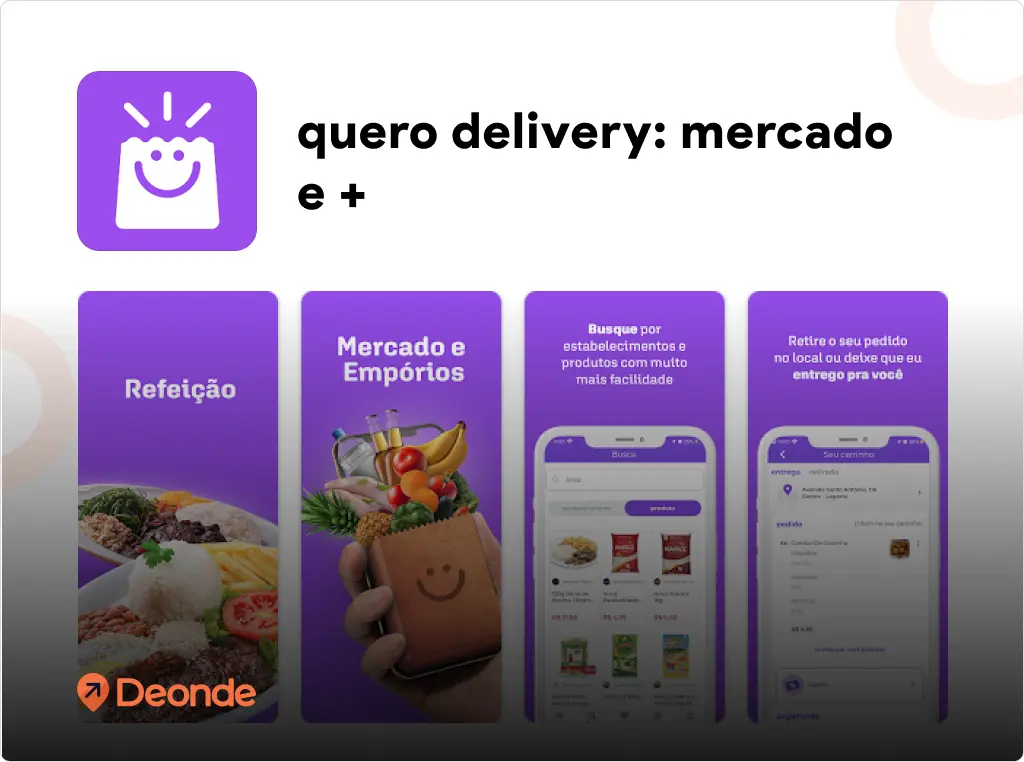
QueroDelivery Labs is a white-label ordering platform designed for independent restaurants in Brazil. It lets restaurants create their own branded online ordering channel — separate from iFood — so they can accept orders without paying marketplace commissions.
This is the same model Deonde offers globally. If you are a restaurant owner in Brazil who wants to own your delivery channel, a white-label store gives you that control.
14. Liv Up — Healthy Food Delivery

Liv Up is a premium healthy food delivery brand in Brazil. It delivers fresh, organic, and ready-to-eat meals directly to consumers. Liv Up has built a direct-to-consumer subscription model — customers sign up for weekly or monthly meal plans rather than ordering one-off.
This approach works well in Brazil’s growing health-conscious urban segment — particularly in São Paulo. The subscription model creates predictable revenue and reduces reliance on discounting. Read more about how subscription models work in delivery businesses.
15. Papila
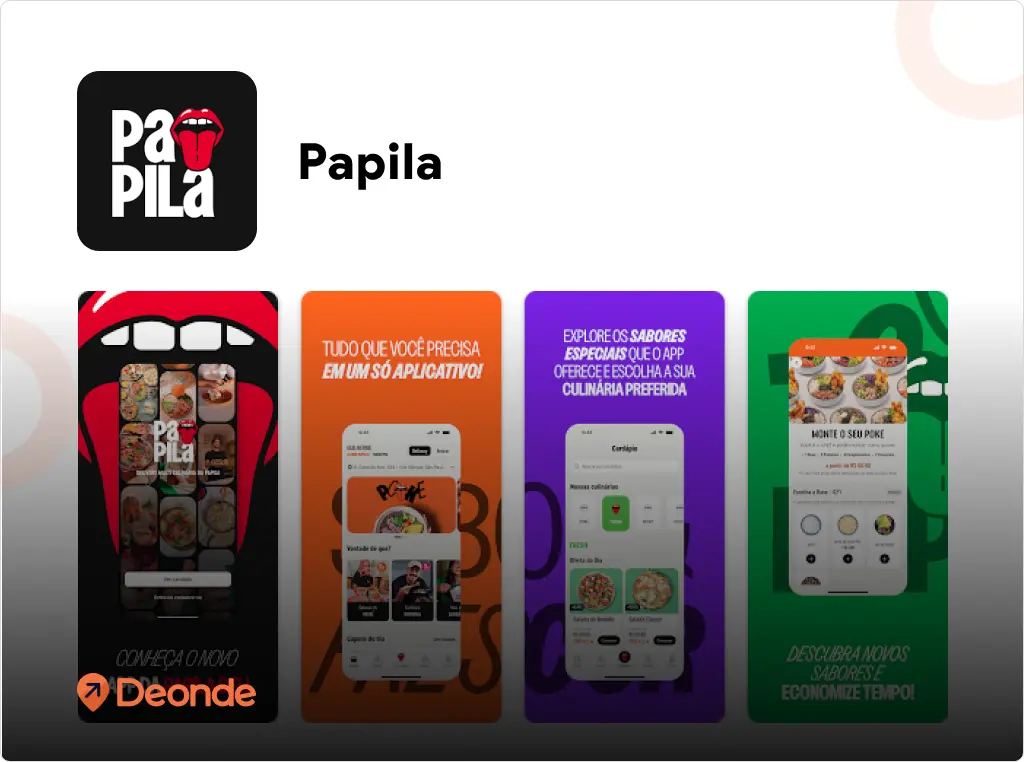
Papila is a neighbourhood-focused food ordering app in Brazil. It focuses on local discovery — helping customers find nearby restaurants and place direct orders. Papila competes at the hyperlocal level, serving specific neighbourhoods rather than entire cities.
This hyperlocal approach has a clear advantage: lower delivery times, more personal service, and stronger community ties. Learn more about the hyperlocal delivery model and why it is growing.
Which Apps Are Best for Niche Delivery Categories in Brazil?
Not every app in Brazil competes on restaurant delivery. The market has strong niche segments with dedicated leaders.
- Beverages: Zé Delivery leads with supermarket-priced drink delivery.
- Healthy meals: Liv Up is the go-to for nutritious, ready-to-eat options.
- Surplus food: Food To Save is the only major platform in the sustainability space.
- Ultra-fast grocery: Daki’s 15-minute delivery model is unique in Brazil.
- Local restaurants: Aiqfome and Delivery Much focus on markets iFood underpenetrates.
Niche apps often outperform general platforms in their category. A focused vertical builds stronger loyalty than trying to compete with iFood head-to-head. If you are entering the market, a niche position is your best starting strategy.
How Can You Launch Your Own Food Delivery App in Brazil?
Brazil’s delivery market has clear white space outside major metros. Hundreds of mid-sized cities have weak delivery infrastructure. That gap is your opportunity.
You do not need to build a platform from scratch. A ready-made food delivery software lets you launch fast without custom development costs.
Here are the steps to get started:
- Choose your delivery vertical — restaurant, grocery, beverage, or healthy food.
- Define your delivery zones and onboard local restaurant partners.
- Set up a driver management and dispatch system.
- Launch a branded customer ordering app and web portal.
- Use analytics to track orders, driver performance, and customer retention.
Deonde provides all these tools under one platform. You can build a business comparable to Delivery Much or Aiqfome at a fraction of the cost. Check our Rappi clone solution if you want to launch a super-app model.
Final Thought
Brazil’s food delivery market is one of the fastest-growing in the world. iFood dominates — but the landscape is shifting. Keeta (backed by Meituan’s $1 billion investment) is entering the market. Independent platforms like Aiqfome and Delivery Much are growing in smaller cities. And major chains are building their own ordering apps to stop paying third-party commissions.
If you are a restaurant owner or food entrepreneur in Brazil, the opportunity is real. The question is whether you want to rent your customers from a marketplace — or build a direct relationship. A commission-free ordering system gives you that second option.

Frequently Asked Questions
1. Which food delivery app is most popular in Brazil?
iFood is the most popular food delivery app in Brazil. It has about 83% of the market. It works in over 1,000 cities and delivers food, groceries, medicines, and pet items.
2. Does DoorDash work in Brazil?
No. DoorDash is a US app and does not work in Brazil. Brazilians use iFood, Rappi, and local apps instead.
3. How do food delivery apps work in Brazil?
You open the app, choose a restaurant, and place your order. The restaurant makes the food. A delivery driver picks it up and brings it to your door. The app charges the restaurant a fee for each order. That fee is usually between 12% and 30%.
4. Is Uber Eats still available in Brazil?
Uber Eats Brazil exited the market in 2022. In May 2025, Uber and iFood announced a partnership. Uber app users in Brazil can now order food through iFood within the Uber app. But Uber Eats as a standalone platform no longer operates in Brazil.
5. Is there a 15-minute delivery app in Brazil?
Yes. Daki delivers groceries in 15 minutes or less. It uses small local warehouses to get orders ready fast. Rappi also offers 10-minute delivery in some cities through a service called Rappi Turbo.