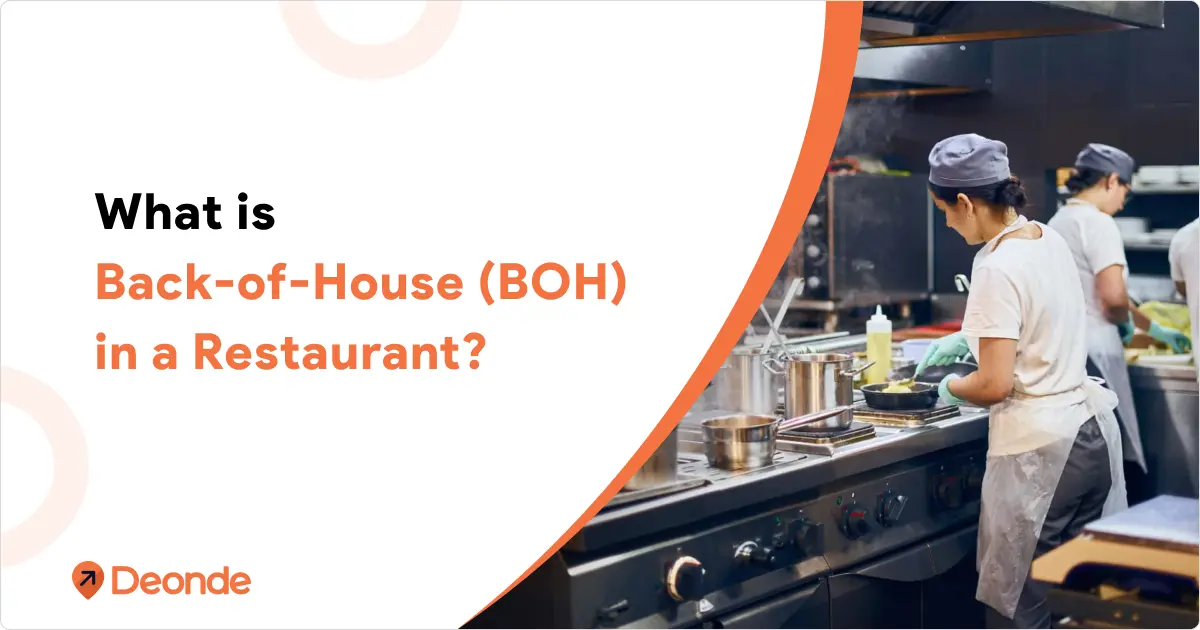
Ever paused to think about the magic that happens before your plate arrives at the table? You see the smiling faces and inviting ambiance of the Front-of-House (FOH), the part of the restaurant where customers dine and interact. But there’s a buzzing, unseen world working tirelessly behind the curtain.
This hidden powerhouse is the Back-of-House (BOH) in a restaurant. It’s the very core of all restaurant operations, making that delicious meal a reality. Truth be told, without a smooth BOH, no restaurant can truly shine.
Imagine it as the restaurant’s engine room, orchestrating every detail. Raw ingredients transform into culinary delights here. Inventory management is handled with precision, and hygiene standards are meticulously maintained. It’s where art meets efficiency.
The BOH roles and responsibilities demand incredible focus and teamwork. It’s a place where culinary staff move with practiced rhythm, often under high pressure. Their dedication directly shapes your dining experience.
In today’s competitive food scene, an optimized Back-of-House workflow isn’t just an advantage; it’s essential. It silently builds a restaurant’s reputation. It ensures every guest consistently enjoys a top-notch meal and a memorable guest experience.
Ready to lift the veil and discover the fascinating inner workings of the Back-of-House? Let’s take a closer look at what truly makes a great restaurant run.
What Exactly is the Back-of-House in a Restaurant?
Knowing who does what helps you appreciate the teamwork behind your meal. The Back-of-House in a restaurant is a complex ecosystem. Various roles intertwine here, each crucial for smooth operations. Their dedication forms the backbone of success. Understanding these BOH roles and responsibilities is key.
This includes:
- The kitchen
- Storage areas (for food, beverages, and supplies)
- Staff rooms
- Often, the office space for administrative tasks
It’s where all the crucial groundwork happens. Everything from receiving ingredients to washing dishes falls under its umbrella.
The BOH is vital for maintaining standards. It ensures quality control for food preparation and efficiency in service. Without a strong BOH, the FOH cannot deliver on its promises.
Who Works in the Back-of-House? Key Roles and Their Responsibilities
The Back-of-House in a restaurant is a complex ecosystem. Various roles intertwine here, each crucial for smooth operations. Their dedication forms the backbone of success. Understanding these BOH roles and responsibilities is key.
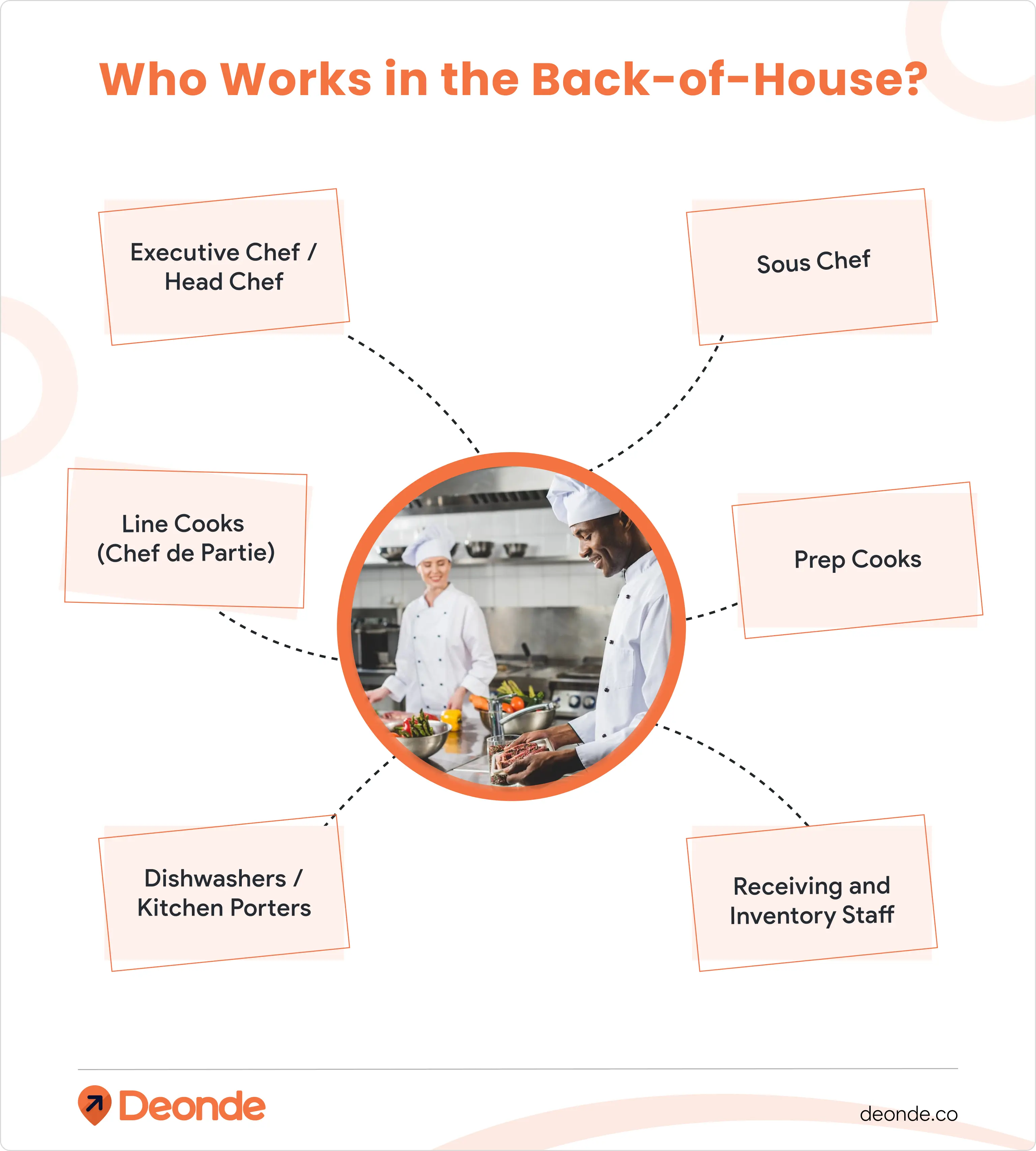
- Executive Chef / Head Chef: These chefs captain the entire kitchen operation. Their responsibilities include menu creation and staff management. They also ensure food quality and control costs. They set the tone for the entire culinary staff.
- Sous Chef: In the Executive Chef’s absence, the Sous Chef leads the kitchen. They supervise daily operations and guide the Line Cooks. They ensure every dish is prepared to perfection.
- Line Cooks (Chef de Partie): Each Line Cook has a specific station, like Grill or Sauté. They are experts in their sections. They assemble dishes with speed and accuracy. Their work is central to food preparation.
- Prep Cooks: Prep Cooks handle the crucial first steps in dish preparation. This includes washing, cutting vegetables, and preparing sauces. Their meticulous work boosts overall kitchen efficiency.
- Dishwashers / Kitchen Porters: Often undervalued, these roles are indispensable. They keep dishes clean and sanitize kitchen equipment. Their work is vital for upholding food safety.
- Receiving and Inventory Staff: These individuals manage all incoming supplies. They check quality and properly store items. Effective inventory management for restaurants minimizes waste and ensures the kitchen runs smoothly.
Why the Divide? Understanding the Difference Between FOH and BOH
A restaurant operates like a living organism. The Back-of-House and Front-of-House (FOH) are distinct yet interconnected systems. Seamless coordination between them defines the customer’s guest experience. Understanding the distinction between these two areas is fundamental to restaurant success.
The FOH is where customers dine and interact. It’s about service and atmosphere. The BOH, however, is the engine producing the product.
Both must communicate constantly. For example, when you place an order with your server (FOH), it’s immediately relayed to the kitchen (BOH). The BOH then prepares the dish, which is sent back to the FOH for service. This tight relationship ensures a positive dining experience.
Back-of-House Workflow: How a Restaurant Kitchen Operates Efficiently?
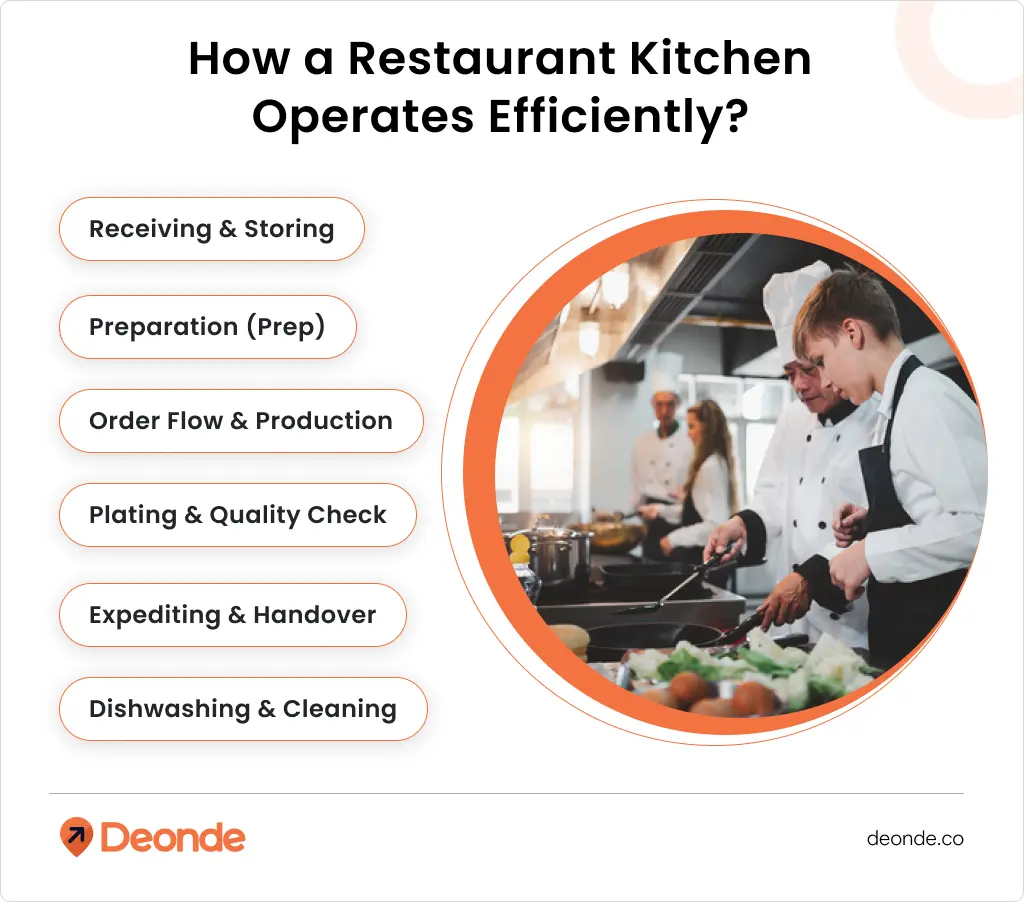
A well-orchestrated BOH workflow is the secret to any successful restaurant. Every step is meticulously designed for efficiency and quality in restaurant operations.
1. Receiving & Storing: The day begins by receiving fresh ingredients. Items are checked for quality. Perishable goods are immediately stored in temperature-controlled units.
2. Preparation (Prep): Before service, Prep Cooks get all ingredients ready. This includes chopping and portioning. This “mise en place” ensures faster order execution for the culinary staff.
3. Order Flow & Production: Customer orders are sent to the BOH via a Kitchen Display System (KDS) or printed Kitchen Order Ticket (KOT). Line Cooks quickly prepare dishes at their stations. Timing is crucial for simultaneous readiness. This is core to kitchen operations.
4. Plating & Quality Check: Prepared components are artfully assembled on a plate. The Sous Chef or Head Chef then performs a final quality check. They ensure perfect taste, temperature, and presentation.
5. Expediting & Handover: Dishes move to the “expo” area after quality check. FOH staff collect them here. An efficient expo ensures a smooth transition to the customer and enhances the guest experience.
6. Dishwashing & Cleaning: Dishwashers keep the kitchen tidy throughout the day. Regular deep cleaning and sanitization are essential. This upholds food safety in BOH and hygiene.
What is Back-of-House in Restaurant Management?
Back-of-House in restaurant management means overseeing all those hidden operations. It’s making sure the kitchen runs smoothly and supplies are well-managed. Good BOH management helps cut costs. It also ensures customers always get great quality food.
It’s about strategic planning for restaurant operations. This includes optimizing workflows, managing staff, and controlling costs. Effective BOH management ensures consistent quality and operational smoothness.
Strong kitchen management systems are key to this. They help track performance, manage inventory, and streamline tasks. This approach elevates the entire restaurant.
BOH positions can have a turnover rate of around 43% Investing in training and better management can help reduce this.
The Evolution of Back-of-House Management
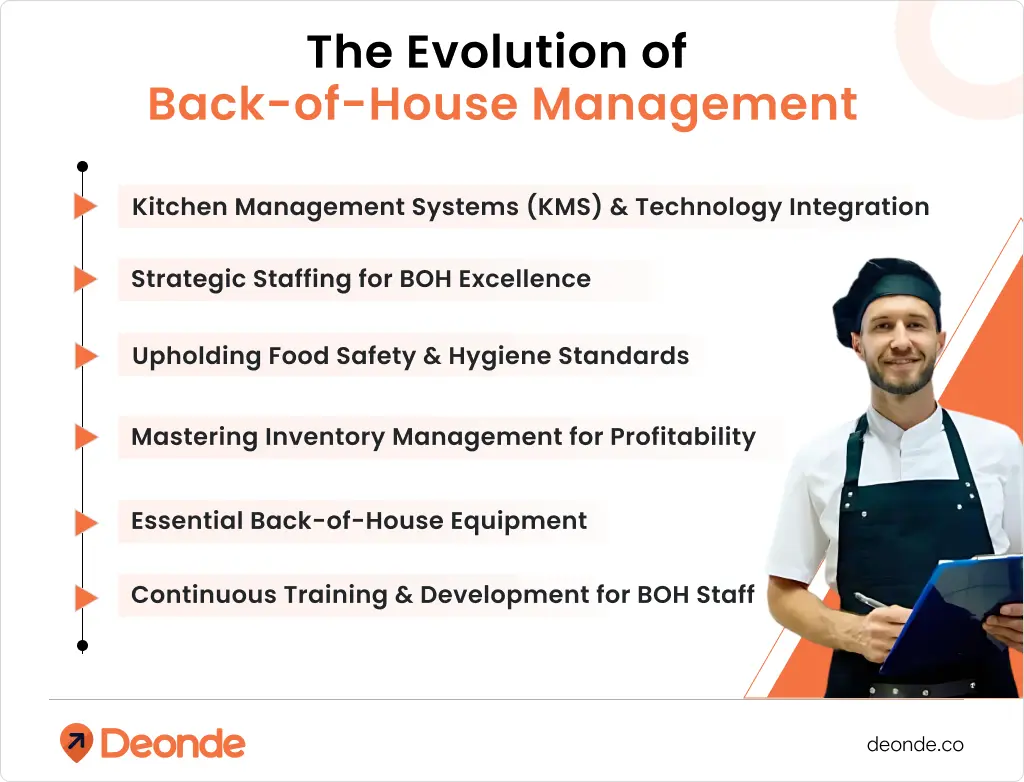
Modern restaurant operations go beyond just cooking. Technology and systematic approaches have revolutionized BOH in a restaurant.
- Kitchen Management Systems (KMS) & Technology Integration: Many restaurants now use Kitchen Display Systems (KDS). These track orders in real-time. This minimizes errors and boosts efficiency. Inventory tracking software also aids data-driven decisions. These are crucial kitchen management systems
- Strategic Staffing for BOH Excellence: A strong BOH team isn’t just skilled; they handle pressure well. They value teamwork and reliability. Staffing for back-of-house includes comprehensive training and development programs crucial for their growth.
- Upholding Food Safety & Hygiene Standards: Food safety in BOH is paramount. This involves proper food handling and temperature control. Strict personal hygiene protocols are mandatory. A single mistake can severely damage reputation and public health.
According to the World Health Organization (WHO), unsafe food causes an estimated 600 million cases of foodborne diseases annually.
- Mastering Inventory Management for Profitability: Efficient inventory management for restaurants directly reduces waste. It also boosts profitability. This includes accurate stock tracking and demand forecasting. Building strong supplier relationships is also key for restaurant efficiency.
- Essential Back-of-House Equipment: A modern commercial kitchen requires advanced equipment for back-of-house. This includes high-efficiency ovens and commercial grills. Sophisticated refrigeration units are also vital. Proper maintenance ensures longevity and performance.
- Continuous Training & Development for BOH Staff: The food industry constantly evolves. BOH staff need continuous training for back-of-house staff. This covers new culinary techniques and food safety regulations. It sharpens skills and boosts confidence.
Conclusion: The Unseen Heart of the Restaurant
The Back-of-House in a restaurant is the invisible, yet immensely powerful, engine of any successful establishment. It’s where culinary creativity, operational discipline, and unwavering dedication converge. They create a memorable dining experience for guests.
Understanding the BOH roles and responsibilities and its management in depth is crucial for anyone in the food industry. When this engine runs smoothly, a restaurant delivers consistent quality. This secures its place in a competitive market and ensures strong restaurant operations.
What fascinates you most about the behind-the-scenes world of restaurant operations? Share your thoughts below!