Let’s be honest, running a cloud kitchen today isn’t easy. You’re handling dozens of online orders, juggling delivery apps, and trying to keep customers happy all at once. Right? That’s exactly where a cloud kitchen management system (also known as ghost kitchen software) steps in to save the day.
See, the food business has changed. It’s not just about great taste anymore; it’s about speed, accuracy, and experience. Customers expect their favorite meal to arrive hot, fresh, and right on time.
But behind every smooth delivery, there’s a lot happening—orders coming from multiple apps, riders waiting, and your team trying to stay organized.
Now imagine if all that chaos could be handled automatically. Every order syncs in one place, deliveries are tracked live, and you get real-time order analytics and reports on your top-selling items—a complete online ordering system for restaurants—all without losing your mind. That’s what good tech can do for your kitchen.
I’ve seen so many kitchen owners stress about wrong orders, delays, or managing five delivery tablets at once. The truth is, it’s not your fault; it’s just outdated systems holding you back. Once you switch to smart software, things change fast.
And here’s the best part — you don’t need to be “tech-savvy.” Modern tools are built for real kitchen teams like yours. You focus on the food; the system handles the rest.
If you’re serious about scaling your cloud kitchen in 2026, then investing in the right cloud kitchen management software isn’t just smart, it’s how you stay ahead of the competition.
Why Running a Cloud Kitchen Isn’t as Easy as It Looks?
You save money on rent, but you gain a new set of problems. Most of these problems come from a lack of control and having too many systems that don’t talk to each other.
- The Multi-App Mayhem:Managing orders simultaneously from Uber Eats, DoorDash, Swiggy, Zomato, and your own website leads to a chaotic symphony of tablets. During a peak dinner rush, a single kitchen might be processing 50-100+ orders per hour. Switching to a digital kitchen display system for restaurants is the fastest way to eliminate this chaos, replacing missed orders, paper tickets, and delayed preparation times with automated routing straight to the prep station.
- High Commission Fees: Aggregator apps are great for getting customers, but they charge huge fees often 25-40% of every order. This makes it extremely difficult to make a profit.
- No Customer Data: When someone orders from an aggregator, that is their customer, not yours. You don’t get their phone number or email. You can’t send them promotions, build a loyalty program, or encourage them to order again.
- Inventory & Menu Errors: When you run out of an item, you have to log in to every single platform to mark it “sold out.” If you forget one, you’ll get orders you can’t fulfill, which leads to bad reviews. This is a common failure of poor restaurant inventory management.
- Delivery Logistics: If you manage your own drivers, you need a system to track them, find the best routes, and let customers know when their food will arrive. This is a huge operation on its own.
Best Cloud Kitchen Management Solutions in the Market
Here are some of the top systems for cloud-kitchen order & delivery management, including platforms specializing in virtual restaurant software. I’ll summarise each, along with why they’re good.
Deonde
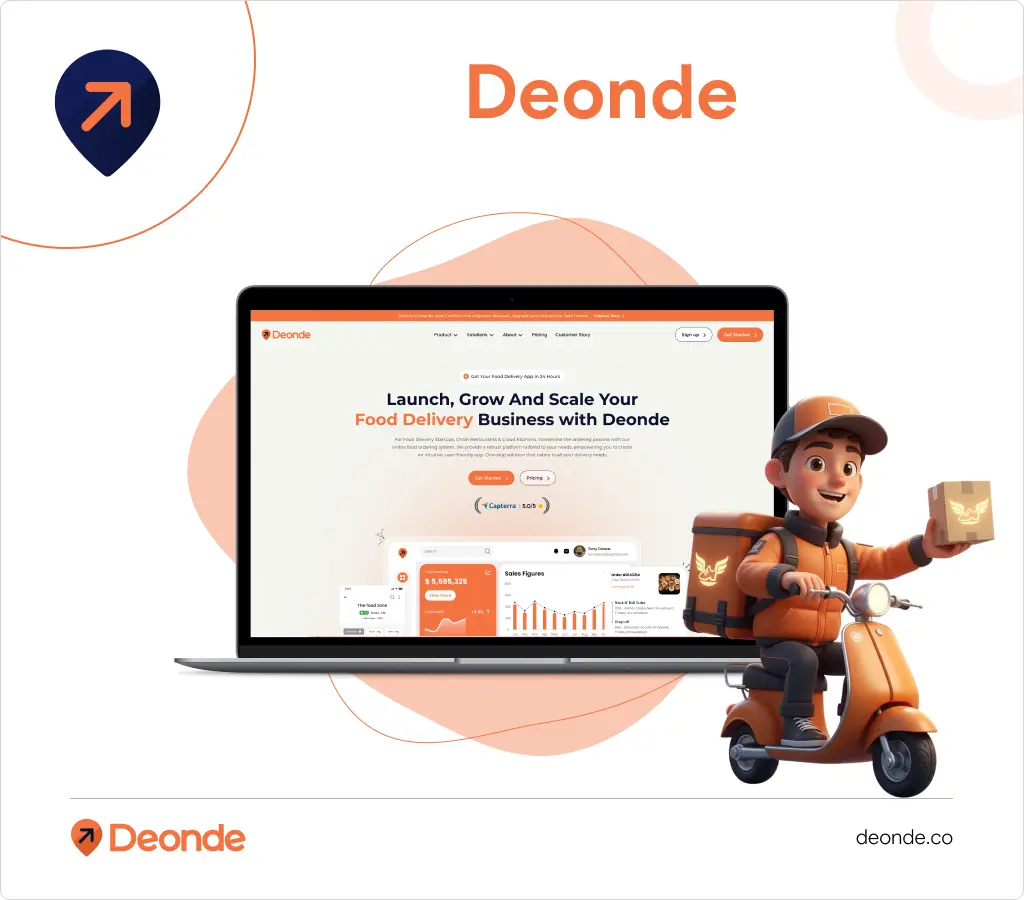
Deonde is a white-label platform designed for brands that want to build their own independent business. Instead of just managing other apps, it helps you create your own branded ordering website and mobile apps. This shifts the power from the aggregators back to you.
- Own Your Customers: You get a complete customer app, driver app, and restaurant dashboard, all with your own brand. You build your own customer list.
- Zero Commission: Since customers order directly from you, you stop paying high commission fees on every sale.
- Integrated Delivery Management: Manage your own fleet of drivers or integrate with third-party logistics partners (like VROMO or Shipday) to handle delivery.
- Total Ecosystem: It’s an all-in-one solution. It handles online ordering, delivery driver management, and marketing tools like loyalty points and push notifications.
- Customer Data Ownership: You get full access to all customer data, enabling you to build loyalty programs, send email/SMS promotions, and analyze purchasing habits.
Best For: The entrepreneur whose primary goal is brand building and long-term, sustainable profitability. It’s the best choice for those who want to build an asset, not just a delivery-only kitchen.
Petpooja
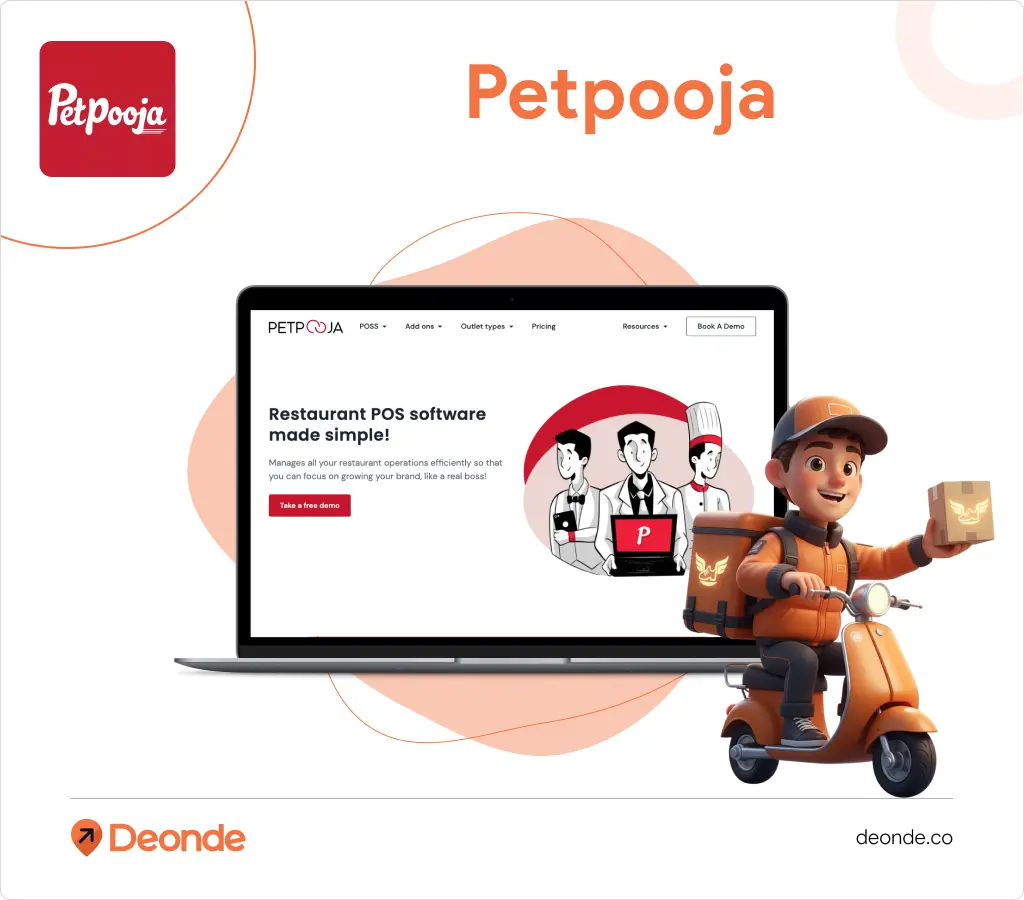
Petpooja is one of the most popular and trusted all-in-one POS (Point of Sale) systems, especially dominant in the South Asian market. It is built to be fast, reliable, and easy for kitchen staff to use in a high-pressure environment.
- Operational Hub: It acts as the central hub for everything. It handles billing, Kitchen Order Tickets (KOT) management, and all online orders on one screen.
- Seamless Aggregator Management: It is known for its smooth integration with all major food apps. Orders appear on the POS instantly, ready to be accepted.
- Virtual Brand Management: It makes it easy to run multiple different “virtual brands” (e.g., a pizza brand and a salad brand) from the same physical kitchen.
Best For: The classic multi-brand cloud kitchen. If your business model is to run 3, 5, or 10 virtual brands from a single location, Petpooja is arguably the best-in-class solution to manage the operational complexity.
Ressto
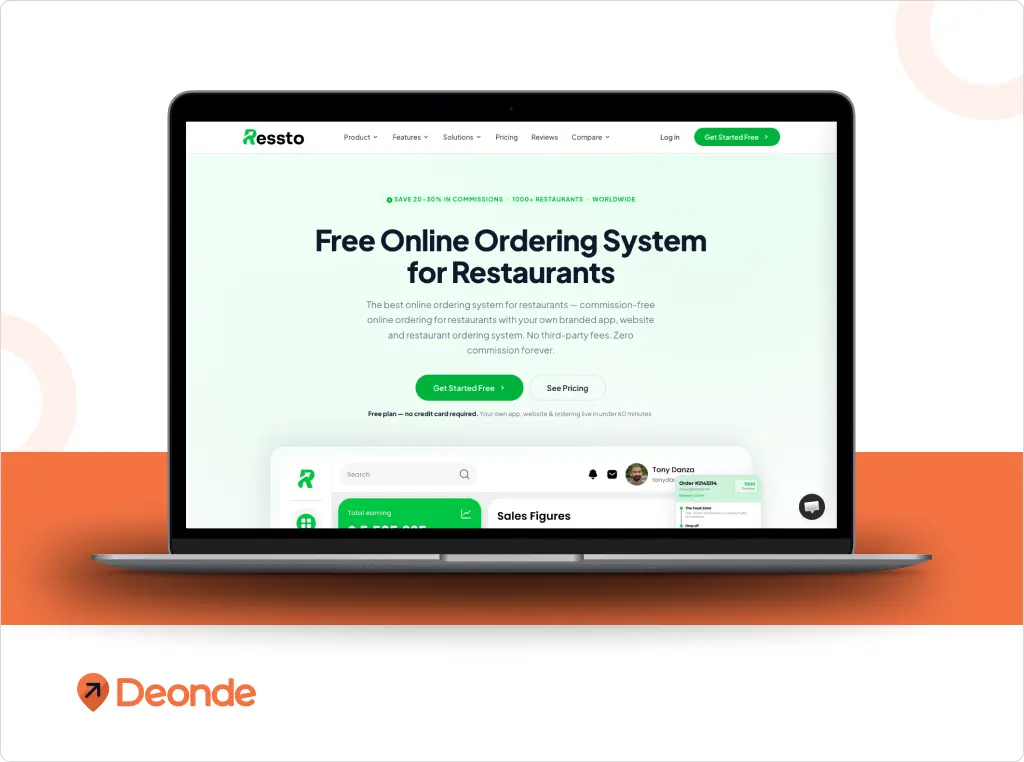
Ressto is a commission-free cloud kitchen ordering system built to help delivery-only kitchens own their customers instead of depending on aggregators. It provides a branded website, mobile app, and QR ordering all with 0% commission on every order.ressto+1
Key Features:
- Zero Commission: Flat monthly fee, no per-order charges—keep 100% of your sales
- Branded Channels: Professional website + iOS/Android apps under your restaurant’s name
- All Orders in One Place: Delivery, pickup, dine-in QR, and reservations on a single dashboard
- Built-in Delivery: Run your own fleet or integrate with third-party logistics partners
- Customer Data Ownership: Full access to phone numbers, emails, and order history for loyalty programs
- Free Plan Available: No time limit, no credit card required for single outlets
Best For: Cloud kitchens and restaurants that want to reduce aggregator dependency, build their own direct ordering channel, and retain customer data all without paying per-order commissions. Ideal for businesses ready to invest in long-term brand equity over short-term aggregator visibility.
LimeTray
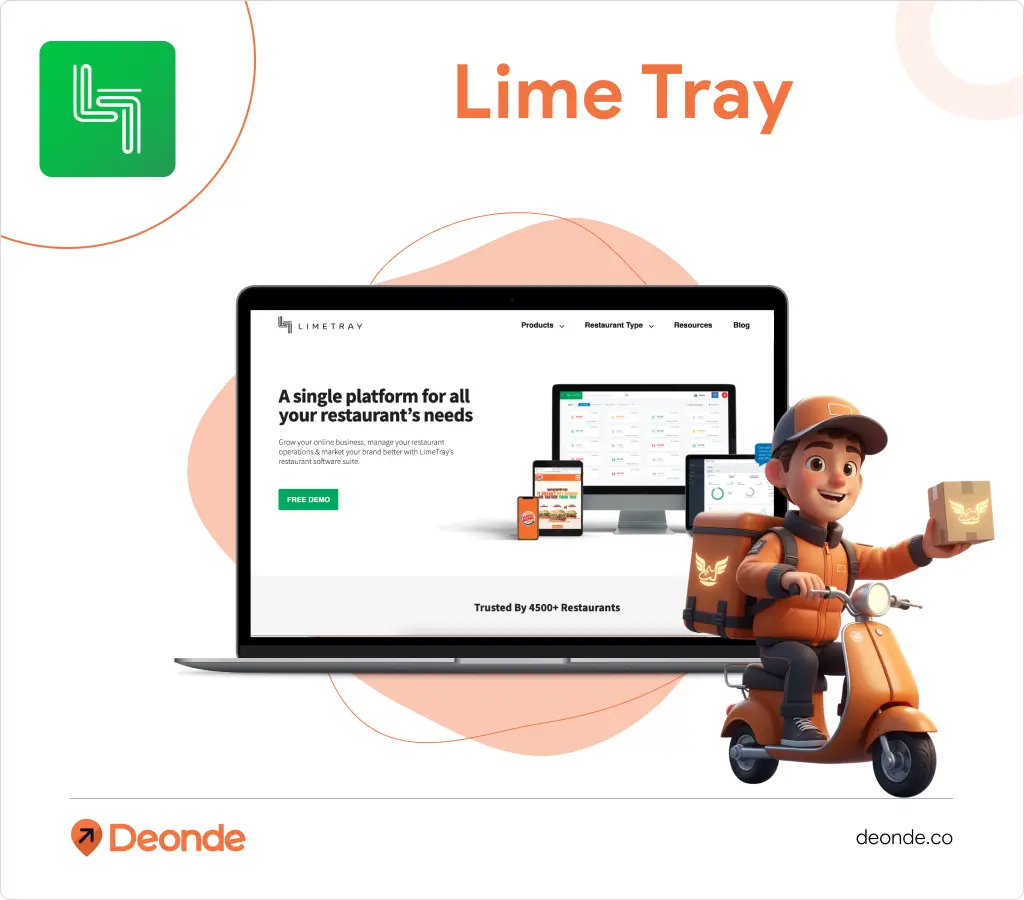
LimeTray is a strong competitor that balances direct-to-consumer (D2C) branding with aggregator management. Like Deonde, it helps you build your own ordering platforms, but it also has a strong focus on integrating everything into one clean system.
- Online Ordering Suite: It provides you with your own branded ordering mobile app and website to take commission-free orders.
- Hybrid Platform: It combines your direct orders and your aggregator orders into a single POS dashboard. This gives you the best of both worlds.
- Marketing & CRM: It includes built-in tools for customer loyalty programs, feedback collection, and targeted marketing campaigns.
Best for: Restaurants that want to build their own brand but also need a powerful tool to manage their existing aggregator sales.
Toast
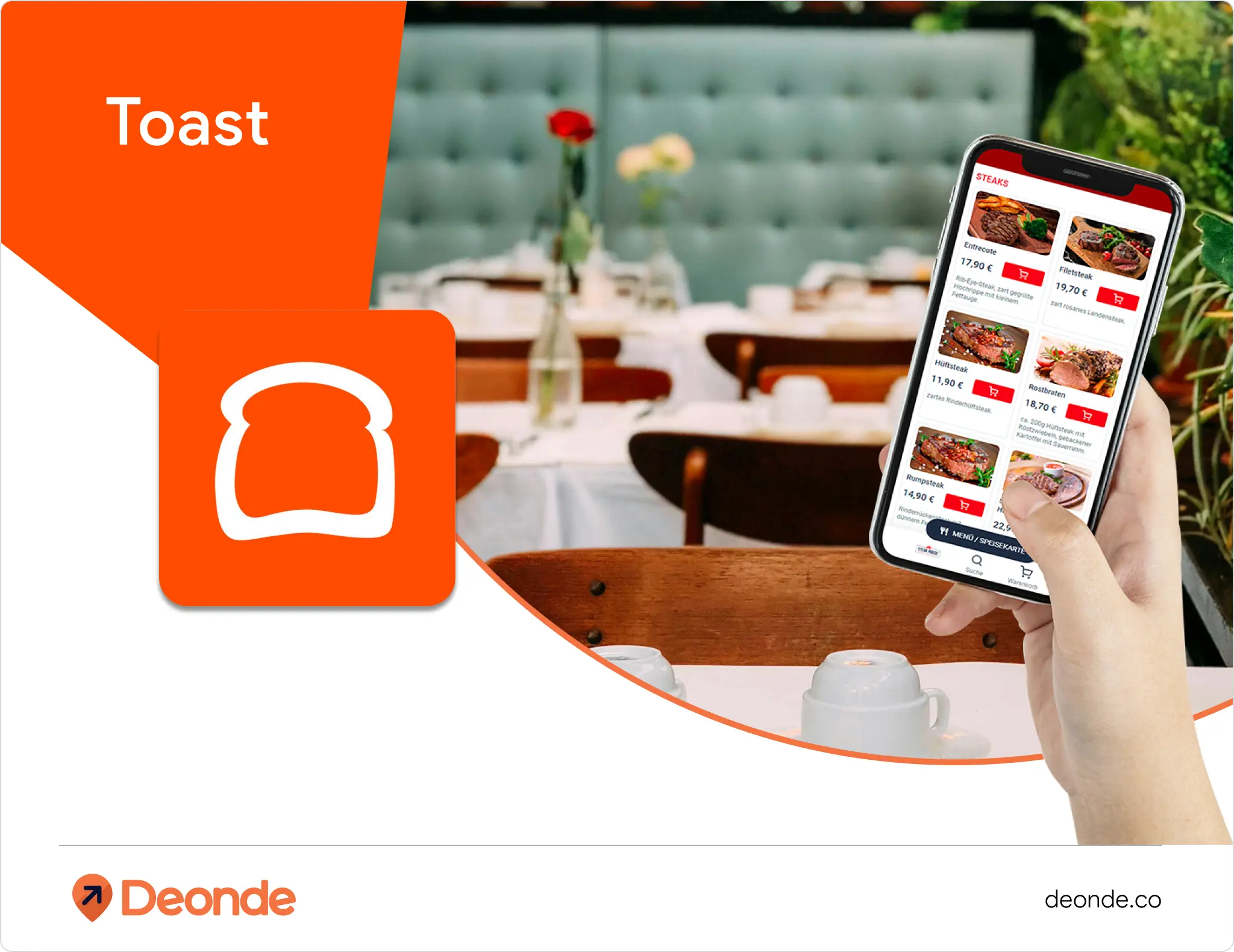
Toast is a leading all-in-one, cloud-based POS and restaurant management platform, especially dominant in the United States. It’s designed to be a complete ecosystem, combining its own hardware, software, and payment processing.
As cloud kitchens grow, many operators realize that legacy POS systems, spreadsheets, or on-premise tools simply can’t keep up with modern delivery volumes and data demands. This is where cloud migration services become essential. By moving order management, inventory tracking, analytics, and customer data to the cloud, kitchens gain faster system performance, real-time visibility across locations, and the flexibility to scale without costly infrastructure upgrades.
- All-in-One System: Bundles its own POS hardware, Kitchen Display Systems (KDS), online ordering, and payments.
- Restaurant-Grade Hardware: Unlike using iPads, it provides its own durable, spill-proof terminals built for kitchen environments.
- Integrated Delivery: Offers “Toast Delivery Services” for a flat-fee driver network, and also syncs with all major aggregators.
- Deep Reporting: Because everything is in one system, it provides very detailed reports on sales, labor, and menu profitability.
Best For: US-based kitchens that want a single, highly reliable, end-to-end system with integrated hardware and payments from one vendor.
Restroworks
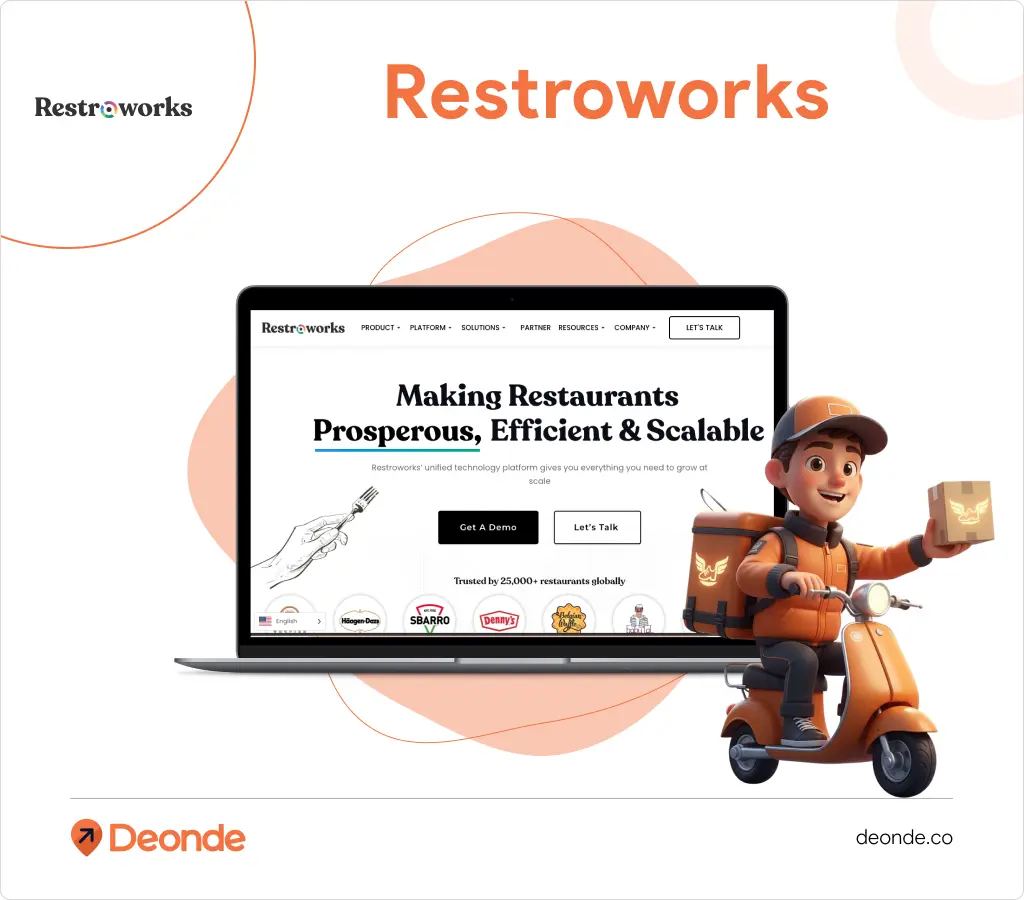
Restroworks (formerly known as Posist) is an enterprise-grade platform designed for large-scale cloud kitchens and multi-outlet chains. It is built to handle the complexity of global operations and is used by major international brands.
- Hardware Agnostic: It is a pure SaaS (software) solution that runs on any device (iOS, Android, or Windows), unlike Toast.
- Built for Global Scale: Easily manages multiple countries, currencies, and tax laws from a single central dashboard.
- Advanced Virtual Brands: Excels at managing complex menus, inventory, and KOTs for dozens of virtual brands from one kitchen.
- Central Integration Hub: Acts as the “middleware” to connect all your global and local aggregators, payments, and logistics partners.
Best For: Large, multi-city, or multi-brand enterprises that need a flexible, powerful, and scalable central platform to manage complex operations.
Why SaaS is the Only Future-Proof Model
You’ll notice all these solutions are SaaS (Software-as-a-Service). This isn’t a coincidence. The SaaS model is the only one that makes sense for a fast-moving cloud kitchen in 2026. Here’s why:
- Low Upfront Cost: You don’t pay a massive $50,000 license fee. Instead, you pay a small monthly subscription. This keeps your startup costs low and makes your expenses predictable.
- Constant Updates: The market changes fast. When Zomato or Uber Eats updates its system, your SaaS provider updates your software automatically. You get new features, security patches, and new integrations without lifting a finger.
- Ultimate Scalability: A SaaS platform grows with you. You can start with one brand in one kitchen and easily add more brands, more locations, or more features just by changing your monthly plan.
- Access Anywhere: Because the software is “in the cloud,” you can log in and see your sales reports, check inventory, or update your menu from your phone or laptop, wherever you are.
Final
In 2026, you can’t win with just good food. A cloud kitchen is a digital business, and it needs a digital brain. The old way of using paper tickets and five different tablets is too slow, too expensive, and leads to too many mistakes.
The right management system organizes the chaos, cuts your costs, and gives you the data you need to grow. Most importantly, platforms like Deonde, Ressto and LimeTray give you a path to own your customers and build a real, long-term brand.
Your final choice depends on your main goal. Do you just need to tame the aggregator chaos? Do you need deep inventory control? Or are you ready to build your own empire?