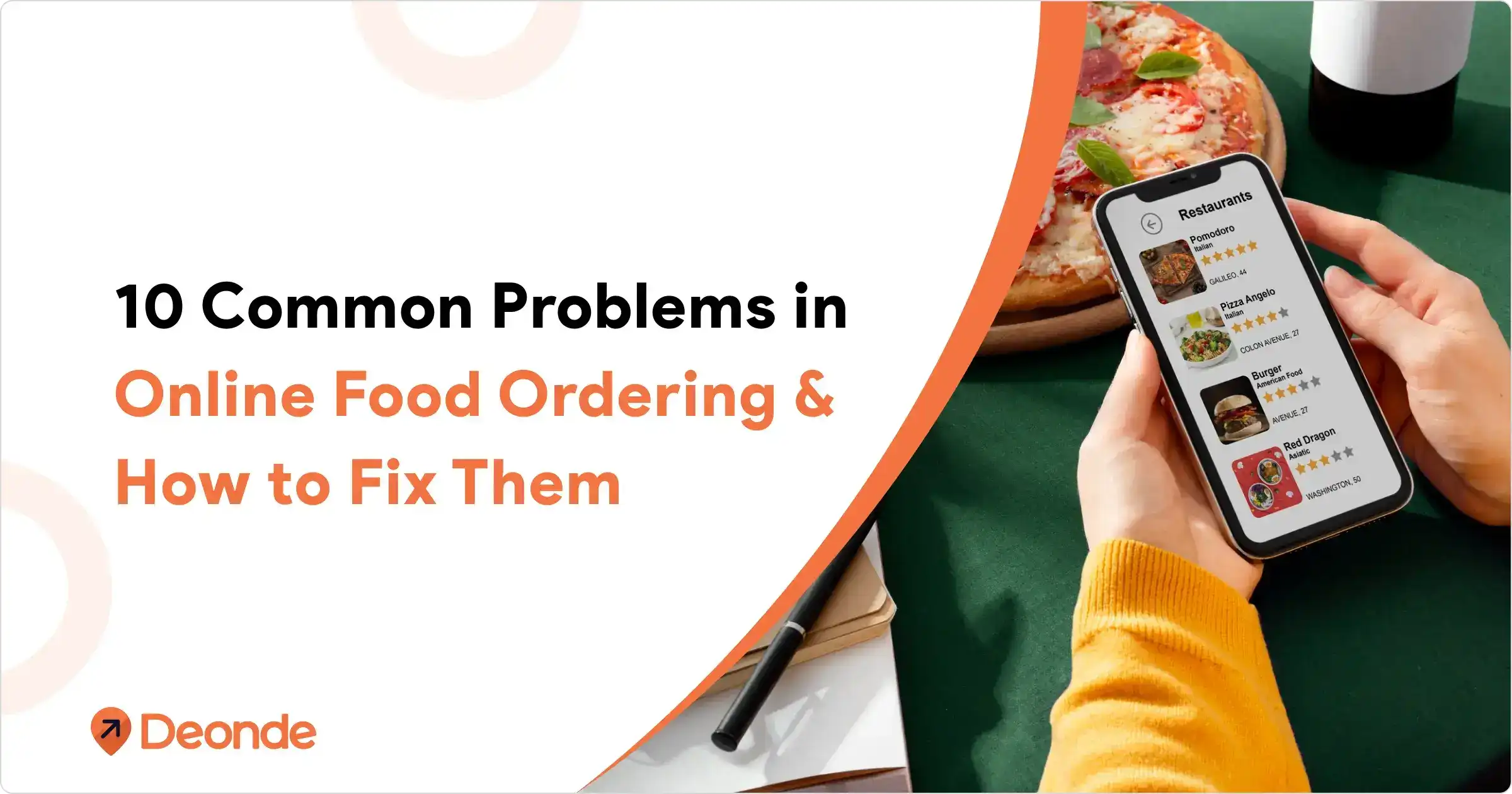
Ordering food online has become a daily habit for millions of people. With just a few taps on your phone, you can have your favourite meal delivered right to your door. Customers want their favourite dishes delivered fast and without any problems.
According to the Grand View Research report, the global online food delivery market size was estimated at USD 288.84 billion in 2024 and is projected to reach USD 505.50 billion by 2030, growing at a CAGR of 9.4% from 2025 to 2030.
However, while the industry is booming, there are still many problems with online food ordering that frustrate both customers and restaurants. From late deliveries to missing food items, these issues hurt trust and loyalty.
According to the DoorDash report, when dinner is served, phones remain in hand. Generation Z leads the pack in “scrolling while eating,” with 60% of young Americans, 46% of Canadians, and 41% of Australians admitting they enjoy takeout meals while glued to their screens.
For businesses, even one bad delivery can result in negative reviews and lost customers. That’s why fixing these challenges is no longer optional; it’s a necessity.
The good news? Most of these food delivery issues can be solved with the right tools and strategies! From smart technology to better restaurant processes and top-notch customer service, there are simple ways to make food delivery smoother and keep customers happy.
This blog will dive into the top 10 issues with online food ordering and share simple solutions to address them.
What Is the Biggest Challenge in Food Delivery Today, and Why?
The biggest challenge in food delivery nowadays is Rising Operational Expenses, Customer Demands, Driver Retention, Intense Competition in Food Delivery, and Sustainability Concerns with customer expectations for fast, affordable service.
Why Is the Biggest Challenge in Food Delivery?
Rising Operational Expenses: Food delivery platforms face significant expenses, including delivery driver wages, fuel costs, insurance, and platform maintenance. For example, companies like DoorDash and Uber Eats often operate on thin margins, with delivery fees and commissions not fully covering costs.
Customer Demands: Customers expect affordable fees, rapid delivery (often within 30 minutes), and consistent food quality. Fulfilling these demands requires streamlined operations, which drives up costs, particularly in busy urban areas where maintaining a large driver pool is costly.
The Driver Retention Problem: High turnover among drivers is a major issue. Many are gig workers with low wages and no benefits, leading to frustration and a constant search for better opportunities. This forces companies to continuously recruit and train new drivers.
Customers continue to show strong interest in loyalty programs that transform one-time visitors into repeat guests, with 78% of customers saying they’re more likely to return to a restaurant where they can earn rewards, even if it’s less convenient.
Intense Competition in Food Delivery: The online food delivery industry is packed with big names like Uber Eats, DoorDash, and local rivals, all fighting for customers. This forces companies to offer discounts or free delivery promotions, further squeezing margins. Smaller restaurants also struggle with high commission fees (often 20-30%), reducing their profitability.
Sustainability Concerns: Growing demands for sustainability, such as eco-friendly packaging and lower-emission vehicles, increase operational costs. Adopting solutions like electric fleets or sustainable materials is expensive and challenging for many companies.
10 Common Problems in Online Food Ordering and How to Solve Them?
Here are the top 10 issues customers face when ordering food online. For businesses, handling these challenges can make a big difference, from fixing app problems to keeping customers happy. For businesses, handling the complexities of online orders can lead to significant problems in online food ordering, from operational inefficiencies to customer frustration.
This blog post will go beyond the surface to analyze the most common issues and provide detailed, actionable solutions for businesses looking to optimize their food delivery service.
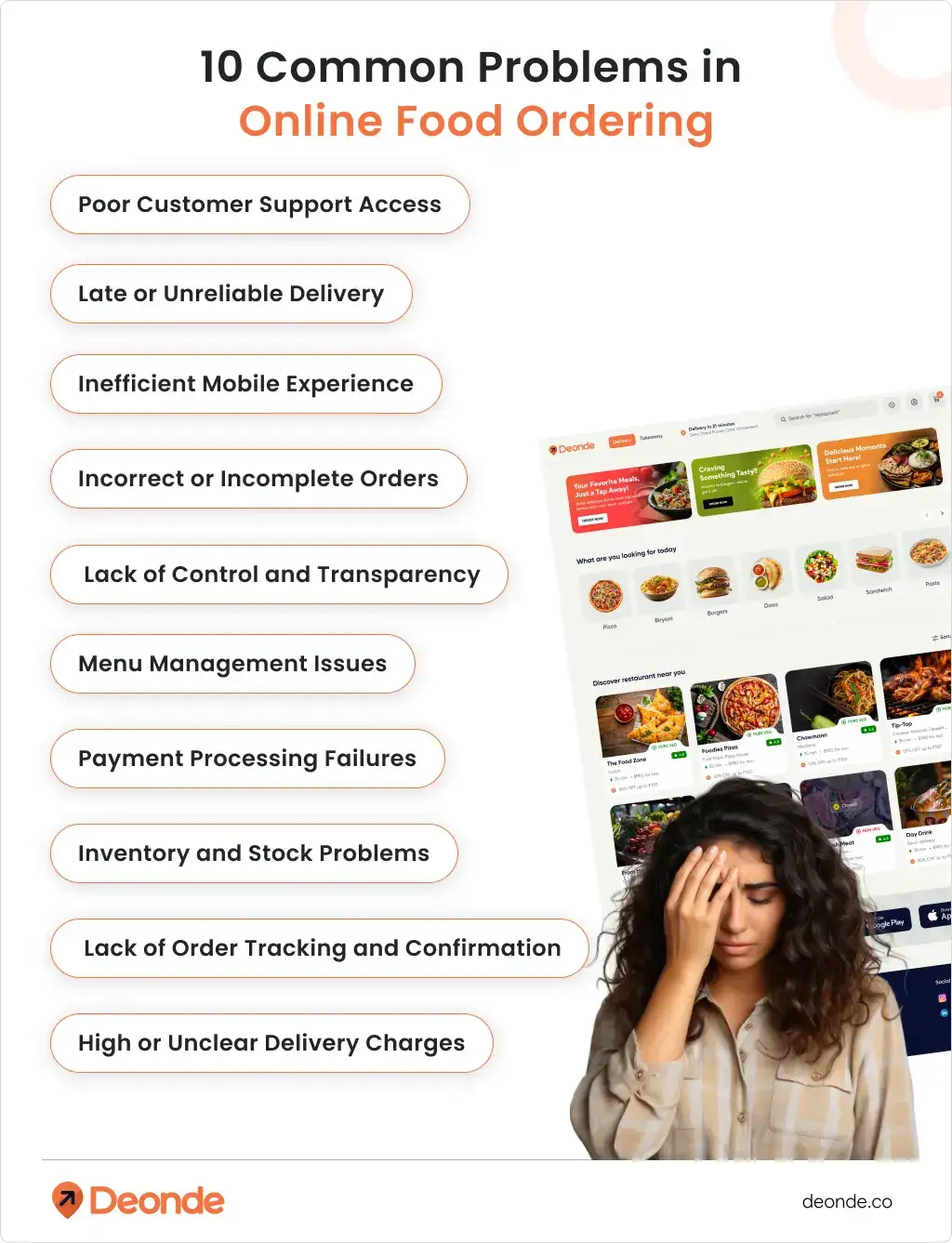
1. Poor Customer Support Access
When something goes wrong, you need help fast. If it’s hard to find a phone number, live chat, or email address for customer support, it makes the problem even worse. Good customer support is key to fixing any issues and keeping customers happy.
In fact, quick responses can keep customers coming back studies show 70% of customers stay loyal to businesses that answer fast.
How You Can Fix This Problem
Create a clear, easily accessible help section in the app. Offer multiple contact options like a push notification, live chat, phone number, and support email for quick assistance. Use an AI chatbot to handle basic questions and direct users to the right resources.
2. Late or Unreliable Delivery
This is likely one of the most annoying problems with food delivery. You’re hungry, you’ve been waiting, and the food is taking way longer than the app said it would. Sometimes, the delivery driver gets lost, or the restaurant is just too busy. The result? A cold, sad meal.
How You Can Fix This Problem
Use smart delivery routing software that helps drivers find the fastest way to your door. Also, a good communication system can let customers know about any delays right away.
3. Inefficient Mobile Experience
When an app is slow, confusing, or keeps crashing, it’s a big turn-off. A bad mobile experience makes it hard to browse menus, customize orders, or pay. Customers get annoyed and might just give up and order from a competitor.
How You Can Fix This Problem
Invest in a user-friendly app design. Make sure the easy checkout process for food delivery is simple and quick. Test the app regularly to fix any bugs or glitches.
4. Incorrect or Incomplete Orders
Imagine you order a burger with no onions and extra cheese, but you get a burger loaded with onions and no cheese. Or worse, a whole item is missing! Missing food items in delivery can ruin a meal and make customers feel like their order isn’t important.
How You Can Fix This Problem
Use a restaurant management system that lets both the customer and the restaurant see the order details clearly. A final check before the food goes out is a great way to prevent missing items.
5. Lack of Control and Transparency
Customers want to know what’s happening with their food. When you place an order and then hear nothing, you start to worry. You have no idea if the restaurant has started cooking, if the driver is on their way, or if there’s a delay.
How You Can Fix This Problem
Offer real-time order tracking for food delivery. Send push notifications for every step: order confirmed, food is being prepared, driver is on the way, etc.
6. Menu Management Issues
Have you ever tried to order something, only to find out the item isn’t available? This is a common problem when the menu not updated online. It’s annoying for customers to get excited about a dish only to find out they can’t have it.
How You Can Fix This Problem
Use a menu management software to update their menu in real-time. If an item sells out, they should be able to mark it as unavailable immediately.
7. Payment Processing Failures
When you’re ready to pay for your food, and the payment doesn’t go through, it’s a huge hassle. Payment failures in food delivery apps may result from several problems, such as a bug in the app to a problem with the credit card processor.
How You Can Fix This Problem
Use a reliable and secure payment gateway. Give customers multiple payment options, like credit cards, digital wallets, and more.
8. Inventory and Stock Problems
Sometimes, a restaurant might run out of a popular item, but their online menu still shows it as available. This can lead to the restaurant having to call the customer to change their order, which can be inconvenient and cause delays.
How You Can Fix This Problem
Integrate a real-time inventory management system with your online menu. This automatically marks sold-out items as unavailable, preventing customers from ordering them. It also saves restaurants from having to call customers to make inconvenient changes.
9. Lack of Order Tracking and Confirmation
This goes hand-in-hand with a lack of transparency. When a customer places an order, they want a confirmation email or text right away. They also want order tracking for food delivery so they can see exactly where their food is at all times.
How You Can Fix This Problem
Provide instant confirmation via email or SMS as soon as a customer places an order. Then, offer real-time order tracking so they can see their food’s exact location at all times. This transparent process keeps customers informed and builds trust.
10. High or Unclear Delivery Charges
The lack of transparency in delivery charges can cause customers to abandon their cart and go elsewhere. Nothing is more frustrating than getting to the checkout and seeing a surprisingly high delivery fee. Sometimes, these charges are hidden until the very end.
How You Can Fix This Problem
Be upfront about all fees. Show the delivery fee, service fee, and taxes clearly before the customer starts the checkout process.
Conclusion
Online food ordering is here to stay, but it’s not perfect. By understanding and addressing these common problems in online food ordering, companies can create a much smoother and more enjoyable experience for everyone. A little effort to improve things like delivery, app design, and customer support can go a long way in building trust and loyalty.
Want to enhance your food ordering platform? Reach out now to discover how our tools can solve these issues and boost your business.

FAQ
Q1: What are the factors affecting online food delivery?
Factors include traffic, weather, restaurant preparation time, delivery driver availability, and app performance. These can cause delays or errors in the ordering process.
Q2: What are the limitations of an online ordering system?
Limitations include technical glitches, payment failures in food delivery apps, outdated menus, and a lack of real-time order tracking for food delivery, which can frustrate users.
Q3: What are the six basic factors of delivery?
The six key factors are speed, reliability, cost (delivery charges transparency), communication (order tracking for food delivery), order accuracy, and customer support (delivery app customer support).
Q4: How to maximize food delivery?
To maximize food delivery, use reliable platforms, ensure an easy checkout process for food delivery, keep menus updated, offer clear delivery charges transparency, and provide excellent delivery app customer support to resolve issues quickly.