
A tiffin service costs about $5,000–$16,600 to start from a home kitchen with a SaaS ordering platform, or $36,000–$117,000+ with a rented commercial kitchen and a custom-built app. In India, a home-based start typically costs ₹30,000–₹75,000. Monthly running costs (ingredients, staff, delivery, utilities) are extra.
A tiffin service delivers freshly cooked, home-style meals, usually on a daily or weekly subscription.
Thinking of starting a tiffin service in 2026? Your first questions are probably simple: Can I cook consistently for paying customers? How do I get my first orders? Where will I cook and deliver from? And, most importantly, how much money do I actually need to start?
In 2026, starting a tiffin service isn’t just about cooking; it’s about building a reliable, tech-driven meal subscription model that offers quality and consistency.
This guide will help you understand the essential costs of starting a tiffin service, how to plan your budget wisely, and what steps to take to launch your business without feeling overwhelmed. Whether you’re a home cook wanting to turn your passion into income or an entrepreneur planning a small-scale startup, this is the roadmap you need.
Fixed Costs: The Foundation of Your Tiffin Service Business
Starting a tiffin business involves some key upfront investments. These are costs you can’t avoid if you want to operate legally and professionally. They include your kitchen setup, licenses, branding, technology, and initial inventory.
Here’s a breakdown of what you might spend based on your startup scale:
| Cost Category | Lean Startup (Home Kitchen, SaaS) | Mid-Scale (Rented Kitchen, Custom Tech) |
| Kitchen Setup & Equipment | $3,000 – $10,000 | $15,000 – $50,000+ |
| Licenses & Permits | $500 – $1,500 | $1,000 – $4,000+ |
| Branding & Marketing | $500 – $2,000 | $2,000 – $5,000+ |
| Technology (Website/App) | $20 – $100/month | $15,000 – $50,000+ (custom build) |
| Initial Inventory & Packaging | $1,000 – $3,000 | $3,000 – $8,000+ |
| Estimated Initial Cost | $5,000 – $16,600 | $36,000 – $117,000+ |
Your kitchen setup and technology choice will largely determine your startup budget. A lean startup can begin with a home kitchen and a SaaS platform, while a mid-scale operation may require a rented commercial kitchen and a custom-built website or mobile app.
Tiffin Service Startup Cost in India
Most figures above are in US dollars. If you’re starting in India, expect a much lower budget: home kitchens, local labour and FSSAI fees cost far less. Published estimates put a lean home-based start at roughly ₹15,000–₹30,000 for containers, utensils, gas and packaging, and a small setup with a helper, more equipment and delivery at about ₹1–3 lakh.
| Item | India (₹) |
|---|---|
| FSSAI Basic Registration | ₹100 per year |
| FSSAI State License (if your turnover requires it) | ₹2,000–₹5,000 per year |
| Lean home start (containers, utensils, gas, packaging) | ₹15,000–₹30,000 |
| Small setup with helper, equipment and delivery | ₹1–3 lakh |
| Website and ordering system on Deonde | From $99/month (roughly ₹8,999) |
Which FSSAI tier you need depends on your annual turnover, and the limits were reportedly revised in 2026, so check the current rule on the FSSAI portal (foscos.fssai.gov.in) before you apply. The ₹ ranges are estimates compiled from published guides by Shriram Finance and DineOpen (2026); your costs will vary by city, kitchen and menu.
Kitchen Setup and Equipment
The kitchen is the heart of any tiffin service. A well-organized kitchen ensures consistent food quality, safe handling, and efficient workflow.
Commercial Kitchen Space: Depending on your scale, you can start from a home kitchen (if permitted by local regulations) or rent a small commercial space. Rent can range from $1,000 – $5,000 per month, or purchasing a commercial kitchen can cost upwards of $100,000.
Essential Equipment:
- Cooking appliances: Ovens, stoves, refrigerators, freezers
- Work tables and storage shelves for prepping and organizing ingredients
- Tiffin containers and packaging: Buying reusable or high-quality disposable containers in bulk can cost $500 – $5,000 upfront
Safety Equipment: Fire extinguishers and a basic first-aid kit are mandatory for any food business.
Licensing and Permits
Running a food business legally requires obtaining a few essential permits.
- Food Service License/Health Permit: Ensures your kitchen meets health and safety standards. $100 – $1,000 per year
- Business License: Required to operate as a registered business. $50 – $500 per year
- Food Handler’s Permits: For staff involved in cooking and packing. $15 – $100 per person
- Insurance (Liability, Product): Protects your business and customers. $500 – $3,000/year
Getting these permits ensures your business is compliant, builds trust with customers, and protects you from legal issues. Starting in India? See the India (₹) section above for FSSAI fees.
Related: Restaurant Permits and Licenses You Need to Start a Restaurant in USA
Branding and Marketing
Even a small tiffin service needs a clear brand identity to attract and retain customers.
- Logo Design: A professional logo helps establish credibility. $200 – $2,000
- Website: A basic website is important even for a local tiffin service. You can go low-cost with SaaS solutions ((Deonde plans start at $99/month (₹8,999)) or spend $500 – $3,000 for a simple custom site.
- Initial Marketing: Social media ads, local promotions, or introductory offers can range $500 – $2,000
Creating a strong brand and marketing plan ensures that your tiffin service stands out and reaches the right audience from day one.
Technology Costs
In 2026, technology is no longer optional for a tiffin service. Customers expect online ordering, subscription management, and convenient payments.
Option 1: SaaS Platforms (Recommended for Beginners)
- Monthly cost: $50 – $300+ (Deonde starts at $99/month (₹8,999))
- Setup fee: often $0 – $500 (Deonde: none for the platform; an optional branded mobile app is a $499 one-time fee)
- Website + online ordering included
- Optional white-label mobile app
Option 2: Custom Website & Mobile App (for Large Operations)
- Custom website with subscription and ordering: $7,000 – $30,000+
- Mobile App (iOS + Android) with full features: $15,000 – $150,000+
SaaS platforms allow you to start quickly and cost-effectively, while custom development is suitable for businesses planning a larger scale or unique features.
Operational Costs
After launch, your ongoing expenses will be the main part of running the tiffin service.
- Ingredients: $1.50 – $4.00 per meal; managing supplier relationships and minimizing waste is crucial
- Staff: Chefs, kitchen assistants, and delivery drivers, $12 – $30/hour depending on role and location
- Delivery: Own vehicles (fuel, maintenance) or third-party services (commissions 15-35%)
- Utilities: Electricity $300 – $1,000/month, water $50 – $200, gas $100 – $500, internet $50 – $150
These are US figures. In India, expect lower labour and ingredient costs. Understanding and managing these costs ensures that your business remains profitable while maintaining quality and reliability.
How much can a tiffin service earn?
Your monthly profit is what is left after your running costs:
Monthly profit = (customers × monthly price) − (food + gas/electricity + packaging + helper wages + delivery fuel)
For example, 25 customers paying ₹3,000 a month brings in ₹75,000 before costs. Subtract your own food cost per tiffin and your fixed monthly expenses to see your real margin. Divide your startup cost by your monthly profit to estimate how many months it takes to break even.
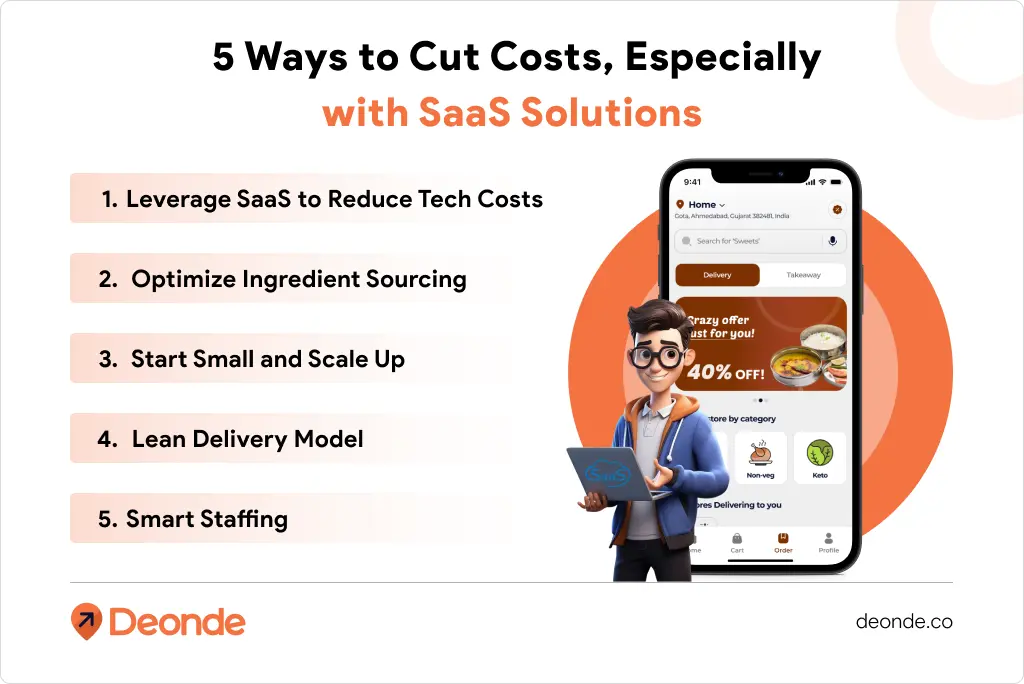
5 Ways to Cut Costs, Especially with SaaS Solutions
Managing your tiffin service business costs effectively is crucial for profitability. Here are several strategies, with a focus on leveraging SaaS for technology needs:
1. Start Small and Scale Up
- Home-Based Kitchen (if permitted): Check local regulations. Starting from a home kitchen can drastically reduce initial rent and equipment costs.
- Limited Menu: Begin with a smaller, focused menu to minimize ingredient waste and streamline operations.
- Phased Growth: Don’t try to serve everyone immediately. Start with a specific neighborhood or demographic and expand gradually.
2. Optimize Ingredient Sourcing
- Bulk Purchasing: Buy ingredients in larger quantities from wholesalers to get better prices.
- Seasonal Ingredients: Focus on using seasonal produce, which is often fresher and cheaper.
- Local Suppliers: Develop relationships with local farmers or producers for potentially better deals and fresher ingredients.
- Minimize Waste: Implement strict portion control and repurpose ingredients creatively to reduce spoilage.
3. Smart Staffing
- Multitasking Roles: In the early stages, have staff wear multiple hats (e.g., cook who also assists with packing).
- Part-Time Staff: Utilize part-time employees during peak hours to avoid overstaffing.
- Leverage Technology for Efficiency: Use your online ordering system or app to streamline order processing, reducing manual labor.
4. Lean Delivery Model
- Self-Delivery in Early Stages: If feasible, manage deliveries in-house with your own vehicle to avoid high third-party commissions, especially for a limited service area. Factor in fuel and vehicle maintenance costs.
- Strategic Delivery Zones: Define specific, efficient delivery routes and zones to minimize fuel consumption and driver time.
- Batch Deliveries: Group orders for the same area to be delivered in a single trip.
- Customer Pickup Option: Offer a pickup option to customers who live nearby, reducing your delivery burden.
5. Leverage SaaS to Reduce Tech Costs
- Avoid High Upfront Development Costs: By opting for a SaaS platform, you bypass the significant tiffin app and website development costs associated with custom builds.
- Reduced Maintenance Burden: SaaS providers handle all server maintenance, security updates, and bug fixes, saving you thousands annually.
- Faster Time to Market: Get your online ordering system and a white-label app up and running in days or weeks, rather than months or a year for custom development.
- Scalability: SaaS platforms are designed to scale with your business. As your customer base grows, you can upgrade your plan without redeveloping your system.
- Integrated Features: Many SaaS solutions include built-in tools like CRM, marketing, reporting, and payment gateway integration, reducing extra software costs.
- Cost-Effective Mobile Presence: Advanced SaaS platforms often offer white-label mobile apps or highly responsive web apps, providing a near-native mobile experience at a fraction of custom development costs.
Conclusion: Investing Smart for a Flavorful Future
Starting a tiffin service in 2026 is an exciting venture with immense potential. However, success depends on understanding the financial commitment required.
The total cost can range from $5,100 – $16,750 for a lean home-kitchen launch on a SaaS platform, to $36,000 – $117,000+ for a mid-scale rented-kitchen setup with custom tech, and over $150,000 – $300,000 for a larger operation with a custom-built kitchen and bespoke technology. In India, a lean home-based start can be as low as ₹15,000–₹30,000.
The key is to invest smartly. Prioritize the quality of your food and customer service above all else. In the digital realm, leverage cost-effective SaaS solutions to establish a professional online presence without breaking the bank.
By carefully planning your budget, managing operational costs, and focusing on sustainable growth, you can turn your culinary passion into a profitable and beloved business.
While typical SaaS platforms range from $50 to $300+ per month, Deonde’s plans start at just $99/month (roughly ₹8,999), giving you a professional website and a complete ordering system in a single subscription.

Frequently Asked Questions
How much does it cost to start a tiffin service in India?
A lean home-based start typically costs about ₹15,000–₹30,000 for containers, utensils, gas and packaging. A small setup with a helper, extra equipment and delivery is closer to ₹1–3 lakh. Add FSSAI registration, which starts at ₹100 a year.
How much money do I need to start a tiffin business from home?
In the US, plan for roughly $5,100–$16,750 for a lean home-kitchen launch, covering equipment, permits, branding, inventory and a SaaS platform. In India, a home kitchen can start from ₹15,000–₹30,000. Check local rules first, because not every area allows home-based food businesses.
What are the monthly expenses of a tiffin service?
Your monthly expenses are ingredients, gas and electricity, packaging, helper wages, delivery fuel or commissions, and your software subscription. In the US, ingredients run about $1.50–$4.00 per meal. Track your cost per tiffin so you can price it correctly.
Is a tiffin service profitable?
It can be, because the model is simple: a daily subscription with low overheads for a home kitchen. Your margin depends on your price per tiffin, your food cost and how many regular customers you serve. Use the profit formula above and keep food waste and delivery costs under control.
Do I need a license for a home tiffin service?
Yes, you generally need a food license or permit. In India that means FSSAI registration, starting at ₹100 a year for Basic Registration. In the US, requirements vary by state and city, and some areas restrict home kitchens, so check with your local health department.