Running a restaurant in today’s fast-paced world demands smart partnerships to stay competitive. According to a 2024 market analysis, DoorDash has partnered with over 590,000 restaurants, and the online food delivery market is projected to grow to over $505.50 billion by 2030.
This makes DoorDash a powerful tool to reach new customers, but the high DoorDash Commission Charges can feel like a significant hurdle.”
Many restaurant owners sign up for DoorDash without fully understanding the fee structure. As a result, they sometimes feel surprised when commissions eat into their earnings. Knowing how these charges work is the first step to making smarter business decisions.
DoorDash typically charges between 15% and 30% commission on every order. The exact percentage depends on the plan you choose and the services included. While these fees can feel high, they also cover marketing, delivery support, and app visibility.
Big question: As a restaurant owner, how to balance these charges while still making a profit? DoorDash’s services can amplify your reach, but only if you know what you’re paying for.
From delivery to pickup, DoorDash’s plans are designed to fit different business goals. Choosing the right one can make or break your profitability.
This guide will break down DoorDash’s fees, what they cover, and how to optimize them. Get ready to transform costs into growth for your restaurant.
With the right strategies, DoorDash can be more than a delivery app it’s a partner in success. Let’s dive in and maximize your profits!
Breaking Down DoorDash’s Fee Structure
DoorDash offers flexible plans tailored to different business needs, allowing you to pick options that align with your goals. Unlike a one-size-fits-all approach, their pricing varies based on the services you use, such as delivery, pickup, or integrating with your own website. Here’s a clear overview of the main products and their associated costs.
1. Marketplace for Delivery and Pickup
This is the core service where customers discover your restaurant via the DoorDash app or site and order for delivery or self-pickup. You handle orders through a tablet or your POS system, and DoorDash coordinates the drivers (Dashers).
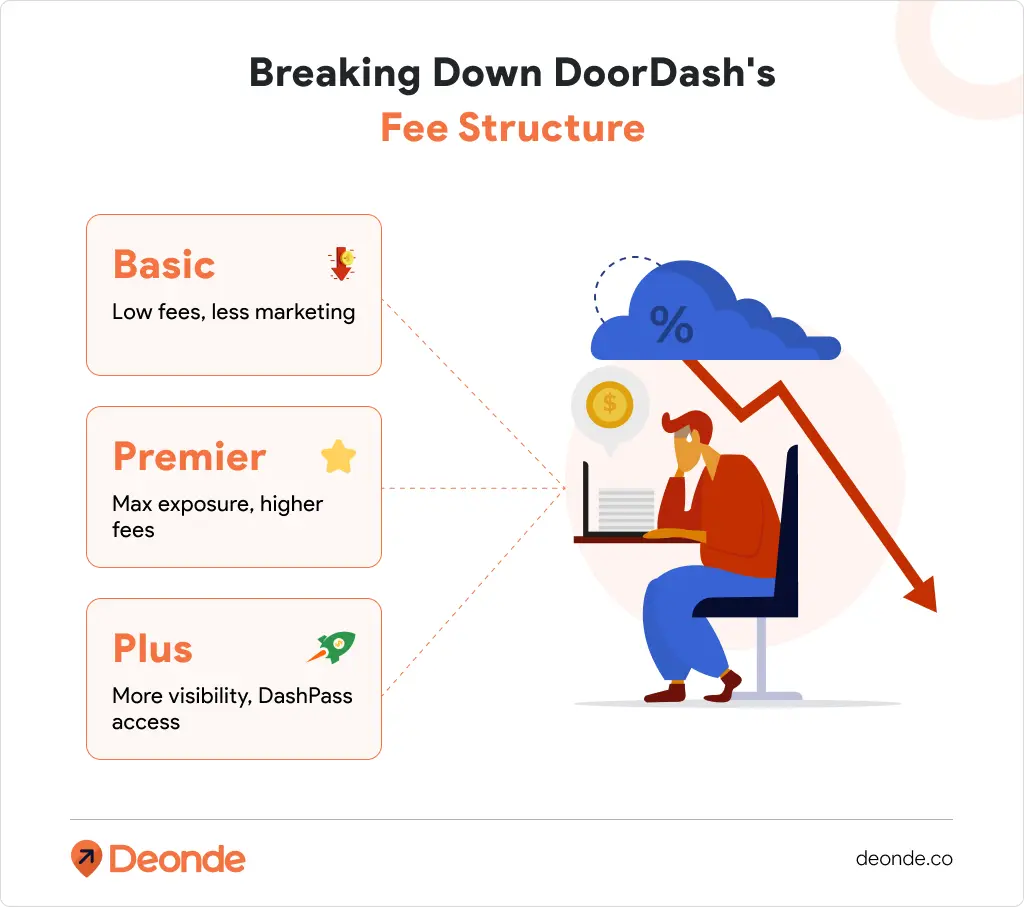
- Commission Rates: DoorDash provides three partnership tiers, Basic, Plus, and Premier, each with different commission percentages on orders. These range from lower rates with minimal marketing perks to higher ones that include robust promotional support. The exact rates aren’t fixed and can vary, but the idea is to choose based on how much visibility you want.
- Additional Fees: No processing fees for card payments on app/website orders, no termination costs, and no monthly subscriptions unless you opt for their tablet (which has regional pricing). You can switch plans anytime for flexibility.
- Perks for Higher Tiers: Upgrading to Plus or Premier gives you better access to DashPass subscribers loyal customers who order more often and spend more.
Think of this as investing in customer acquisition. One restaurant partner noted that the commissions feel like marketing spend, bringing in new patrons who might not have found them otherwise.
How Can a Commission-Free Restaurant Ordering System Boost Your Profits
2. Online Ordering Through Your Own Channels
If you prefer customers ordering directly from your website to build brand loyalty, DoorDash’s Online Ordering tool integrates seamlessly as part of their Commerce Platform.
- Commission and Fees: The Starter package comes with 0% commission, but includes a standard payment processing fee (around 2.9% plus a small per-order amount). Advanced Boost or Pro packages add tools for loyalty programs and sales growth, with costs scaling accordingly.
- Benefits: This setup drives direct traffic to your site, reducing reliance on the DoorDash app and potentially lowering overall fees per order.
It’s ideal for established restaurants wanting to own the customer experience while still tapping into DoorDash’s ecosystem.
3. Drive On-Demand for Custom Delivery
For businesses with their own ordering app or site but needing reliable delivery, this service connects you to Dashers on an as-needed basis.
- Fee Structure: A straightforward flat fee per delivery—no commissions, sign-up costs, subscriptions, or processing fees. You can automate via integrations or request drivers manually.
- Use Case: Perfect if you’re handling orders in-house but want to outsource logistics without building your own fleet.
Overall, DoorDash avoids hidden surprises: no flat monthly fees (except optional add-ons), and everything is tied to actual orders. This pay-as-you-go model helps smaller operations scale without upfront risks.
Must Read: DoorDash Business Model
What Are You Really Paying For? The Value Behind the Fees
It’s easy to see fees as just another expense, but they fund a robust ecosystem that supports your business growth. Here’s what your payments contribute to:
- Marketing and Visibility: DoorDash’s massive reach (covering most of the U.S.) puts your restaurant in front of millions. Fees help fund ads, promotions, and app features that keep customers engaged and coming back.
- Driver Compensation and Safety: Dashers get competitive pay, incentives, insurance, and round-the-clock support, ensuring reliable deliveries that reflect well on your brand.
- Customer and Merchant Support: A dedicated team handles issues 24/7 for you, your customers, and drivers—resolving problems quickly to maintain trust and repeat business.
- Tech Infrastructure: Behind the scenes, fees cover the development and maintenance of apps, portals, and tools that make ordering seamless.
- Payment Handling: Built-in credit card processing simplifies transactions without extra headaches.
In essence, these costs aren’t just overhead they’re investments in a platform that handles the heavy lifting, from logistics to marketing, so you can focus on what you do best: running your kitchen.
Strategies to Navigate Fees and Boost Your Bottom Line
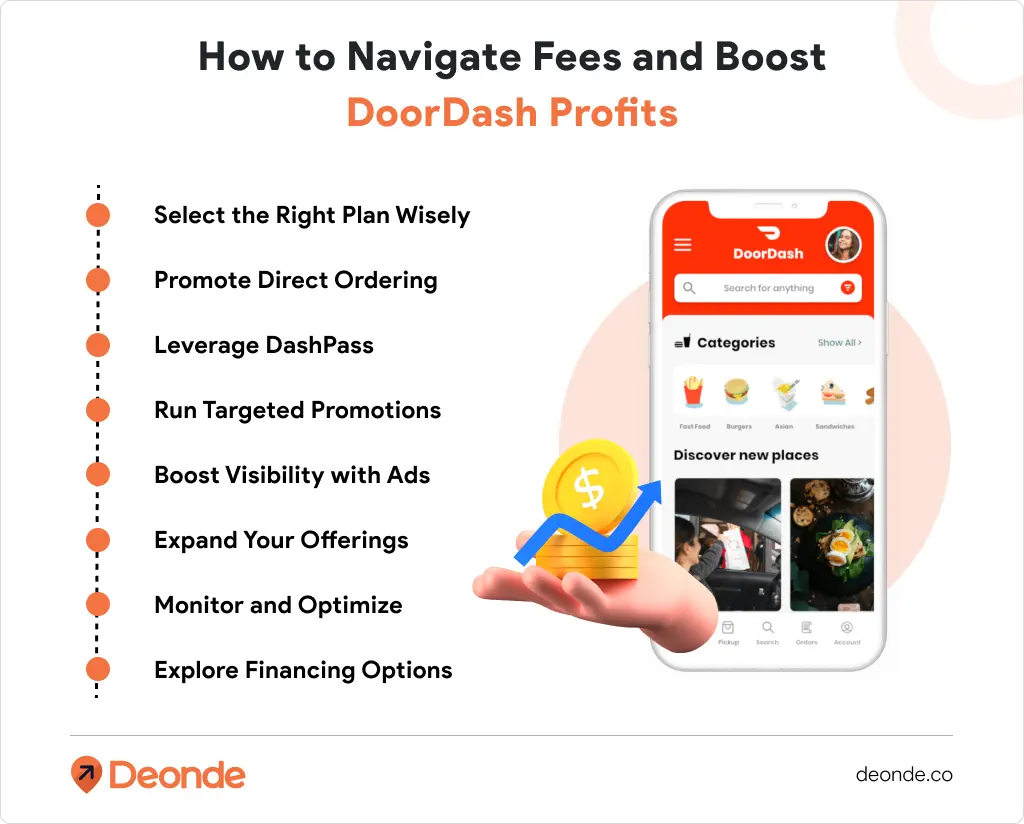
Knowledge is power, but action turns it into profit. Here are actionable tips for restaurant owners to reduce the impact of fees and increase revenue through DoorDash:
Select the Right Plan Wisely: Start with the Basic tier if you’re testing the waters, then upgrade to Plus or Premier as sales grow. The added marketing in higher plans can pay for itself through increased orders from high-value customers.
Promote Direct Ordering: Integrate Online Ordering and push it on your social media, Google profile, and Yelp page. This channels more traffic to your site, where commissions are lower or zero, helping you retain more per sale.
Leverage DashPass: By joining (included in Plus/Premier), you attract frequent, big-spending users. Encourage sign-ups in your marketing to build a loyal base.
Run Targeted Promotions: Use DoorDash’s tools to offer deals like “buy one, get one” or discounts on slow days. You only pay when they lead to orders, making it a low-risk way to fill seats (or delivery bags).
Boost Visibility with Ads: Sponsored Listings let you appear higher in searches—charged only on successful orders, not views. Track performance to refine what works.
Expand Your Offerings: Add catering, virtual brands (like a spin-off menu), or alcohol (where legal) to increase average order values. Optimize your menu with high-margin items and clear photos to encourage upsells.
Monitor and Optimize: Use the Merchant Portal to analyze data on orders, fees, and customer behavior. Adjust pricing or menu items based on insights to improve efficiency.
Explore Financing Options: If cash flow is tight, check DoorDash Capital for quick funding to invest in growth without disrupting operations.
Remember, the goal is balance: Treat DoorDash as a partner, not just a vendor. Regularly review your statements to ensure fees align with the value received.
Final Thoughts: Turning Fees into Growth Opportunities
DoorDash opens doors to new customers and steady sales, but commissions can shrink margins if you’re not careful. The key is to balance the visibility you gain with smart strategies to protect your bottom line.
Always treat DoorDash as a marketing partner, not your only sales channel. Use it to bring in new customers, then encourage repeat orders through your own website, phone lines, or loyalty programs. This way, you reduce long-term dependence on high commission fees.
Another smart approach is to invest in a white-label delivery app, like the one offered by Deonde. With your own branded platform, customers can order directly without third-party commissions, helping you save more and build a stronger connection with your audience.
At the end of the day, commission fees are part of doing business on delivery apps, but with the right planning, you can turn those costs into profitable growth opportunities.