Opening a coffee shop is a common dream for many entrepreneurs. You imagine the rich smell of fresh coffee and a room full of happy, loyal customers.
But the reality of the business is often very different and much harder.
Many people open cafes with passion and a love for coffee. But once the business starts, managing staff, costs, customers, and consistency becomes a real challenge.
Too many new shops close down in their first year. This usually happens because the owner focuses on the vibe and the latte art, but ignores the actual costs of doing business.
If you want to successfully run a cafe, you must transition from a “passion mindset” to a “business mindset” immediately.
In this blog, we will share essential cafe management tips, break down what makes a cafe successful, why many coffee shops fail early, and how you can build a cafe that is popular, profitable, and sustainable step by step.
What is the Definition of a Successful Cafe?
A successful cafe is one that runs smoothly every day, earns steady profit, and has customers who keep coming back. It is not about being busy once in a while, but about being reliable all year round.
From an experienced cafe owner’s point of view, a cafe is successful when sales are predictable, costs are under control, and the owner is not forced to manage every small task personally.
But the real success is balance—good coffee, trained staff, and clear systems working together. When customers trust the experience and staff know their roles, the cafe runs without chaos.
Why Do Most Coffee Shops Fail in the First Year?
Around 60% to 65% of coffee shops fail in their first year because owners underestimate daily challenges like cash flow, staffing, and consistent sales. Rent and salaries stay fixed, but customer flow does not.
Many owners start with a “build it and they will come” attitude. They spend all their money on fancy furniture and have nothing left for marketing.
One of the biggest disadvantages of a café business is the high competition. Since it is easy to open a shop, there is a new competitor on every corner.
If you don’t have enough cash saved to survive the slow months, you will struggle to pay your staff.
Another common mistake is choosing a location that is cheap but has no foot traffic. You cannot sell coffee to an empty street.
When cafe operations are not managed properly from day one, even good coffee cannot keep the business alive for long.
How to Make Your Cafe Popular
A cafe becomes popular when customers enjoy the experience enough to return and recommend it to others. Consistent service, comfort, and trust turn a simple visit into a habit.
The 5 A’s of Customer Service in a Cafe
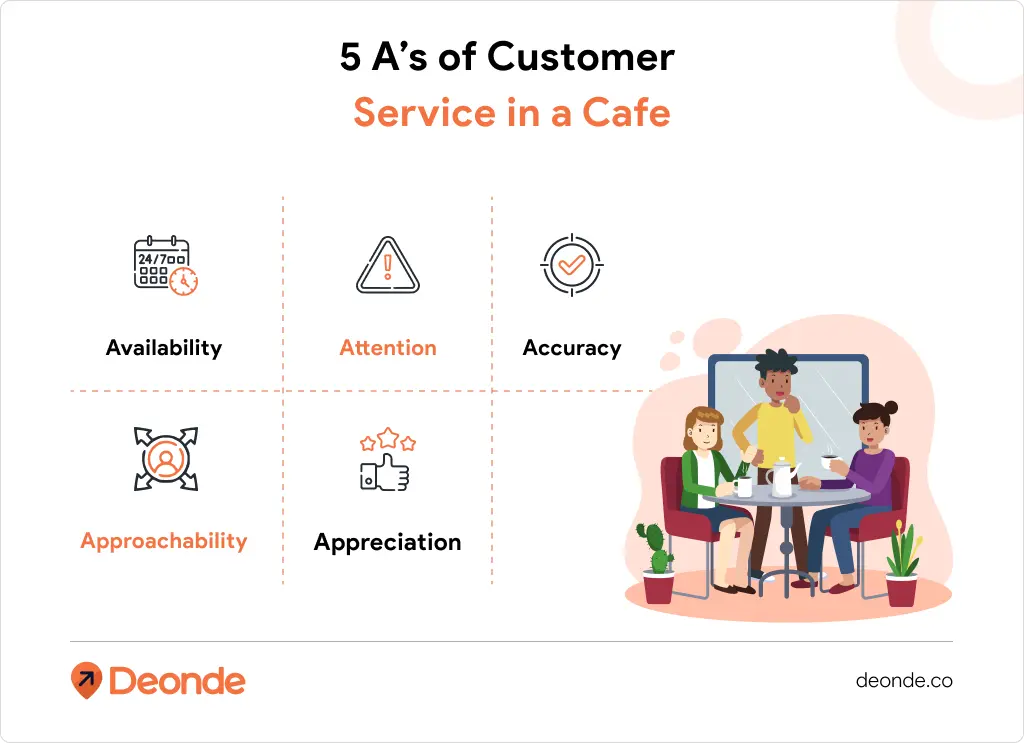
The 5 A’s of customer service help create an experience that feels natural, respectful, and reliable, which is why customers choose to return to the same cafe again and again.
- Availability – Staff should always be visible and ready, especially during rush hours, so customers never feel ignored or confused.
- Attention – Paying full attention to the customer while taking orders reduces mistakes and makes people feel heard.
- Accuracy – Delivering the right order every time builds trust and shows that the cafe values quality.
- Approachability – A warm tone, eye contact, and simple friendliness make the cafe feel welcoming instead of transactional.
- Appreciation – Thanking customers sincerely and remembering regulars creates emotional connection and loyalty.
Read More: What is a Cafe Ordering System?
Modernizing the Customer Experience
Modernizing the customer experience means giving customers more control, speed, and convenience while keeping the cafe experience enjoyable and personal.
Key modern ways to improve customer experience in a cafe:
Cafe Mobile Ordering: Give your regular customers a VIP experience by automating cafe orders through your own mobile app. They can browse the menu, customize their coffee, and pay before they even arrive. Plus, you can send push notifications for “Happy Hour” deals directly to their pockets.
Web Ordering: Not everyone wants to download an app. Ensure your cafe website includes a robust online ordering system for a cafe with a simple “Order Now” button. This allows you to capture orders directly without paying huge commissions to third-party delivery platforms.
Must Read: How to create a coffee shop website?
Table/QR Ordering: Speed up table service by placing a QR code menu for coffee shops on every table. Customers can scan, view the menu, order, and pay immediately without waiting for a waiter. This turns tables faster and frees up your staff to focus on hospitality rather than just taking .
Takeaway Ordering: Optimize your flow for the “grab-and-go” crowd. Set up a dedicated pick-up counter for online takeaway orders so these customers don’t get stuck behind people deciding what to eat. Fast hand-offs mean happy commuters.
Marketing Strategies to Build Your Brand
Great coffee doesn’t sell itself. You need to tell people you exist. Here is how to build a brand that pulls customers in and keeps them coming back.
1. Creating a Memorable Brand Identity
- Unique Concept and Positioning: Don’t try to be everything for everyone. Pick a lane. Are you the cozy spot for freelancers, the fast pit-stop for commuters, or the high-end specialty roaster? Define exactly who you are, and stick to it.
- Interior Design and Ambiance: Your cafe is your stage. The lighting, the music, and the furniture should all match your concept. If you are targeting students, you need comfortable chairs and soft music. If you are a fast espresso bar, you need sleek, standing-room layouts.
- Instagram-Worthy Presentation: People eat with their eyes first. Every latte, toast, and pastry should look good enough to share online. Train your baristas on latte art and ensure your plating is consistent. When customers post your food, they are doing your marketing for you.
2. Customer Acquisition Strategies
- Social Media Marketing (Instagram, Facebook): You don’t need a million followers; you need local ones. Post high-quality photos of your food, share “behind the scenes” Reels of your staff, and use location tags in every post so locals can find you.
- Local SEO and Google My Business: This is non-negotiable. When someone searches “coffee shop near me,” you must show up. Claim your Google My Business profile, upload fresh photos of your menu, and encourage happy customers to leave 5-star reviews.
- Partnerships and Collaborations: Team up with nearby businesses. Offer a discount to the gym next door or provide catering for the co-working space down the street. It’s the fastest way to get your product into the hands of new local customers.
- Grand Opening and Launch Events: Start with a bang. Don’t just open the doors; throw a party. Offer “Free Coffee Day” or buy-one-get-one deals for the opening weekend to create a line outside the door. That buzz creates curiosity in the neighborhood.
3. Customer Retention Tactics
- Loyalty Programs: Reward your regulars. Whether it’s a digital app or a simple stamp card, give them a goal to work toward. A free coffee after every 10 purchases is a small price to pay for a loyal daily customer.
- Personalized Service: The sweetest sound to a customer is their own name. Train your staff to remember names and “usual” orders. That personal connection is the main reason people choose independent cafes over big chains.
- Community Building: Turn your cafe into a hub. Host open mic nights, cupping workshops, or local art displays. Give people a reason to visit even when they aren’t thirsty.
- Regular Customer Feedback: Don’t guess what your customers want—ask them. If you notice a regular hasn’t visited in a while, or if a new dish isn’t selling, ask for honest feedback. Showing you care about their opinion builds massive trust.
How to Make a Cafe Profitable from the Start
A cafe becomes profitable when you control costs, understand daily sales numbers, and focus on repeat customers from day one. Profit is built through planning and discipline, not trial and error.
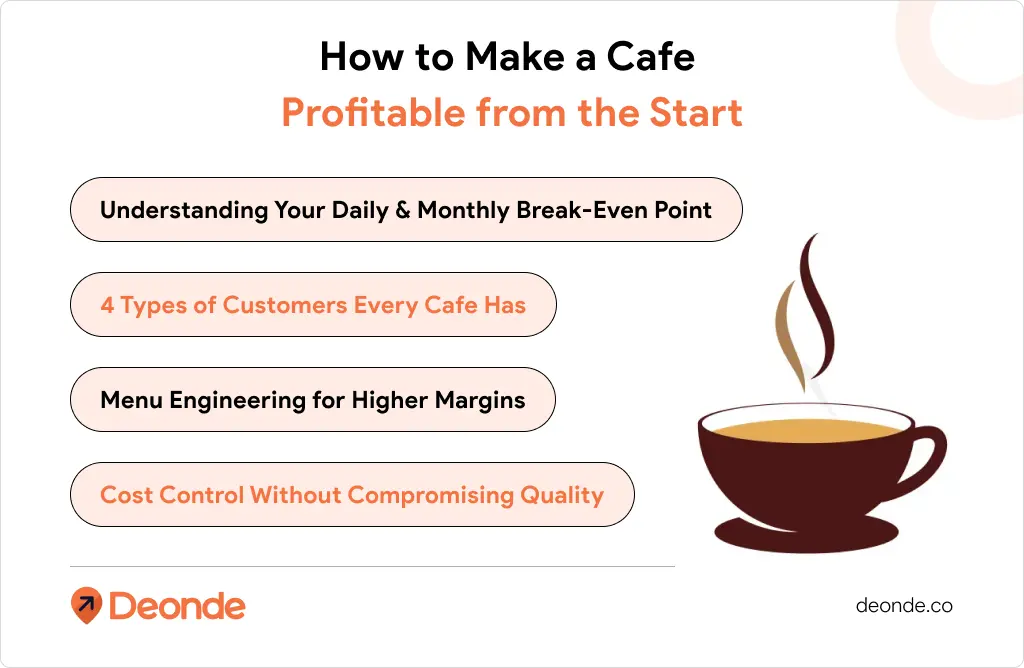
Calculate Your Daily and Monthly Break-Even
This is where many cafe owners stumble—not knowing their numbers. Your break-even point isn’t just a financial concept; it’s your survival line. Here’s how to calculate and use it effectively:
What Is the Break-Even Point?
The break-even point is the moment when your cafe’s total income equals total expenses.
At this point, you are not making profit and not making loss.
Every sale after this point is real profit.
How to Calculate Your Monthly Break-Even
To find your monthly break-even, you need two things:
- Your fixed monthly costs
- Your gross margin percentage
Formula:
Monthly Break-Even = Total Fixed Costs ÷ Gross Margin Percentage
Example:
Let’s say your cafe has:
- Fixed monthly costs (rent, utilities, insurance, salaries): $12,000
- Average gross margin (profit after food and drink costs): 70%
Now calculate:
- $12,000 ÷ 0.70 = $17,143
This means your cafe must make $17,143 in monthly sales just to break even.
Breaking It Down into Daily Targets
Monthly numbers feel big, so always break them into daily goals.
Daily Break-Even = Monthly Break-Even ÷ Number of Operating Days
- $17,143 ÷ 30 days = $571 per day
This means your cafe needs to earn $571 every day to cover all costs.
What This Means in Customer Terms
Thinking in customer numbers makes this much easier.
If your average bill per customer is $8.50:
- $571 ÷ $8.50 = 68 customers per day
So your real daily goal is simple:
- Serve around 68 customers per day to survive
- Customers beyond this number create profit
Once a cafe owner understands this, decision-making becomes calm, clear, and confident.
The 4 Types of Customers Every Cafe Has
Every cafe has different types of customers, and each one behaves differently. Understanding these customers helps you increase sales without adding pressure or discounts.
1. Regular Customers
These are people who visit often and trust your cafe. They may not spend a lot each time, but they keep the business stable and predictable.
2. Occasional Customers
They come once in a while—maybe on weekends or with friends. With the right experience, many of them can be converted into regulars.
3. Deal-Focused Customers
These customers come mainly for offers or discounts. They increase footfall but should not be the main focus, as margins are usually low.
4. First-Time Customers
First-timers are testing your cafe. Their first experience decides whether they will ever return.
Smart cafe owners focus most on regular and occasional customers, because they bring steady revenue and long-term growth.
Menu Engineering for Higher Margins
Menu engineering means designing your menu so customers naturally choose items that give you better profit. It is about selling smarter, not selling more.
Not all menu items earn the same profit. Some look popular but make very little money, while others quietly bring strong margins.
How to apply menu engineering in a cafe:
- Identify high-profit items
Find items with low ingredient cost and good selling price, such as specialty coffees or add-ons.
- Highlight best-margin items
Place profitable items at the top of the menu or in highlighted sections where eyes naturally go.
- Limit menu size
Too many options confuse customers and increase waste. A focused menu improves speed and margins.
- Use add-ons and upgrades
Extra shots, flavors, or combos increase the bill size with little extra cost.
- Remove weak items
Items that sell rarely and cost more to prepare should be removed or redesigned.
A well-designed menu increases profit without raising prices or pushing customers.
Cost Control Without Compromising Quality
Cost control means reducing waste and inefficiency without lowering the quality that customers expect. A cafe stays profitable when it saves money in smart places, not by cutting corners.
The first step is controlling portion sizes and inventory. When ingredients are measured properly and stock is tracked daily, wastage drops automatically. This saves money without affecting taste.
Next, review suppliers regularly. Comparing prices and negotiating better rates helps lower costs while keeping the same quality ingredients. Buying smart is better than buying cheap.
Finally, focus on process, not shortcuts. Better staff training, proper storage, and clear preparation methods maintain quality while keeping costs under control.
Learning from the Best: Starbucks & Other Success Stories
Big coffee brands succeed because they remove uncertainty for customers and owners. People know what to expect every time, and the business runs on systems, not guesswork.
A. What Makes Big Chains Successful
Big chains work because they focus on doing a few things extremely well, every single day.
- Consistency across locations
The taste, service, and look remain the same everywhere. Customers trust the brand because there are no surprises.
- Customer experience focus
From ordering to seating, everything is designed to feel easy and comfortable. Experience matters as much as the product.
- Operational systems
Clear processes guide staff on how to work, serve, and handle problems. Brands like Starbucks rely on systems, not individuals.
B. Adapting Big Brand Strategies for Small Cafes
Small cafes don’t need big budgets to think like big brands. They need clarity and discipline.
- Scalable processes
Simple checklists, standard recipes, and clear roles help your cafe run smoothly as it grows. - Brand building on a budget
A clear concept, consistent visuals, and honest storytelling build recognition without heavy spending. - Technology adoption
Using professional cafe management software to manage orders, sales, and inventory helps small cafes gain control and reduce daily stress.
The key lesson is simple: To Successfully Run a Cafe, build systems first, then let creativity grow on top of them.
Conclusion
Successfully running a cafe is about balance, not perfection. When quality, customer experience, and business systems work together, a cafe becomes stable and sustainable.
Many cafes fail because owners focus only on coffee and ignore daily numbers, processes, and people. Those who succeed understand their costs, listen to customers, and improve step by step.
You don’t need to copy big brands or invest heavily from day one. Clear thinking, simple systems, and consistency matter more than size or hype.
A cafe that serves people well, controls operations smartly, and adapts to customer needs can grow steadily over time. That is how real, long-term cafe success is built