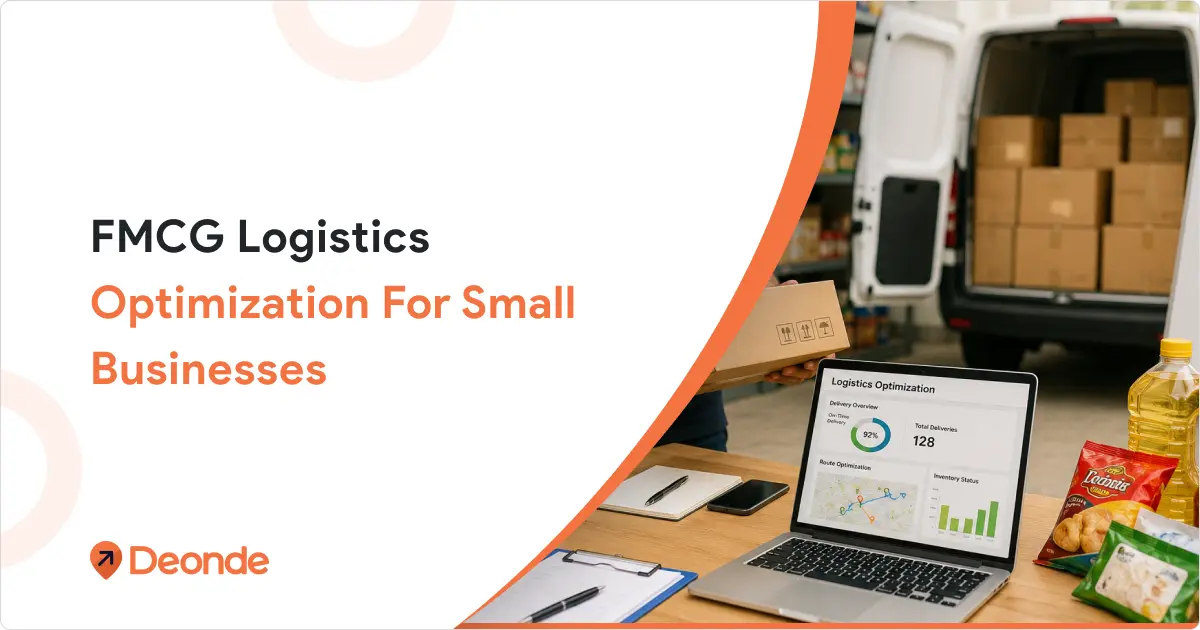
FMCG logistics optimization means improving how fast-moving consumer goods — groceries, dairy products, household essentials, personal care items — move from suppliers to your shelves or directly to your customers’ doors.
It covers everything from demand forecasting and inventory management to route planning, warehouse operations, and last-mile delivery. The goal is simple: get the right product to the right place at the right time, at the lowest possible cost.
If you’re running a grocery store, dairy, or restaurant, you’ve felt the squeeze. Your margins are thin, your customers want everything delivered yesterday, and a single delayed shipment can throw off your entire week. This isn’t just a logistical headache — it’s a direct threat to your bottom line.
In 2026, this isn’t optional anymore. Third-party delivery platforms are charging 15–30% commission per order.
Consumer expectations for same-day and next-day delivery have become the baseline, not a premium. Supply chain disruptions — from fuel price spikes to driver shortages — hit small businesses the hardest because they don’t have the buffer that large corporations do.
This guide breaks down the practical strategies that small FMCG businesses are using right now to cut delivery costs, reduce spoilage, and build operations that actually hold up under pressure.
We’ll also show you how a modern grocery delivery software platform can be the foundation for a more resilient and profitable operation.
Why FMCG Logistics Optimization Matters for Small Businesses
For fast-moving consumer goods, logistics isn’t just a cost center — it’s a core driver of survival and growth.
The Growing Importance of Efficient FMCG Supply Chains
Consumers now expect the speed and transparency of Amazon, whether they’re ordering a week’s worth of groceries or a gallon of milk.
How Logistics Impacts Profitability for SMBs
According to our analysis of publicly reported CPG earnings, freight costs typically account for 8–9% of a company’s cost of sales.
Boston Consulting Group research found that transportation efficiency alone can swing a company’s bottom-line profitability by up to 5 percentage points in either direction. For a mid-sized grocery business doing $2 million in annual revenue, a 2-point improvement in logistics efficiency could translate directly into $40,000 in additional operating income.
FMCG Logistics Challenges and Solutions 2026
Here are the three biggest hurdles for small FMCG businesses and practical ways to overcome them.
Demand Forecasting and Inventory Management
Effective FMCG supply chain optimization techniques start with smarter forecasting.
- Leverage Historical Data: Your past sales are your best guide. Analyze patterns — what sells on weekends versus weekdays, seasonal spikes, and the impact of local events.
- Start Simple: A well-maintained spreadsheet tracking daily sales by SKU can reveal powerful trends.
- Consider a Safety Stock Buffer: For your top 20% of best-selling items, keep a small buffer (2-3 days of extra supply) to prevent stockouts.
FMCG Last Mile Delivery Cost Reduction Strategies
The last mile is often the most expensive part of the entire supply chain. FMCG logistics optimization here can have an immediate impact on costs.
- Consolidate Orders: Offer free delivery over a certain threshold (e.g., “Free delivery on orders over $75”) to reduce the number of trips per dollar of revenue.
- Optimize Delivery Windows: Offer a limited set of realistic delivery windows to cluster deliveries in the same geographic area, drastically cutting fuel and time costs.
- Explore Local Pickup Points: Partner with a local café or shop to serve as a pickup location.
Managing Third-Party Commission Fees
If you’re using aggregator platforms, public pricing data from DoorDash, Uber Eats, and Grubhub shows that delivery commission plans typically range from 15% to 30% per order depending on the tier selected. That can obliterate your profit on a single sale.
- Drive Direct Orders: Promote your own ordering channel with a small discount. The commission you save is greater than the discount you give.
- Build Your Own Fleet: For high-volume areas, consider starting with a couple of dedicated drivers for peak hours.
FMCG Logistics Technology and Automation for SMBs
You don’t need an enterprise budget to access powerful tools.
AI-Powered FMCG Supply Chain Solutions
AI applications in FMCG logistics optimization are moving from large corporations to accessible SMB tools.
- Automated Reordering: AI can analyze your sales velocity and automatically generate purchase orders when inventory hits a predefined level.
- Dynamic Routing: AI-powered route optimization software can calculate the most efficient delivery routes in real-time. Industry studies indicate that route optimization can reduce fuel consumption by 15–25.
Warehouse Management Systems for Small Operations
- Barcode Scanning: According to Finale Inventory’s 2026 warehouse implementation guide, scanning reduces error rates from 3–5% to under 1% in inventory counts.
- Real-Time Inventory Visibility: Know exactly what you have and where it is. This prevents overselling and helps you fulfill online orders from your physical store inventory.
Route Optimization and Delivery Tracking
According to our logistics industry report, 59% of consumers say the ability to track shipments in real time affects their satisfaction. Implementing delivery tracking also gives you proof of delivery and performance metrics for your drivers.
FMCG Last Mile Delivery Optimization: A Practical Guide
Reducing Delivery Costs While Maintaining Speed
- Analyze Your Cost Per Delivery: Factor in fuel, driver time, vehicle wear, and packaging. You might find that delivering to certain distant neighborhoods is unprofitable.
- Implement Zone-Based Pricing: Charge a small delivery fee for areas farther from your base.
Customer Expectations and Real-Time Tracking
Logistics optimization in the fast-moving consumer goods industry is now judged by the customer’s phone screen. They want to see their order moving in real-time.
Sustainable Delivery Practices
- Optimize for Lower Emissions: Route optimization doesn’t just save fuel; it reduces your carbon footprint.
- Use Sustainable Packaging: Switch to recycled, compostable, or minimal packaging.
- Consider Electric Vehicles (EVs): For urban delivery zones, EVs have lower running costs.
Implementation Roadmap: Getting Started with FMCG Logistics Optimization
Assessing Your Current Logistics Setup
- Document the Flow: Trace a single order from placement to delivery.
- Identify the Leaks: Where are the biggest costs?
- Set Clear Goals: Define what success looks like.
Choosing the Right Technology Partners
- Prioritize Integration: Your tools should talk to each other. A platform like Deonde offers a unified system for ordering, dispatch, and tracking.
- Start with a Pilot: Test a new tool with a single product line or delivery route.
- Focus on User Experience: Choose intuitive, mobile-friendly tools.
Measuring ROI and Continuous Improvement
- Cost Per Delivery: The holy grail metric. Aim to reduce this quarter over quarter.
- Order Accuracy Rate: The percentage of orders delivered without errors.
- Customer Satisfaction (CSAT): Use simple post-delivery surveys.
Future Trends: What’s Next for FMCG Supply Chain Optimization
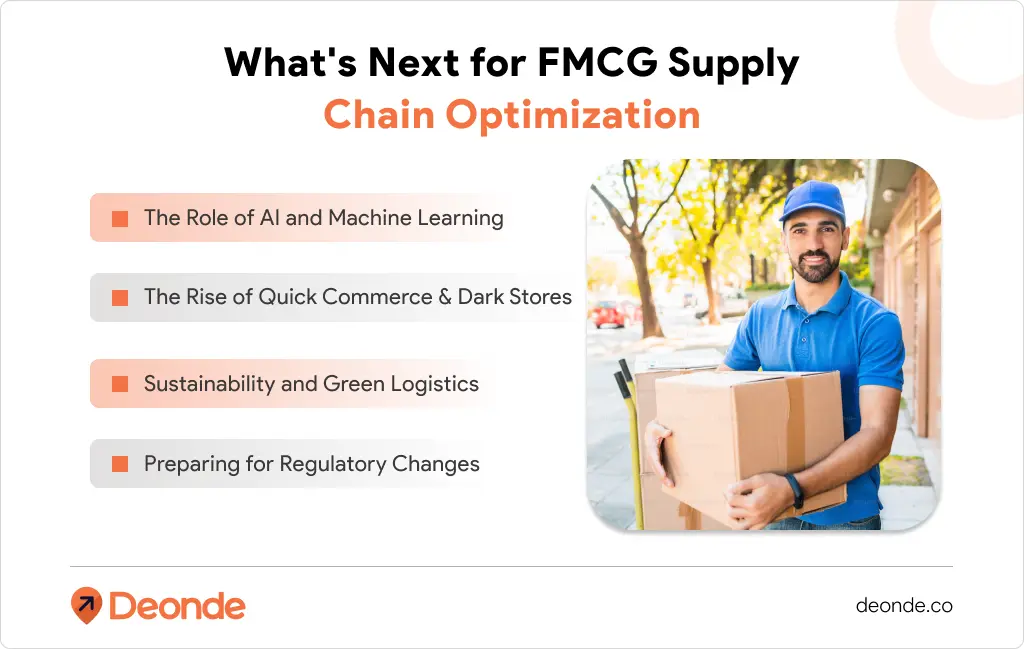
The Role of AI and Machine Learning
AI will move from being a tool for optimization to one for prediction. Expect systems that can forecast demand based on past sales, weather forecasts, social media trends, and community event schedules.
The Rise of Quick Commerce and Dark Stores
The shift toward quick commerce vs e-commerce delivery models is reshaping fulfillment strategies.
Dark stores — retail spaces dedicated solely to fulfilling online orders — are enabling sub-30-minute delivery windows.
For small businesses, understanding this shift helps you decide whether to compete on speed, reliability, or niche service. Similarly, the hyperlocal delivery model connects nearby customers with local vendors for rapid fulfillment.
Sustainability and Green Logistics
More cities will likely implement low-emission zones or congestion pricing. Investing in efficient fleets and local fulfillment now will future-proof your business.
Preparing for Regulatory Changes
From data privacy laws governing customer tracking to labor laws affecting delivery drivers, the regulatory environment is tightening.
An FMCG logistics optimization case study in the future will almost certainly include compliance and sustainability as core metrics alongside cost and speed.
FAQ
Q: What Is The First Step In Fmcg Logistics Optimization For A Small Business?
A: Start with an honest assessment of your current “cost per delivery.” Track every order for a week to understand the true expense of fuel, time, and labor. You can’t improve what you don’t measure.
Q: How Can I Reduce Last-Mile Delivery Costs Without Hiring More Drivers?
A: Focus on consolidation. Offer incentives for larger orders, set optimal delivery windows to cluster stops, and use route optimization software to ensure your existing drivers are as efficient as possible.
Q: Are Ai-Powered Logistics Tools Too Expensive For A Small Grocery Store?
A: Not anymore. Many modern SaaS platforms offer AI-driven features like automated reordering and smart routing at affordable monthly subscription rates. The ROI from saved time and reduced waste often pays for the tool within months.
Q: How Do I Handle Perishable Goods In My Delivery Logistics?
A: Invest in proper insulated packaging and consider a “cold chain” verification process. For deliveries, shorter time windows are crucial. Communicate clearly with customers about delivery times.
Q: Can I Compete With Large Chains On Delivery Speed?
A: You can compete on smart delivery, not just speed. Focus on reliability, excellent communication via real-time tracking, and personalized service. Niche down to your local community.
Q: What’s A Realistic Roi Timeline For Investing In Logistics Technology?
A: According to our 2026 analysis, positive ROI typically appears within 6–18 months of deployment, with fuel and route mileage savings materializing first and customer retention gains accumulating over 12–24 months.