
Did you know 7 out of 10 working professionals now prefer home-style meals over take-out?
In today’s fast-paced world, the search for a healthy, home-style meal often feels like an uphill battle. We’re all looking for that perfect balance of convenience and quality.
For decades, the traditional tiffin service has been the simple, trusted solution, famously exemplified by the iconic Mumbai Dabbawalas. This time-honored system brought the comfort of home-cooked food directly to offices and homes with legendary reliability and simplicity.
Now, imagine that same dependable service, supercharged by technology. This is the revolution of the online tiffin service, where powerful SaaS platforms are transforming local businesses into digital powerhouses.
The emergence of SaaS-based Tiffin App platforms has made launching an online tiffin business simple and cost-effective. Entrepreneurs can now manage menus, subscriptions, and deliveries all from one dashboard.
With platforms like Deonde, anyone can launch a branded tiffin delivery app without heavy investment or coding. The model empowers small food businesses to go digital quickly and grow sustainably.
So, what exactly is an online tiffin delivery app, and why is it creating such a buzz? Let’s dive in and explore how this innovation is set to change the way we eat for good.
Read More: How Much Does a Tiffin Service Business Cost
What is a Tiffin App?
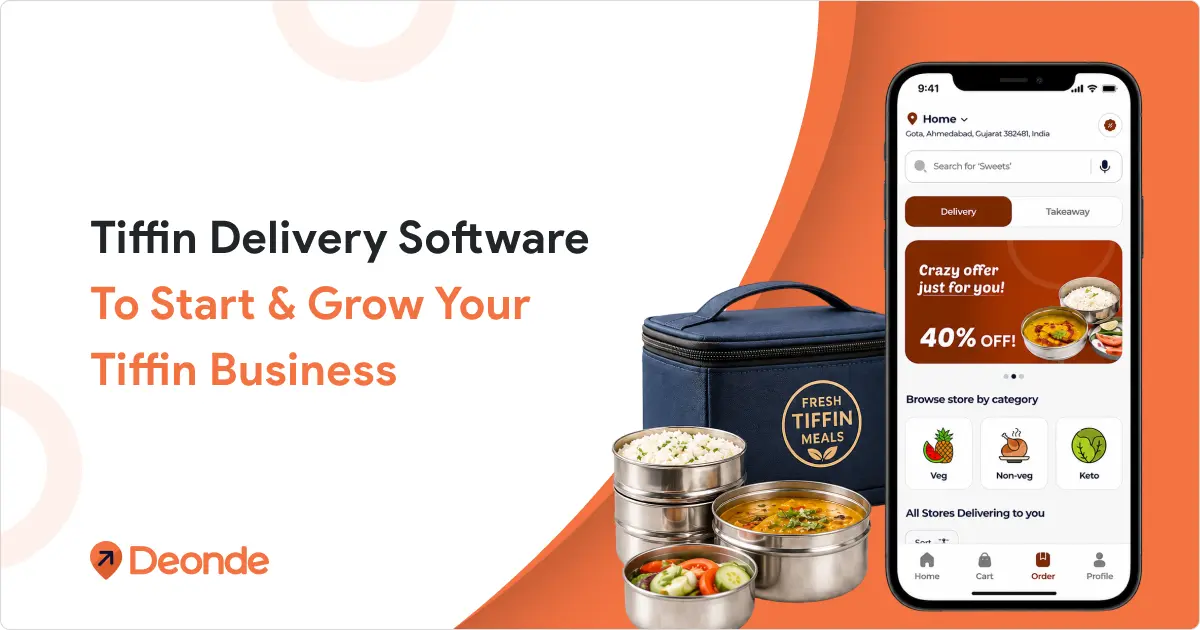
A Tiffin App is a digital platform that connects customers with local tiffin providers, home chefs, or small kitchens offering freshly prepared, homemade meals. It brings the traditional tiffin service online, making meal ordering, payments, and delivery completely automated.
Key features include:
- Subscription options: Customers can subscribe to daily, weekly, or monthly meal plans, which are more structured than ordering from a standard restaurant delivery service.
- Home-cooked meals: The focus is on authentic, homemade food rather than restaurant-style cuisine, which is often oilier and more processed.
- Customization: Many apps allow for a degree of meal customization, letting users specify dietary preferences, portion sizes, or the days they need delivery.
- Hygiene and quality: Many platforms emphasize strict hygiene standards and use fresh ingredients, differentiating their offerings from quick-service restaurant fare.
- Operational efficiency: The apps provide a complete system with panels for customers, vendors, and delivery agents, handling payments, order management, and logistics.
Why is the Tiffin App Trending in 2026?
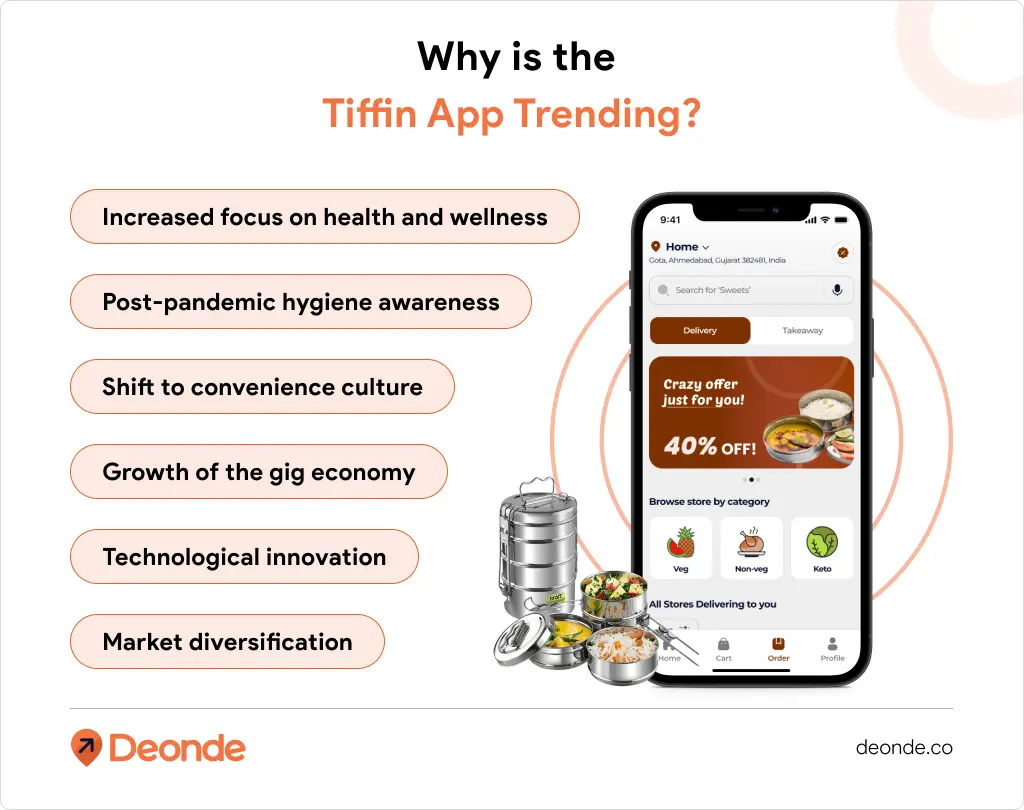
The emergence of online tiffin services is driven by a combination of cultural shifts, economic trends, and technological advancements that are reshaping our relationship with food.
Shift to convenience culture
With more people working longer hours, particularly in urban areas, there is a strong demand for time-saving solutions that simplify meal planning. This trend is particularly prominent among busy working professionals, students, and nuclear families.
Growth of the gig economy
For anyone asking, Is there profit in tiffin service?, these apps provide a clear answer. They empower skilled home cooks and small entrepreneurs to monetize their culinary skills without the high overhead costs of running a restaurant. This decentralized model is well-suited for the modern, app-driven economy.
Post-pandemic hygiene awareness
The COVID-19 pandemic accelerated the demand for contactless delivery and heightened consumer awareness of food hygiene. Tiffin apps that emphasize cleanliness by using FSSAI-certified home chefs gain a strong competitive advantage.
Increased focus on health and wellness
As consumers become more health-conscious, they seek healthier alternatives to fast food. The home-cooked, nutritious meals offered by tiffin apps appeal directly to this growing demographic.
Technological innovation
The integration of technologies like AI, GPS tracking, and enhanced user interfaces (UI/UX) is improving the service’s efficiency, personalization, and reliability.
Market diversification
While large food delivery apps like Zomato dominate the restaurant space, tiffin apps are effectively carving out a niche market by focusing exclusively on home-cooked and regional meals.
Why Now Is the Best Time to Start Your Own Tiffin Service Business?
The market remains largely unorganized, dominated by small, local vendors with limited reach.
This fragmentation presents a golden opportunity. With only a handful of major players in the tech-enabled tiffin delivery space, there’s a significant gap for new professional services to enter and capture a substantial market share.
The home-cooked meal delivery market is valued at approximately $3.5 billion in 2024 in India, and is projected to grow substantially over the next five years.
The U.S. represents a significant portion of the global meal kit delivery market, with over 39.5% of the revenue share in 2023. It is also seeing a rise in demand for custom and plant-based options.
Companies like the Dabbawalas in India generate significant revenue, with estimates in 2024 suggesting an annual turnover of ₹200–₹240 crore. Shef, based in the US, has an estimated annual revenue of approximately $123.4 million. Both are prime examples of this successful model, showcasing the high-profit potential in niche food delivery. This trend extends across the online food industry, confirming just how profitable an online food business can be when specialized.
How Does a Tiffin App Work?
A tiffin app streamlines the process of getting fresh, home-cooked meals to your doorstep with minimal hassle. Here’s a step-by-step breakdown of how it works:
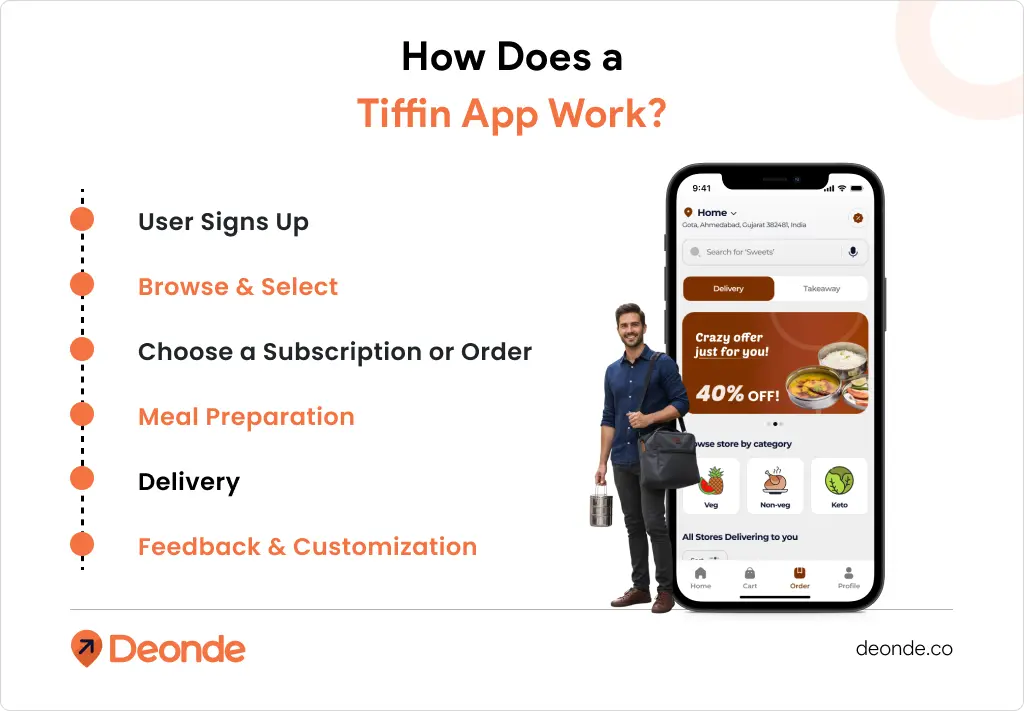
User Signs Up: Download the app or visit the website and create an account with basic details like name, contact information, and delivery address.
Browse & Select: Explore a variety of home chefs, small kitchens, or curated meal plans available in your area. Menus often highlight regional cuisines, dietary preferences (vegan, gluten-free, etc.), or portion sizes.
Choose a Subscription or Order: Opt for a subscription plan (daily, weekly, or monthly) for regular deliveries or place a one-time à la carte order for flexibility. Subscriptions often come with discounts and priority delivery.
Meal Preparation: Once the order is placed, the chef or kitchen prepares the meal, typically on the same day to ensure freshness. Many apps emphasize locally sourced, high-quality ingredients.
Delivery: Meals are delivered in eco-friendly, reusable, or sustainable packaging during designated lunch or dinner time slots. GPS tracking and real-time updates ensure you know exactly when your food will arrive.
Feedback & Customization: After enjoying your meal, you can rate the chef, provide feedback, or customize future orders to suit your taste or dietary needs.
This seamless, tech-driven process makes tiffin apps a convenient and reliable choice for anyone craving wholesome, home-style meals without the effort of cooking.
Why People Are Choosing Tiffin Services Over Restaurants?
The debate over tiffin vs restaurant delivery is heating up, and tiffin services are stealing the spotlight from traditional restaurants and big delivery apps.
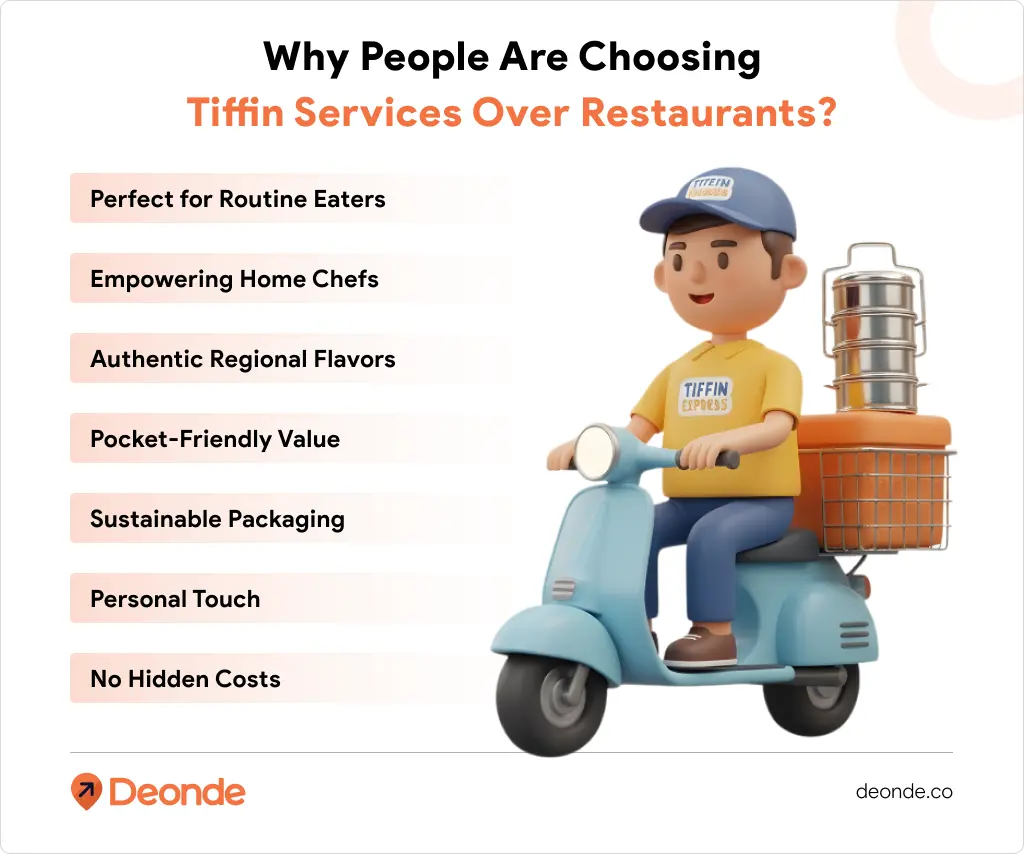
- Authentic Regional Flavors: Tiffin apps offer local, home-style dishes that restaurants often overlook, such as a Gujarati thali or South Indian sambar-rice, providing a taste of home wherever you are.
- Pocket-Friendly Value: Compared to pricey restaurant meals, tiffin services offer affordable, subscription-based pricing that delivers quality without burning a hole in your wallet.
- Personal Touch: Unlike the one-size-fits-all restaurant menus, tiffin apps let you connect directly with chefs who can customize dishes to your liking, whether it’s less spice or extra veggies.
- Sustainable Packaging: Many tiffin services use reusable dabbas or biodegradable packaging, cutting down on plastic waste and appealing to eco-conscious foodies.
- Empowering Home Chefs: By ordering through tiffin apps, you’re supporting passionate home cooks and small-scale kitchens, helping them thrive in a competitive food industry.
- No Hidden Costs: Restaurants often sneak in extra charges like service fees or high delivery costs. Tiffin apps keep it transparent, with clear pricing and no surprises.
- Perfect for Routine Eaters: For those who need meals daily—think students or office-goers—tiffin services offer a dependable routine, delivering fresh food at the same time every day.
Tiffin apps combine the heart of homemade cooking with the ease of modern tech, making them a smarter, tastier choice over restaurant food in 2026.
Conclusion: The Future of Home-Cooked Meals Is Digital.
Tiffin apps are changing the way people eat in 2026. They combine the warmth of homemade food with the speed and comfort of modern technology. Whether you’re a student tired of take-out, a working professional looking for healthy lunches, or a home chef dreaming of starting your own food business, tiffin apps offer something for everyone.
With a modern, SaaS-based platform, you can launch a feature-rich, branded tiffin delivery app in a fraction of the time and cost, avoiding the complexities of custom Tiffin app development. Imagine having a powerful dashboard to manage your menus, subscriptions, payments, and delivery fleet, all without writing a single line of code.
Ready to turn your passion for cooking into a thriving online business?

Frequently Asked Questions (FAQ):
1. What are the first steps to launch my own tiffin app business?
First, decide on your food specialty (like healthy or regional dishes). Then, create a simple business plan, get the required food licenses, and use a SaaS platform to easily launch your app and start marketing.
2. What are effective ways to attract and retain customers for my tiffin business?
Use social media and local ads to find new customers. Keep them happy with great food, flexible subscription plans, and special discounts for being a loyal customer.
3. How can I assess demand for tiffin services in my area?
Check local social media groups and see what competitors are doing. You can also run online polls or simply talk to people in local offices and communities to see if they’re interested.
4. What criteria should I use to choose a SaaS tiffin app provider?
Choose a provider that offers an all-in-one package: a user-friendly app for customers, a dashboard for you, and a tool for delivery tracking. Make sure they have good support and can grow with your business.