The on-demand delivery industry is an excellent method to take advantage of the market’s growth and create an economically viable business.
However, just like every other business, you require the right software and tools to run your day-to-day operations efficiently.
If you are a business that delivers, you must track orders and manage your fleet effectively, as well as reward driver-partners with incentives and optimize your delivery process to increase profits.
This is all possible if you have the most effective, most popular food delivery management system solution to aid your company. When you are comparing different delivery management software, there are some points you must be aware of.
The options offered, as well as the price of purchasing the software, after-sales support for customers, and ease of use, are just a few aspects to be considered when evaluating delivery management applications.
To help you choose the best delivery management software to meet your needs, we have put together a list of the top delivery management software available for 2026.
What Is Delivery Management Software?
Delivery management software is a digital solution designed to manage, streamline, and automate delivery operations. It covers everything from order dispatching and driver route planning to real-time tracking and delivery confirmation. For businesses handling multiple deliveries daily, having such a system in place is essential.
These tools are particularly valuable for:
- E-commerce companies
- Food and grocery delivery services
- Courier and logistics providers
- Retail chains with omnichannel distribution
- Subscription-based businesses (e.g., milk, meals, etc.)
Why Use Delivery Management System?
Streamlined Operations
One of the primary benefits of implementing delivery management system is the ability to streamline operations. By automating various aspects of the delivery process, businesses can save time and reduce human error. This software allows for easy scheduling and dispatching, ensuring that deliveries are made promptly. coordinating people, jobs, and vehicles across multiple locations, says Gabriel Cohen from Klipboard, a business management platform.
Enhanced Customer Experience
In the competitive landscape of e-commerce, customer experience is paramount. management software provides customers with real-time tracking capabilities, allowing them to monitor their orders from dispatch to delivery. This transparency fosters trust and improves satisfaction, leading to repeat business.
Cost Efficiency
Reducing delivery costs is another significant advantage of using delivery software. By optimizing routes and reducing fuel consumption, businesses can significantly cut down on expenses. Furthermore, many software solutions offer analytics features that help identify inefficiencies, enabling companies to make data-driven decisions.
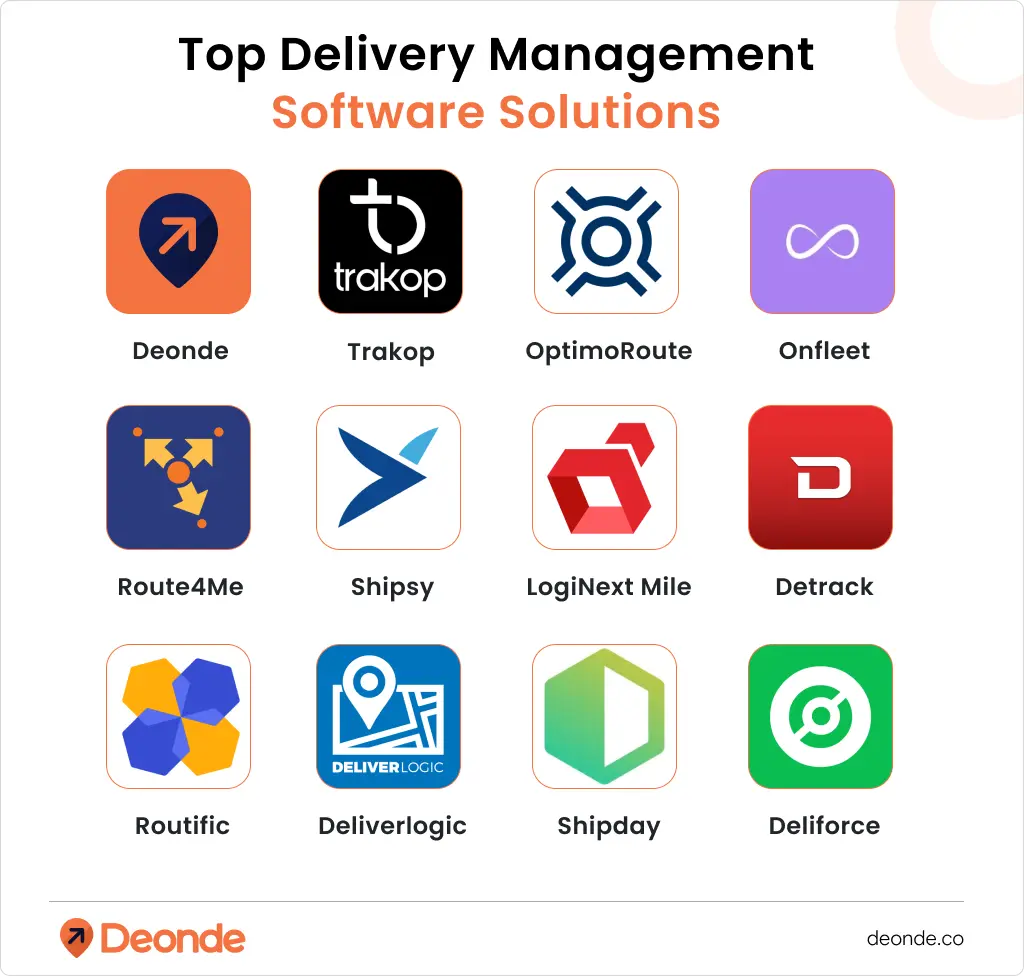
Top Best Delivery Management Software Solutions
To help you choose the right platform, here is a list of top-rated delivery management systems, covering a wide range of business needs and industries.
1. Deonde

Best for: Small businesses and restaurants needing affordable, all-in-one solutions.
Deonde is SaaS-based delivery management system designed for simplicity and scalability. It’s a favorite among restaurants, startups, and enterprises, offering features like real-time tracking, automated dispatching, and customer notifications. Its seamless integration with POS systems and e-commerce platforms makes it a go-to for the best delivery management software for enterprises and small businesses.
Key Features:
- Real-time order tracking with customer SMS alerts.
- Automated route optimization for faster deliveries.
- Customizable dashboards for branding.
- Integrates with POS and e-commerce platforms.
- Mobile app for drivers to manage routes on the go.
- Free 15-day trial, no credit card required.
2. Trakop
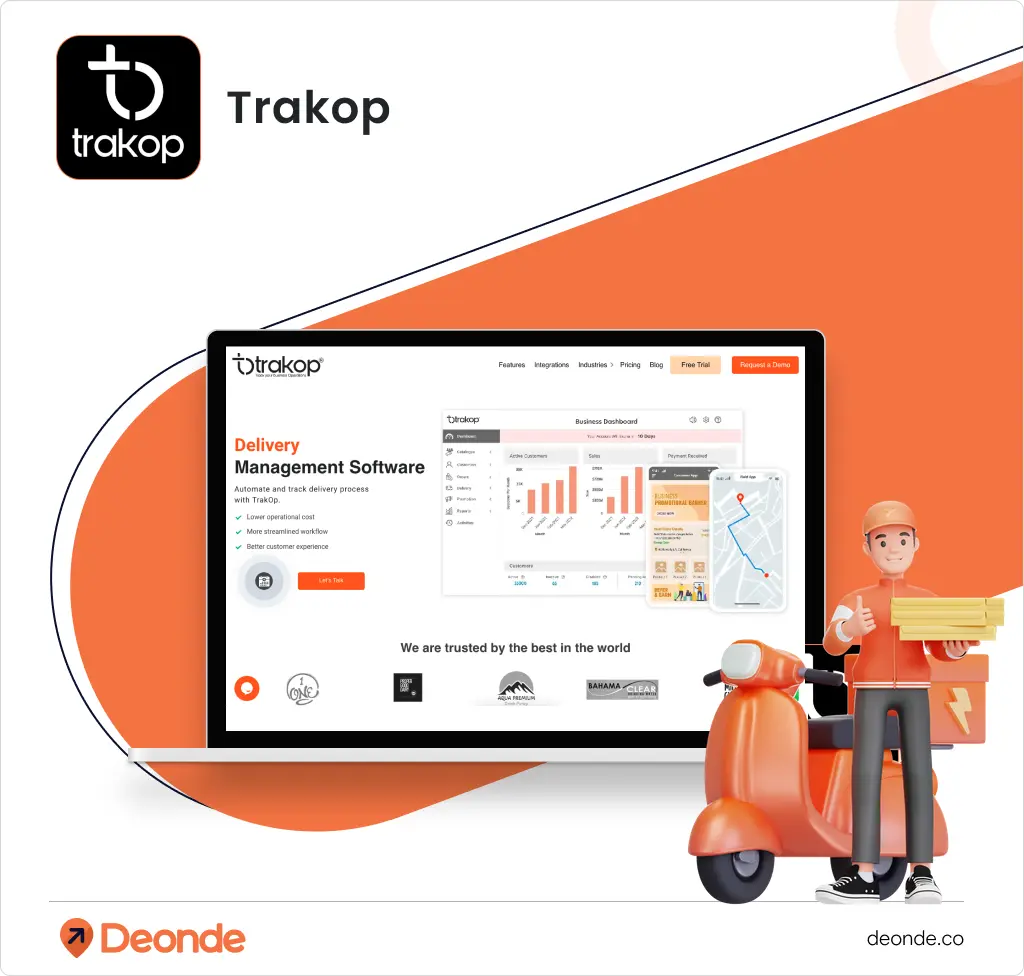
Best for: Subscription-based scheduled delivery businesses.
TrakOp offers a scheduled delivery platform that automates operations, including subscription & one-time order management, recurring invoicing & payment collection, inventory tracking, B2B & B2C customer management, & delivery planning & optimization. The system supports multiple payment business models (prepaid, postpaid, and hybrid) & multiple payment gateway integrations.
Key features:
- Automated order processing (subscription and one-time orders)
- Automated multi-stop route optimization to reduce turnaround and last-mile delivery costs.
- Advanced and intuitive business dashboard.
- Delivery schedule management.
- Automated invoicing and multiple payment collection options.
3. OptimoRoute
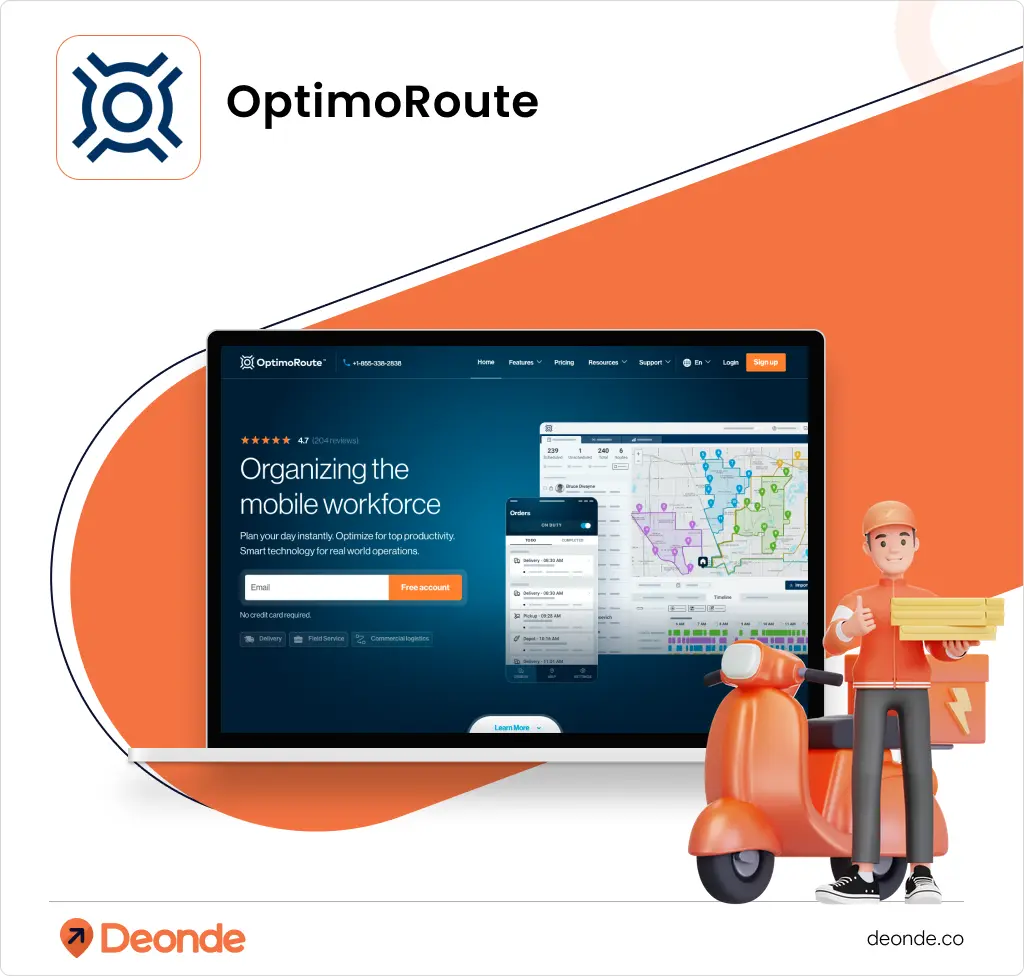
Best for: Businesses with complex, multi-stop delivery routes.
OptimoRoute shines in route optimization, making it ideal for field service and delivery businesses with dynamic schedules. Its cloud-based platform uses advanced algorithms to plan routes in seconds, saving fuel and time. It’s a strong contender for e-commerce order tracking thanks to its real-time updates and proof-of-delivery features.
Key Features:
- Multi-stop route planning with real-time adjustments.
- Proof of delivery with digital signatures and photos.
- Mobile app for drivers to manage routes on the go.
- Scalable for small to enterprise-level businesses.
4. Onfleet
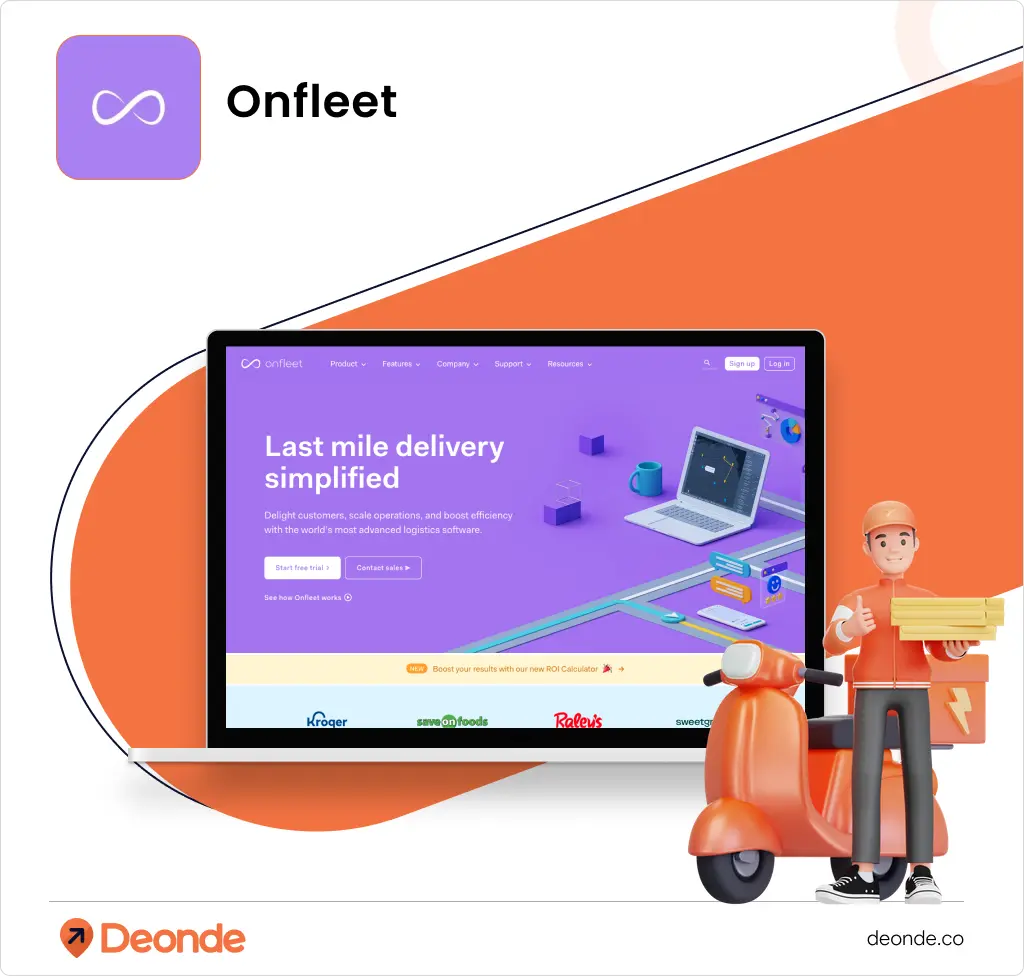
Best for: Retail and food delivery businesses needing robust integrations.
Onfleet powers millions of deliveries across 60+ countries, making it a trusted name in dispatch solutions. Its intuitive driver app, automated notifications, and API integrations make it perfect for restaurants and e-commerce stores. Onfleet’s real-time tracking and analytics are top-notch for improving customer experience.
Key Features:
- Automated SMS notifications and ETA updates.
- API integrations with Shopify, WooCommerce, and more.
- Driver performance analytics for operational insights.
- Real-time tracking for customers and dispatchers.
5. Route4Me
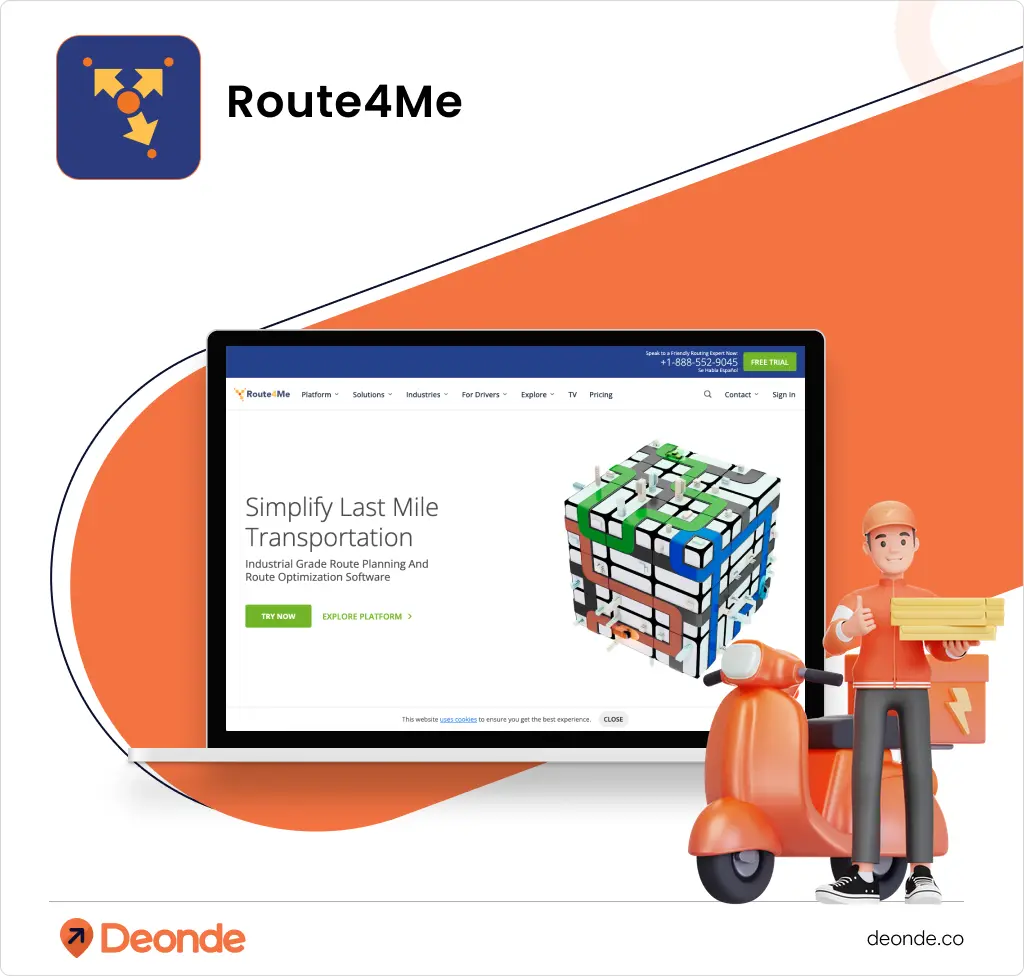
Best for: Small to midsize businesses needing simple route planning.
Route4Me is a straightforward routing solution that excels in multi-stop route optimization. It’s ideal for field sales, couriers, and small e-commerce businesses looking to save time and money. Its mobile app and barcode scanning features streamline order tracking.
Key Features:
- Multi-stop route optimization for up to 200 stops.
- Barcode scanning for order verification.
- Real-time driver tracking and customer updates.
- Integrates with Salesforce, Shopify, and QuickBooks.
6. Shipsy
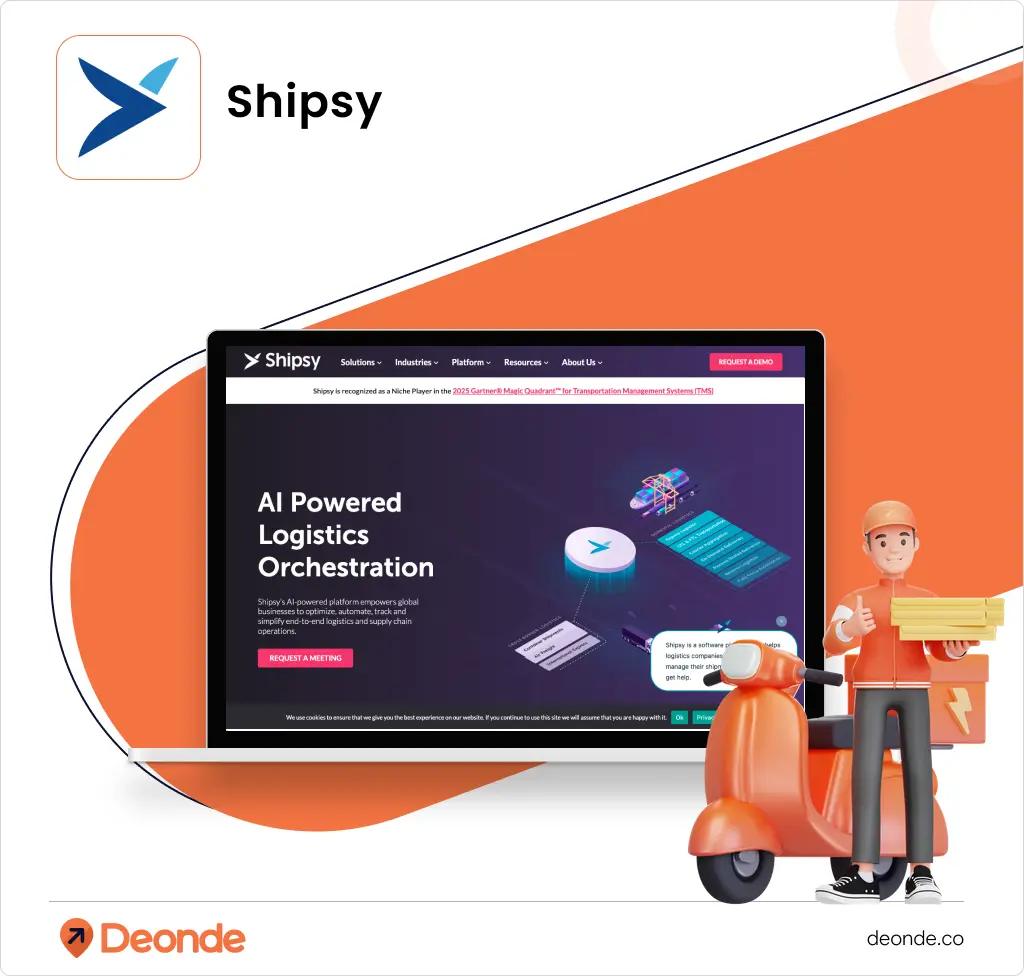
Best for: Enterprises with complex logistics needs.
Shipsy is a robust logistics platform for large-scale e-commerce and logistics companies. Its AI-powered tools optimize routes, manage multiple warehouses, and provide end-to-end visibility. It’s a strong pick for businesses scaling internationally or handling high-order volumes.
Key Features:
- AI-driven route optimization and dynamic dispatching.
- Multi-warehouse management for large operations.
- Real-time tracking with geofencing capabilities.
- Advanced analytics for data-driven decisions.
7. LogiNext Mile

Best for: Large businesses needing advanced logistics solutions.
LogiNext Mile is a powerhouse for e-commerce delivery tracking software, offering tools like dynamic routing, geofencing, and predictive analytics. It serves industries like retail, courier services, and food delivery, with a focus on last-mile efficiency.
Key Features:
- Predictive AI for accurate ETAs and geocoding.
- Dynamic routing for last-minute changes.
- Customer portal for real-time order tracking.
- Integrates with ERP and CRM systems.
8. Detrack
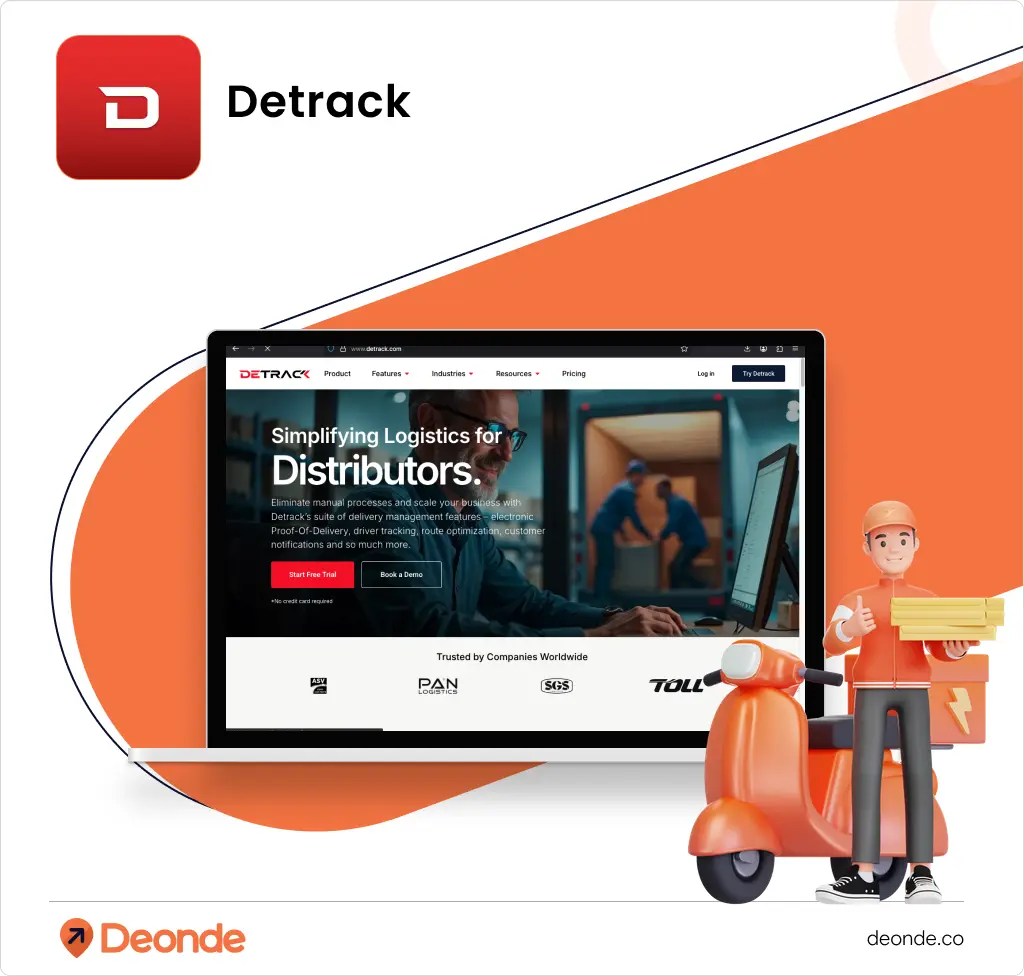
Best for: Businesses needing flexible, affordable tracking.
Detrack is a cloud-based dispatch tool that simplifies logistics with real-time tracking, electronic proof of delivery (ePOD), and route optimization. Its affordability and flexibility make it a top choice for small to midsize businesses.
Key Features:
- Real-time tracking with map-based customer updates.
- ePOD with photos and digital signatures.
- Route optimization for fuel and time savings.
- API integrations for e-commerce platforms.
Also Read: Restaurant Management System – Step By Step Guide
9. Routific
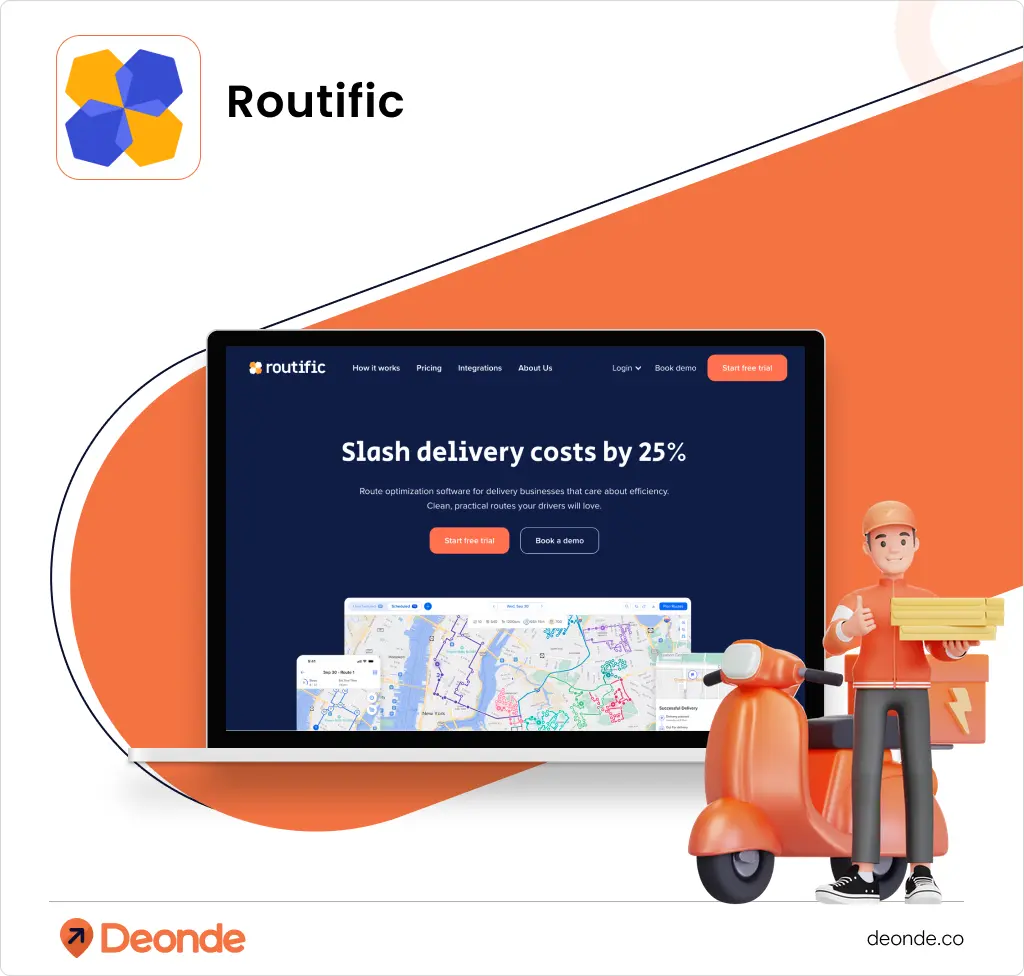
Best for: Small to midsize businesses needing intuitive tools.
Routific is a user-friendly platform built for small businesses. Its focus on route optimization and real-time tracking makes it ideal for e-commerce and local delivery services.
Key Features:
- Automated route planning with accurate ETAs.
- Real-time driver tracking and customer notifications.
- Mobile app for easy driver management.
- Free trial and affordable pricing plans.
10. Deliverlogic
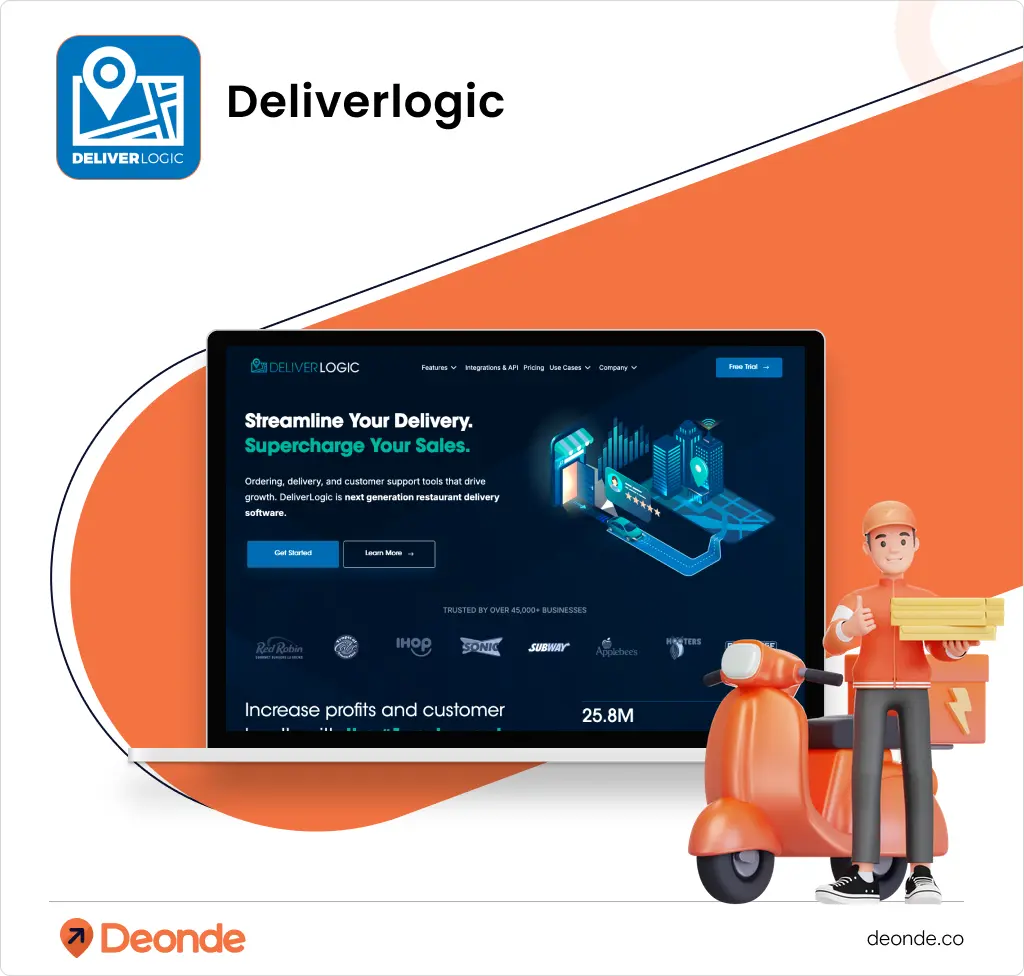
Best for: White-label solutions for delivery marketplaces.
Deliverlogic offers a customizable, white-label platform for businesses building their own delivery networks. It’s perfect for startups and marketplaces needing branded, scalable solutions with robust tracking and dispatching.
Key Features:
- White-label platform with custom branding.
- Real-time tracking and automated dispatching.
- Integrates with e-commerce and POS systems.
- Customer feedback collection for insights.
11. Deliforce

Best for: Hyperlocal delivery and field force management.
Deliforce is a versatile platform for small businesses, offering real-time tracking, route optimization, and customer chat features. It’s ideal for e-commerce, food delivery, and courier services.
Key Features:
- Real-time tracking with Google Maps integration.
- Customer chat and SMS alerts for ETAs.
- Route optimization for multiple deliveries.
- API integrations for e-commerce platforms.
Must Read: Questions to Ask Before Choosing a Delivery Management Software for Restaurants
12. Upper
Best for: Delivery and service businesses needing fast, accurate multi-stop route planning.
Upper is an intuitive route planning and delivery management software built for businesses that handle high-volume, multi-stop deliveries every day. From last-mile delivery operators and couriers to food, grocery, pharmacy, and flower delivery services, Upper helps dispatchers turn hours of manual planning into minutes of automated optimization.
Key Features:
- AI-driven multi-stop route optimization with one-click dispatch.
- Electronic proof of delivery with photos, signatures, and notes.
- Live driver GPS tracking and automated customer SMS/email ETAs.
- Drag-and-drop schedule editor and recurring route templates.
- Curbside delivery support and custom service zones.
- 7-day free trial, no credit card required.
What are the Benefits of having Delivery Management Software?
Not every platform on this list fits every business. Here’s a quick decision framework to narrow it down:
| Your Situation | What to Look For |
|---|---|
| 5–20 daily deliveries | Simple dispatch, mobile driver app, basic route optimization |
| 20–100 daily deliveries | Automated routing, real-time tracking, customer notifications |
| 100+ daily deliveries | AI-powered optimization, multi-warehouse support, API integrations |
| Subscription/recurring orders | Scheduled delivery management, recurring invoicing |
| White-label marketplace | Custom branding, multi-vendor support, commission control |
Key Benefits of Delivery Management Software
- Complete fleet visibility – see exactly where every driver and order stands in real time, and confirm your team is following the routes and processes you’ve set.
- Fewer costly errors – built-in checks catch problems like missed stops or delayed pickups before they become customer complaints.
- Lower operating costs – route optimization cuts fuel spend and driver hours, and consistent routing makes planning predictable.
- Instant team communication – dispatch, drivers, and managers are notified the moment something changes, instead of relying on calls or group chats.
- Fits any business type – the same platform supports restaurants, grocery, pharmacy, and courier operations, unlike older tools built for a single industry.
- Scales with you – whether you need an out-of-the-box package or a more custom setup with hands-on support, most platforms offer both.
Conclusion
The market is competitive, and for good reason: modern businesses need real-time tracking, reliable routing, and integrations that fit into their existing workflow.
The right pick depends more on your business size and daily order volume than any single feature on a list. Use the free trials above to test a few platforms hands-on before committing, and prioritize the one your dispatch team will actually want to use every day.
Are you unsure about How to set up Online Ordering System for Restaurants? Talk to experts now.