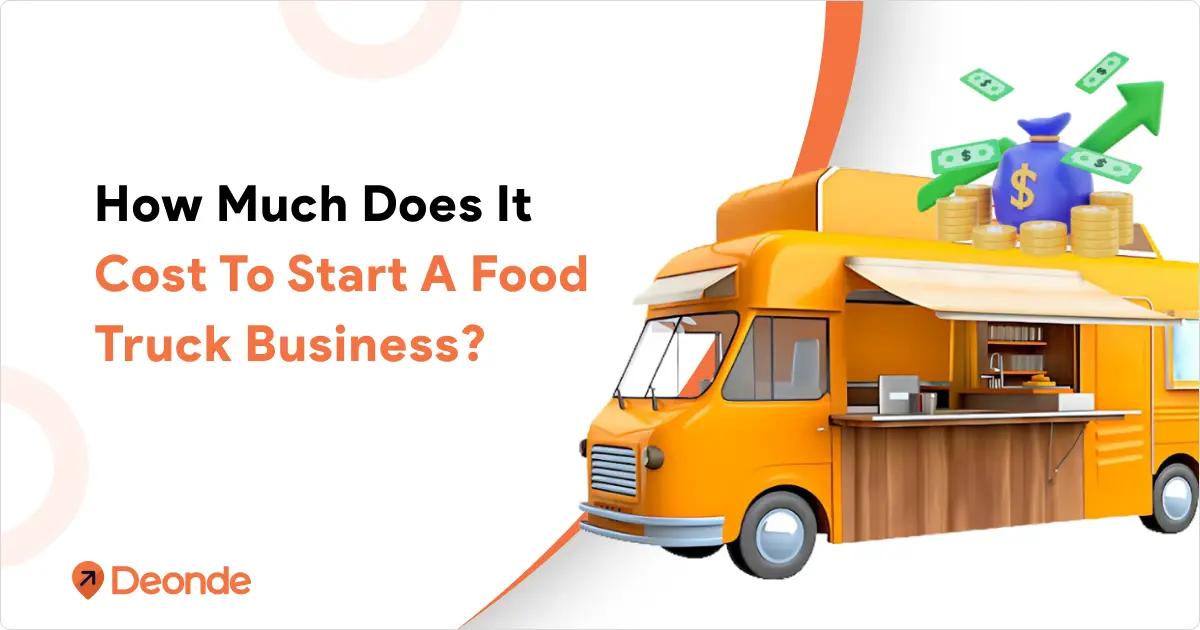
Imagine rolling up to a buzzing festival, the aroma of your signature dishes drawing eager crowds to your vibrant food truck. Starting a food truck business is an exciting venture, but it comes with significant financial considerations.
This guide provides a clear look at all the costs involved. Specifically, we will detail the food truck startup cost and ongoing expenses.
Our goal is to offer clarity on the significant financial investment required to launch a successful mobile kitchen.
Are you wondering, “What is the real cost to start a food truck?” or “How much capital do I truly need to get rolling?” This guide is designed to answer those very questions with deep, actionable insights.
Imagine your delicious creations served from a vibrant, mobile kitchen, reaching diverse customers with flexibility. That dream is achievable with careful financial planning.
We’ll cover everything from vehicle acquisition and equipment to permits, marketing, and operational expenses, all updated for 2026 global market trends. This guide will help you build a realistic food truck business plan.
Why Start a Food Truck Business?
With food trucks surging in popularity in 2026, driven by demand for unique and sustainable dining, the global food truck market is projected to grow from $4.36 billion in 2025 to reach $5.8 billion in 2029, with a Compound Annual Growth Rate (CAGR) of 7.9%, making it a highly attractive business to enter.
here are key reasons to jump in:
- Lower Startup Costs: It’s significantly cheaper to open and equip a food truck than a full restaurant (often $500,000+ for a brick-and-mortar), making it more accessible.
- Flexibility & Mobility: You can move your business to different locations with high demand (like events, festivals, or busy lunch spots), adapting easily to customer flow.
Recent surveys indicate that 78% of consumers hold a positive view of food trucks, and Millennials and Gen Z, in particular, favor the unique experience that food trucks offer.
- Lower Overheads: Generally, food trucks have lower ongoing expenses like rent, utilities, and staffing compared to a fixed restaurant.
- Direct Customer Connection: It offers a great way to interact directly with your customers, build a loyal following, and refine your menu based on real-time feedback.
- Niche Focus & Creativity: Food trucks are perfect for specializing in unique cuisines or experimental menus. While fast food holds the largest segment in the food truck market, the plant-based food truck segment is projected to see a CAGR of over 15% by 2030.
It’s an agile way to enter the food industry with less risk and more freedom.
How Much Does the Truck Itself Cost?

The truck is the cornerstone of your business. It’s likely where you’ll allocate the largest chunk of your initial food truck investment.
However, not all food truck price tags are created equal. You have three main options when securing your primary vehicle.
Each approach has its benefits and drawbacks to consider. Here’s a closer look at the ways to acquire your food truck.
Ways to Get a Food Truck: Pros & Cons
|
Way to Get a Food Truck |
PROS |
CONS |
|
Buying a new food truck |
– Top-tier equipment with warranties |
– Higher upfront food truck startup cost |
|
– Tailored to your cuisine needs |
||
|
Buying a used food truck |
– More affordable initial investment |
– May require repairs or customization |
|
– Potentially faster permitting process |
– Equipment may not align perfectly with your menu |
|
|
Building a custom food truck |
– Fully customized to your unique vision |
– Can be very time-intensive to complete |
|
– Complete control over every detail |
– Permitting can be complex due to its custom nature |
1. Buying a New Food Truck
A brand-new food truck, equipped with state-of-the-art appliances, typically costs between $75,000 and $200,000 USD. These vehicles are built specifically for commercial food service operations, ensuring compliance with complex health and safety regulations from day one.
New trucks often come with comprehensive manufacturer warranties (typically 1-3 years), offering significant peace of mind regarding potential mechanical or equipment breakdowns.
While the upfront food truck investment can be substantial, leasing is a viable option to spread out the cost and conserve initial capital. Leasing typically ranges from $2,000 to $3,000 per month.
2. Buying a Used Food Truck
For a more budget-friendly approach, used food trucks typically range from $15,000 to $100,000 USD. The cost of buying a used food truck depends heavily on its age, condition, existing equipment, and mileage.
You might even find smaller food trailers or carts for less, though you’ll then need a separate, robust vehicle to tow them, which adds another layer of cost.
Be prepared to invest additional capital in repairs (e.g., $5,000-$15,000 for generator or appliance upgrades) or customization to meet your specific menu needs or local health and safety regulations. Always conduct a thorough pre-purchase inspection.
3. Building a Food Truck from Scratch
If you have a clear vision and possess significant technical and construction skills, you can convert a van or truck into a custom food truck yourself.
The cost of building a food truck this way starts at around $50,000 – $200,000+ USD (depending on the vehicle and equipment you choose)
While this option offers unparalleled control over design and layout, it requires meticulous planning and execution to meet stringent health and safety codes. This route can also be very time-intensive, potentially delaying your launch.
Startup Costs Beyond the Truck
The truck is just the beginning of your food truck startup costs. Before you serve your first customer, you’ll need to cover several other essential one-time investments to get your food truck business rolling.
Understanding these initial, one-time investments is crucial for a realistic food truck budget. Ignoring them can lead to unexpected financial strain down the line.
Equipment
Even a fully equipped truck may need tweaks or additional pieces to perfectly match your menu. This is a significant part of your food truck equipment cost.
If you’re outfitting a truck from scratch or upgrading a used one, expect to spend $30,000 to $50,000 USD on core kitchen equipment.
This includes a range of essential kitchen equipment for a food truck:
- Cooking Line: Professional-grade griddles, flat-top grills, deep fryers, ovens, or ranges suited for high-volume service.
- Refrigeration: Commercial refrigerators and freezers (often under-counter to maximize space), crucial for food safety.
- Prep Stations: Durable stainless steel prep tables and multi-compartment sinks (for hand washing, food prep, and utility).
- Ventilation: A robust exhaust hood system with integrated fire suppression, mandatory for safety.
- Smallwares: Essential items like knives, cutting boards, commercial-grade pots and pans, and safety equipment.
Beyond cooking equipment, you’ll also need a reliable Point of Sale (POS) system for payments and inventory tracking. With technology adoption on the rise in 2026, many food truck owners are also integrating digital ordering systems and QR code menus.
Consider a dedicated WiFi router for seamless online transactions, especially at busy events. Don’t forget janitorial supplies to keep your truck spotless and compliant.
Permits and Licenses
Navigating the complex web of local, state, and national regulations is a non-negotiable part of starting a food truck. These food truck legal requirements vary immensely by region, and costs can differ significantly.
Common Permits:
- Business License: Required for legal operation as a vendor.
- Employer Identification Number (EIN): For tax purposes (if you’ll have employees).
- Food Service Permit / Health Department Permit: Mandatory after rigorous inspections ensuring your mobile kitchen meets all food safety and sanitation compliance standards.
- Mobile Food Vendor Permit / Street Vending Permit: Often highly regulated and sometimes limited, especially in major urban centers.
- Vehicle Registration & Commercial Licensing: For your food truck as a commercial vehicle.
- Fire Safety Permit & Inspection: Essential given cooking equipment and fuel sources.
- Sales Tax Permit: To legally collect and remit sales tax on your food items.
- Commissary Kitchen Agreement: Many jurisdictions mandate that food trucks operate in conjunction with a licensed commercial kitchen food truck facility.
Average Costs: According to recent industry research, first-year permits and licenses can average around $1,500 to $4,000 USD in many regions, but in major urban centers like California or New York, this can exceed $5,000 to $10,000+ USD.
Crucial Advice: Always check directly with your local city and county authorities, as well as state food safety departments, to get precise figures and understand the specific requirements for your operating area. This proactive research prevents delays and unexpected costs.
Professional Services
Starting a food truck isn’t a solo mission, especially given the complexities of finance, legal compliance, and business planning. Consulting with experts can help you avoid costly missteps and build a stronger foundation.
Engaging a business attorney or an accountant familiar with the mobile food industry is highly recommended. Expect to pay $50 to $500 per hour for professional advice, depending on their expertise and location.
These services are vital for reviewing contracts, setting up your business structure, and ensuring all regulatory compliance.
Ongoing Operating Costs: Keeping Your Wheels Turning & Kitchen Cooking (Monthly/Recurring)
Once your food truck is operational, these food truck operating expenses are vital for your day-to-day business. Understanding and managing them efficiently is key to sustained food truck profitability.
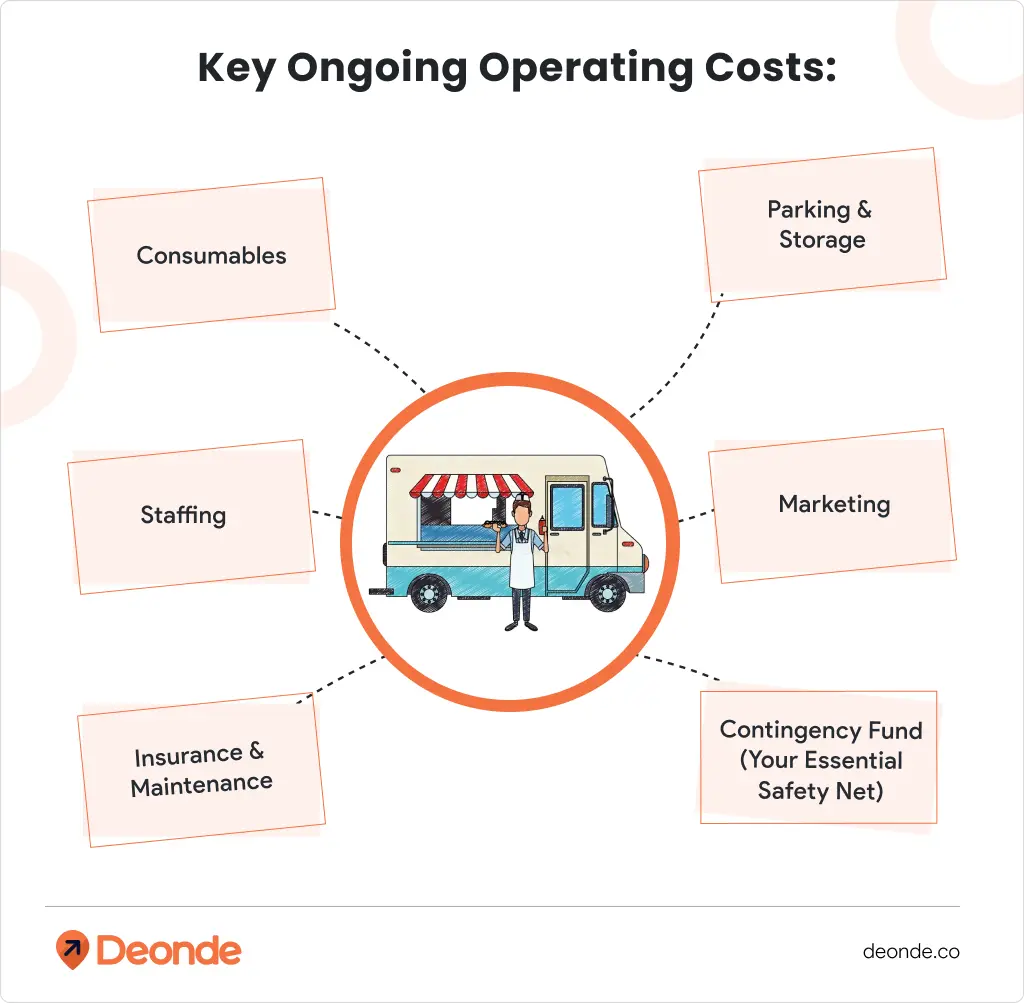
Consumables
This category includes your raw ingredients and supplies. It’s often your largest and most variable expense, directly proportional to your sales volume.
Efficient food cost management and rigorous inventory control are absolutely paramount for maintaining a healthy food truck profit margin.
- Ingredients: Depending on your cuisine, projected sales, and operating hours, weekly ingredient costs can range from $800 to $1,500 USD or more. This is a major part of your initial inventory for food truck operations and ongoing stock. Sourcing local or sustainable ingredients can add to this cost but also enhance your brand.
- Fuel: This covers gasoline or diesel for driving the truck and propane for cooking equipment and generators. Expect to budget $500 to $1,000 USD per month. This figure depends on your daily travel distances, the frequency of events you attend, and the duration of your generator’s operation each day.
- Supplies: Items like takeout containers, napkins, and utensils are small but necessary expenses that accumulate over time. Expect $100 to $300 USD per month. In 2026, there’s a strong trend towards eco-friendly, compostable, or recyclable packaging, which might be a higher upfront cost but aligns with consumer expectations and food truck industry trends.
Staffing
Even a lean food truck operation usually requires a small, dedicated team, often comprising the owner/operator plus 1-3 additional employees. This contributes to your significant staffing costs food truck budget.
Labor costs depend heavily on local minimum wage laws, the cost of living in your operating area, and the employees’ experience levels. For a small team, these could total $3,000 to $6,000 USD per month for wages.
Don’t forget to factor in payroll taxes and any associated employee benefits (like worker’s compensation insurance).
Insurance and Maintenance
Protecting your significant food truck investment and mitigating various potential liabilities is paramount.
- Insurance: Food trucks require specialized insurance to cover the vehicle, equipment, and business operations. Annual premiums typically start around $1,200 USD but can range significantly higher based on coverage. This includes:
- Commercial Auto Insurance: Essential for your truck as a commercial vehicle.
- General Liability Insurance: Protects against claims related to customer injury, property damage, or food-borne illness claims.
- Workers’ Compensation Insurance: Mandatory in many jurisdictions if you have employees.
- Commercial Property Insurance: Covers your kitchen equipment and assets.
- Maintenance: Routine maintenance is absolutely essential to prevent costly breakdowns that can halt your operations. Budget $200 to $600 USD per month for routine servicing (like oil changes, tire rotation) and minor repairs for both your truck and kitchen equipment. This helps manage food truck maintenance costs and minimizes downtime. This could also include a vehicle modification cost if upgrades or changes are needed after launch.
Parking and Storage
Food trucks often need a designated, compliant parking spot when not in use, especially in cities with strict regulations. This is a recurring expense for your mobile food business.
Commissary kitchen fees, which often include access to essential services like waste disposal and water refills, can range from $500 to $1,500 USD per month. Costs can be higher in major urban areas with high demand for spaces.
Marketing
Continuous efforts are needed to keep your brand visible, attract new customers, and maximize your food truck revenue potential. This is a crucial marketing expense food truck businesses must embrace.
A common guideline is to allocate 10-15% of your gross revenue to marketing efforts. This typically translates to $2,000 to $4,000 USD per month once you are generating substantial sales. This includes:
- Digital Advertising: Social media ads (Instagram, Facebook, TikTok), Google Ads for “food truck near me” searches.
- Online Presence: Maintaining your website, updating your Google My Business profile, and listings on food truck directories.
- Event Participation: Fees for local festivals, markets, or special events.
- Promotional Materials: Flyers, loyalty cards, and eye-catching branding on your truck (a one-time setup, but maintenance adds to ongoing marketing).
Contingency Fund: The Essential “Hidden Cost”
This is arguably the most critical “hidden cost of running a food truck business” that many aspiring entrepreneurs overlook.
For example, a $5,000 generator failure or a 2-month permit delay could disrupt your launch. Always set aside a significant portion of your capital for unforeseen expenses.
These can include unexpected delays in permitting, initial operational learning curves, equipment breakdowns, or slower-than-expected sales periods during your first few months.
A good rule of thumb is to allocate 15-25% of your total initial investment as a dedicated contingency fund.
This financial buffer is absolutely crucial for navigating the often unpredictable early stages of any small business and ensuring resilience.
Strategic Considerations for Food Truck Success
1. Who is Your Target Audience, and What Do They Crave?
- Understanding Your Niche: Before calculating how much capital is needed for a mobile kitchen, a deep dive into your potential customers is essential. Are they office workers seeking quick lunches, event-goers looking for unique flavors, or late-night diners craving comfort food?
- Menu Innovation: The food truck industry trends for 2026 clearly point towards unique, high-quality offerings and innovative concepts. What makes your food distinct? How will your menu stand out in a crowded market? This directly impacts your food truck profitability.
2. How Will You Manage Costs and Maximize Profit?
- Detailed Breakdown of Food Truck Startup Costs: Create an incredibly precise, item-by-item budget from the very beginning. This granular approach ensures no expense, large or small, is overlooked, helping you control your food truck financing options.
- How to Calculate Food Truck Monthly Expenses:
- Implement robust tracking systems to monitor every recurring cost religiously.
- Utilize your POS data to gain detailed insights into your food truck operating expenses. This helps identify areas for cost reduction and improve efficiency.
- Renting vs. Buying a Food Truck Cost Comparison: Carefully evaluate the pros and cons of each option based on your financial situation and long-term goals. For many new entrepreneurs, the cost of buying a used food truck or renting initially can be a more accessible entry point, minimizing upfront capital.
- Break-Even Point for Food Truck: A fundamental calculation for any business. Determine precisely how many sales units or how much revenue you need to generate to cover all your fixed and variable costs. This is a cornerstone of effective food truck business planning.
- Funding a Food Truck Business: Explore various avenues for securing the necessary capital: personal savings, traditional small business loans, government grants (if available), crowdfunding campaigns, or seeking private investors.
3. What Are the Industry Trends Shaping Success?
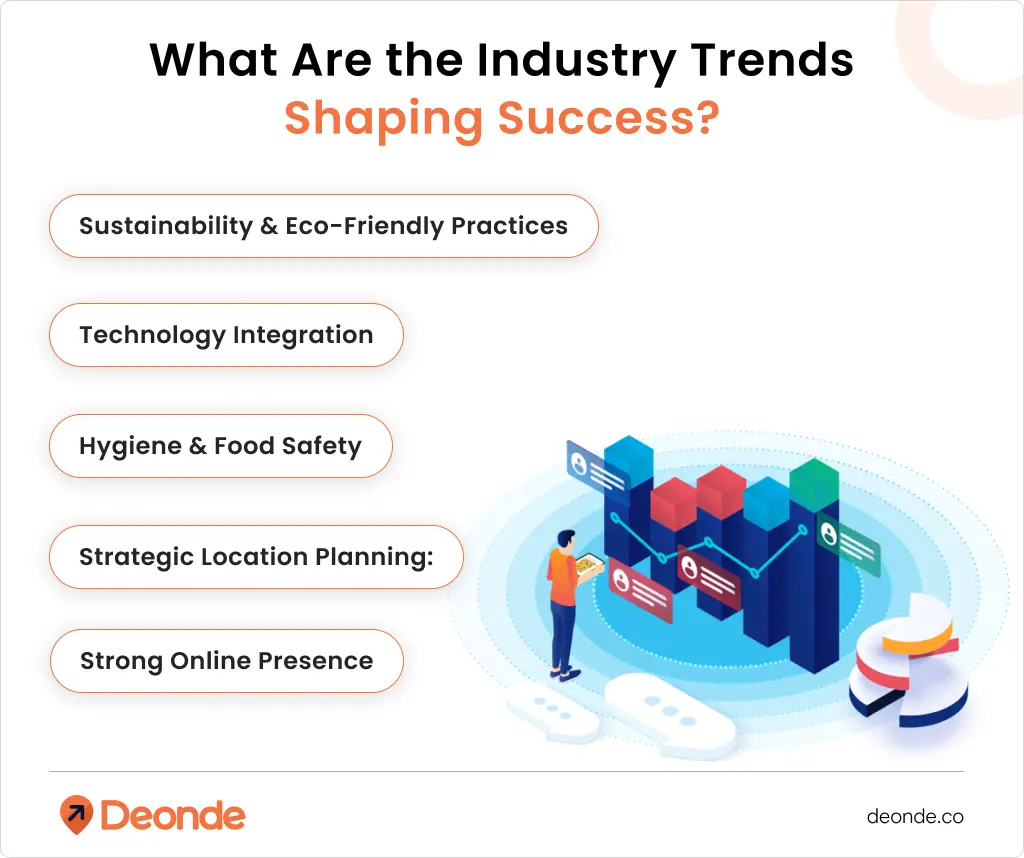
Sustainability & Eco-Friendly Practices:
- Consumers are increasingly prioritizing businesses with environmental consciousness. Invest in compostable or recyclable packaging from the start.
- Explore ways to reduce food waste. These are major food truck industry trends that enhance your brand image and appeal.
Technology Integration:
- Mobile ordering apps, seamless cashless payment systems, and robust POS analytics are no longer luxuries; they are necessities for efficiency and customer satisfaction.
- Platforms like Deonde specialize in helping food businesses launch their own branded online ordering and delivery systems quickly and efficiently.
- Leveraging such a solution can streamline operations, expand your customer reach without hefty third-party commissions, and provide crucial insights into your sales data.
- Utilizing technology is key to understanding your food truck revenue potential and optimizing operations.
Impeccable Hygiene & Food Safety:
- Post-pandemic, consumer trust is heavily reliant on visible cleanliness and strict adherence to all health department regulations.
- Always display your food truck health permit prominently. Train your staff rigorously on best practices. This builds immense trustworthiness and customer loyalty.
Strategic Location Planning:
- Don’t just pick a spot randomly. Thoroughly research high-traffic areas, local event schedules, corporate parks, residential communities, and areas with complementary businesses.
- Understand local zoning laws, parking restrictions, and event permit requirements for prime food truck locations.
Strong Online Presence & Digital Visibility
- Maintain an active and visually appealing presence on social media. Crucially, keep your Google My Business profile updated with your current schedule and location.
- This helps customers find your food truck near me and promotes consistent engagement.
Total Investment Snapshot: Startup + First Month (Estimated)
Here’s a summary of the estimated starting a food truck budget, combining your initial one-time expenses with projected first-month operational costs.
|
Item |
Estimated Costs (USD) |
Remarks |
|
Food Truck (one-time) |
~$15,000 – $200,000 |
New, used, or custom-built; wide range |
|
Equipment (one-time) |
~$30,000 – $50,000 |
Based on menu and truck setup; essential kitchen equipment for a food truck |
|
Permits & Licenses (one-time) |
~$1,500 – $10,000+ |
Varies significantly by location and specific food truck legal requirements |
|
Professional Services (one-time) |
~$1,000 – $5,000 |
Legal and accounting advice for setup |
|
Branding & Marketing (initial setup, one-time) |
~$5,000 – $15,000 |
Truck wrap, logo, initial digital setup |
|
POS System (initial, one-time) |
~$600 – $3,000 |
Hardware and initial software setup |
|
Initial Inventory & Supplies (one-time) |
~$2,000 – $7,000 |
Food, packaging, cleaning supplies for launch |
|
Contingency Fund (one-time recommended) |
~$15,000 – $50,000+ |
15-25% of total initial investment; crucial buffer |
|
Consumables (monthly) |
~$1,300 – $2,200 |
Ingredients, fuel, supplies; crucial food truck operating expenses |
|
Staff (monthly, 2 employees) |
~$3,000 – $6,000 |
Based on local wages; part of staffing costs food truck |
|
Insurance (monthly portion of annual) |
~$100 – $600 |
Monthly allocation for annual premiums; important food truck insurance costs explained |
|
Parking/Commissary (monthly) |
~$500 – $1,500 |
Higher in major cities; crucial for mobile food business cost |
|
Marketing (ongoing, monthly) |
~$2,000 – $4,000 |
10-15% of revenue; key to food truck revenue potential |
|
TOTAL (Estimated Startup + First Month) |
~$102,000 – $350,000+ |
This is a comprehensive estimate for your initial food truck investment and first month’s operations. This range accounts for various choices from basic used setups to high-end new trucks. |
Please note: This table provides estimated ranges based on current market data for 2026. Your actual costs will depend on your specific choices, geographic location, menu, and business model. These figures are meant to be a helpful guide for your food truck business plan.
Conclusion: Driving Towards Culinary Success
The food truck business cost represents a significant investment of both capital and passion. However, when approached with meticulous planning, a deep understanding of every food truck setup cost, and a proactive embrace of evolving industry trends, it offers a dynamic, flexible, and often more accessible path to culinary entrepreneurship compared to traditional restaurant models.
By focusing on smart financial management, delivering exceptional value through your food, and building a strong brand identity, your mobile kitchen can absolutely drive to reality and achieve profitability.
Remember, the journey is challenging but immensely rewarding for those with passion and precision.
Ready to start mapping out your food truck dream? What specific cuisine or unique concept are you envisioning, and where do you imagine your wheels rolling in 2026 and beyond?