
For many bakery owners, the thought of building a website is as daunting as frosting a five-tier wedding cake. You’re busy perfecting recipes, managing orders, and keeping your customers happy.
But in today’s world, a professional website isn’t a luxury; it’s a necessity. It’s your online hub, a 24/7 menu, and your best tool for attracting new customers.
A well-crafted website isn’t just about looking pretty; it’s your digital storefront. From showcasing your best-selling cakes to taking online orders, a bakery website opens the door to new customers while building loyalty among existing ones. Whether you’re a home-based baker or running a full-scale patisserie, your website can become the heart of your marketing strategy.
Ready to get your bakery online? Let’s start building!
Why an Online Presence is Sweet for Your Bakery
Before we dive into the how, let’s talk about the why. Customers are searching for bakeries online every day for birthday cakes, wedding desserts, or just a weekend treat. Without a website, you’re missing a slice of that audience.
In fact, a survey by the Food Industry Association (FMI) found that 67% of consumers shop for groceries online. For many, a business’s website or online presence is the first place they go before ever setting foot in a physical location.
A bakery website helps you:
- Showcase your menu with high-quality images.
- Take online orders and payments easily.
- Share your brand story and baking journey.
- Build trust with reviews and testimonials.
- Promote special offers and seasonal products.
The global bakery market was valued at over $480 billion in 2024 and is projected to grow to over $730 billion by 2032.
Step-by-Step Process to Make a Bakery Website
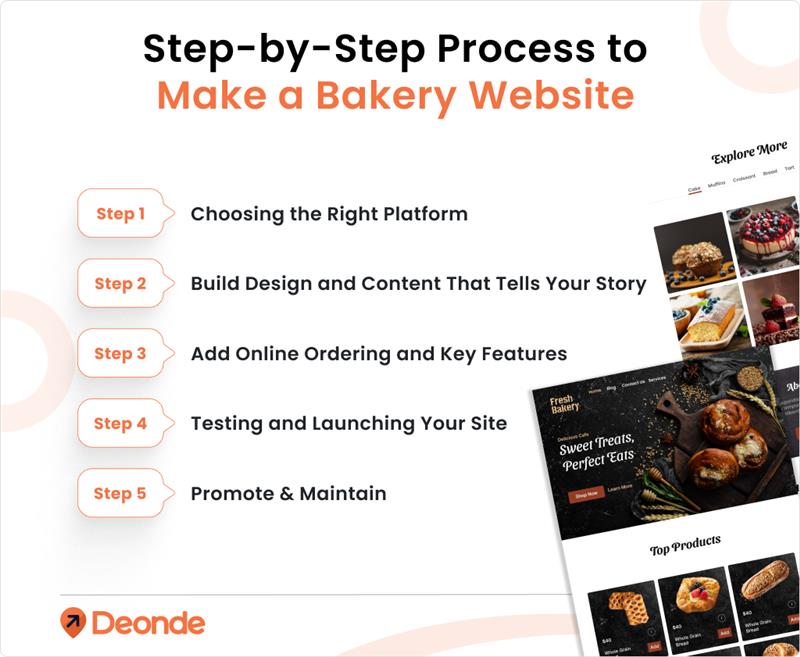
Step 1: Choosing the Right Platform
The first and most important decision is which website builder to use. While there are many options, we recommend deonde.co for several key reasons:
- User-Friendly: deonde.co is a SaaS-based platform that makes it easy to set up your own branded website and online ordering system. It’s designed for quick deployment, allowing you to launch your store without needing any technical skills.
- Mobile-Ready: The platform is built to provide a seamless ordering experience. It offers a branded website and mobile apps (iOS and Android) that are fully optimized for all screen sizes, ensuring your customers can order from any device.
- All-in-One Solution: deonde.co provides a complete suite of tools for your bakery business. This includes everything from an online ordering system and delivery management to marketing automation, loyalty programs, and inventory tracking, all in one dashboard.
- Cost-Effective: deonde.co offers an affordable subscription model with no commission fees on orders. This allows you to keep more of your revenue and access a wide range of features without a large upfront investment, making it perfect for startups and small businesses.
Step 2: Build Design and Content That Tells Your Story
Content is the heart of your site. Write an About page sharing your passion and how you started baking as a kid. This creates a personal touch.
Your menu page lists items with descriptions and prices. Add allergens info for trust. Blog about recipes or tips, using SEO for bakery websites to attract search traffic.
Include calls to action, like “Sign up for specials.” This keeps visitors engaged and coming back.
The Homepage
This is your online hub, the first impression that counts.
- Showcase Your Best Work: Use high-resolution, mouth-watering photos of your pastries, breads, and cakes. Let the visuals do the talking.
- Introduce Your Bakery: Write a short, friendly introduction that tells people who you are and what you’re passionate about.
- Clear Call-to-Action: Make it easy for visitors to find your menu or place an order.
The Menu Page
This is one of the most important pages for any bakery.
- Organize Your Products: Create categories like “Cakes,” “Cookies,” or “Seasonal Specials” to help customers find what they’re looking for.
- Provide Detailed Information: Include professional photos, clear descriptions, and prices for each item.
- Manage Availability: With a menu management system, you can easily mark items as “sold out” or “coming soon,” so your menu is always accurate.

The About Us Page
This page is your chance to connect with your customers on a personal level.
- Share Your Story: Tell people how you got started. Was it a family tradition? A passion project? Sharing your story builds trust and loyalty.
- Introduce Your Team: If you have a team, introduce them with a few friendly photos and a short bio.
The Contact Page
This page makes it easy for customers to get in touch.
- Simple Contact Form: A quick form for general inquiries, catering requests, or custom orders.
- Address and Map: Add your business address and integrate a Google Maps location so people can easily find your physical bakery.
- Social Media Links: Link to your Instagram, Facebook, and other social media accounts to help customers follow you online.
Step 3: Add Online Ordering and Key Features
This step is about setting up the functional parts of your website that allow customers to interact with your business. It’s where you integrate the tools that handle sales, communication, and analytics.
Online Ordering System: Set up an online store for bakery goodies. Use a platform that handles pickups or deliveries and allows customers to select items and complete their purchases easily.
Multiple Payment Options: Offer your customers flexible payment methods. Integrate a system that supports various options, including credit cards, digital wallets, and other popular payment gateways, to make checking out easy.
Integrations: Connect your website with essential tools to streamline your business. This can include integration with delivery partners, a kitchen display system to manage orders, or a Point of Sale (POS) system to handle in-store and online sales from one dashboard.
Website Analytics: Track your performance directly from your admin panel. The platform provides built-in analytics where you can see your sales growth, track customer behavior, and make data-driven decisions to improve your business.
Step 4: Testing and Launching Your Site
Before your new website goes live, it’s crucial to perform a final quality check. This ensures a smooth and professional experience for your customers.
- Test on All Devices: deonde templates are automatically optimized for mobile, but you should still check your website on both desktop and mobile to see how it looks and feels. Make sure buttons are easy to click and text is easy to read on a small screen.
- Check Everything: Click every link, fill out every form, and test the entire online ordering process from start to finish. A broken link or a dysfunctional order button can lose you a customer.
- Connect Your Domain: Once you’re confident everything is working perfectly, it’s time to connect your custom domain name (e.g., https://www.google.com/search?q=yourbakery.com) and officially make your site live.
Step 5: After Launching, What’s Next?

Getting your website live is a huge accomplishment, but the work doesn’t stop there. Here’s how you can make sure people find your website and keep coming back for more.
Search Engine Optimization (SEO)
SEO helps your website appear higher in search results so that new customers can find you.
- Use Keywords: Think about what customers might search for. “Best chocolate chip cookies in [Your City]” or “custom birthday cakes near me.”
- Claim Your Google Business Profile: This free tool helps your bakery appear on Google Maps and local search results.
Must-Read: How To Get Your Restaurant Listed On Google for Free?
- Link to Social Media: Make sure your website and social media channels are linked to create a strong online presence.
Email Marketing
This is one of the most effective ways to build customer loyalty.
- Collect Emails: Add a simple email sign-up form to your website. Offer a small incentive, like a discount on their next order, to encourage sign-ups.
- Send Regular Updates: Use email to announce new products, seasonal specials, or promotions.
- Build Relationships: Share your story, behind-the-scenes content, and valuable information to keep your audience engaged.
Social Media Marketing
An active social media presence is crucial for building a community around your brand.
- Showcase Your Products: Use high-quality photos and videos of your baked goods in action. Post stories and reels of your baking process.
- Engage with Your Audience: Respond to comments, run polls, and ask questions to build a loyal following.
- Announce Specials: Use social media to promote limited-time offers, new menu items, or upcoming events to drive traffic to your website.
Influencer Marketing
Partnering with local influencers can help you reach a new and broader audience.
- Find Local Foodies: Search for local food bloggers or Instagrammers with a strong following in your area.
- Offer Samples: Reach out to them and offer to send free samples of your baked goods in exchange for a review or a post.
- Build Relationships: Find influencers who genuinely love your products, as their authentic recommendation will be more effective in driving new customers to your website.
The Sweet Conclusion
Building a professional website doesn’t have to be a long, complicated process. With a powerful platform like deonde.co and a clear plan, you can create a stunning online home for your bakery in a day. You’ll not only attract new customers but also streamline your business operations, giving you more time to focus on what you do best: baking.
Ready to take the first step toward building your bakery’s online presence?