The cloud kitchen model has truly revolutionized the food service industry globally.
It represents the backbone of digital dining, moving away from expensive dine-in setups.
Entrepreneurs are flocking to this model due to its low overhead and incredible scalability.
However, success in 2026 hinges on a granular understanding of the cloud kitchen startup cost and operational expenses.
We are entering a new phase where technology is no longer optional but absolutely critical.
And if you’ve ever dreamt of running your own food brand without burning millions on interiors and rent, this model is your golden ticket. But before you start, there’s one crucial question: How much does it really cost to start a cloud kitchen in 2026?
Let’s dive deep into the real costs of a cloud kitchen startup and the secrets behind a successful brand. It will help you structure your investment to yield maximum profitability from day one.
Must Read: What is Cloud Kitchen?
Why Choose Ghost Kitchen Over Traditional Restaurants?
The primary appeal of a ghost kitchen lies in its significantly lower financial barrier to entry and operational overhead. Without a front-of-house, you eliminate many of the biggest expenses associated with a traditional restaurant.
Here’s a quick comparison:
|
Feature |
Traditional Restaurant |
Cloud Kitchen (Ghost Kitchen) |
|
Initial Investment |
Very High ($200,000 – $1,000,000+) |
Low to Moderate ($20,000 – $100,000+) |
|
Real Estate |
Requires a premium, high-foot-traffic location. |
Can operate from an industrial or low-rent area. |
|
Staffing |
Requires chefs, servers, hosts, managers, and cleaners. |
Requires only kitchen staff. |
|
Overhead Costs |
High (rent, utilities for a large space, decor). |
Low (smaller rent, fewer utilities, no decor). |
|
Flexibility |
Difficult to change concept or menu. |
Easy to launch multiple brands or pivot menus. |
|
Scalability |
Expensive and slow to open new locations. |
Fast and cost-effective to expand to new areas. |
Essentially, the cloud kitchen model strips a restaurant down to its most vital component: the kitchen. This allows operators to focus entirely on food quality, efficiency, and delivery logistics, making it a highly attractive option in the modern digital economy.
Global Cloud Kitchen Growth & Trends
The global cloud kitchen market is experiencing explosive, verifiable growth.
It was valued at approximately USD 73.18 billion in 2024 and is projected to surpass USD 141.08 billion by 2030.
This represents a robust Compound Annual Growth Rate (CAGR) of around 11.9% during this forecast period.
In Asia Pacific, particularly, the market is dominant, holding a revenue share of nearly 47.8% in 2024.
This dominance is driven by high smartphone penetration and rapidly accelerating urbanization trends.
The Middle East and Africa regions are also emerging as the fastest-growing markets, signaling global opportunity.
Industry giants like Curefoods and Rebel Foods are setting benchmarks with massive scale and operational leverage.
Their success proves that the model is financially viable when executed with precision and data.
The flexibility of cloud kitchens allows them to pivot quickly to meet emerging dietary trends.
This includes the soaring demand for healthy, plant-based, ethnic, and highly personalized meal options.
This significant cost saving is naturally the core appeal of the delivery-only business model.
By minimizing upfront capital expenditure (CapEx), entrepreneurs can focus resources entirely on food quality and efficient delivery.
The market is fiercely competitive, however, necessitating continuous innovation in tech and brand strategy.
Only those who meticulously track their key performance indicators (KPIs) and adapt will survive the pressure.
The move is towards multi-brand, centralized operations to maximize the revenue potential from a single physical space.
Top 6 Most Profitable Food Concepts for Ghost Kitchen
Not all food is created equal when it comes to delivery. The ideal menu for a cloud kitchen consists of items that are both popular on delivery apps and can withstand a 20-30 minute journey without losing quality.
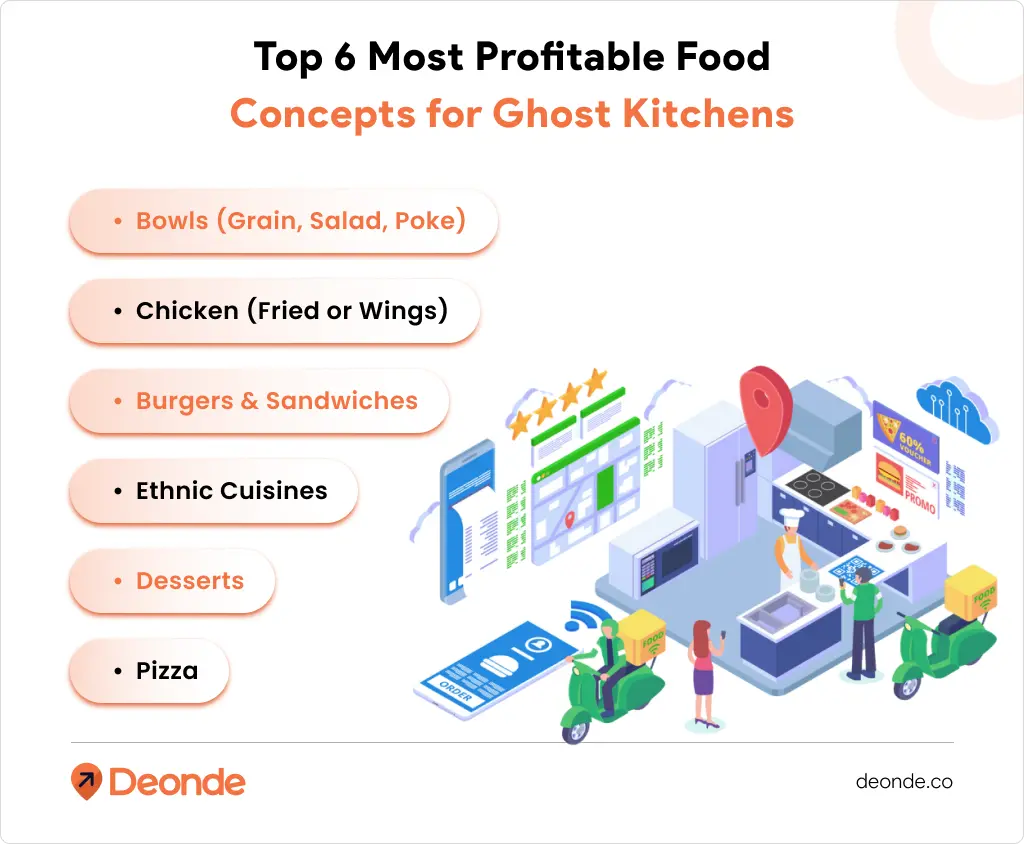
Here are some of the most successful food categories for delivery-only concepts:
- Pizza: The original delivery king. It holds temperature well and is consistently in high demand.
- Burgers & Sandwiches: Easy to assemble, package, and customize. They remain a top choice for online orders.
- Bowls (Grain, Salad, Poke): Highly customizable and travel exceptionally well. They cater to the health-conscious demographic.
- Chicken (Fried or Wings): A comfort food staple that retains heat and texture when packaged correctly.
- Ethnic Cuisines: Foods like tacos, burritos, curries, and noodle dishes are perennial favorites on delivery platforms.
- Desserts: Specialized concepts focusing on items like cookies, ice cream, or donuts can capture a lucrative and often overlooked market segment.
The key is to design a “delivery-first” menu. This means testing your recipes and packaging thoroughly to ensure the customer receives a meal that looks and tastes as good as it did when it left your kitchen.
How Much Money Is Needed To Start A Cloud Kitchen?
A successful 2026 launch requires a detailed budget that accounts for both capital and operational expenditure.
The total initial startup cost for a small-to-mid-scale single-brand operation typically ranges from $12,000 to $100,000+ (or ₹5–₹20 lakhs in Tier-1 Indian cities).
1. Kitchen Space and Infrastructure Cost
Leasing commercial kitchen space is your foundational fixed cost, often utilizing industrial or mixed-use zones.
Rent for a private space can range from $2,500 – $8,000 per month, depending on city and size.
A significant trend is the rise of shared or commissary kitchens, which offer turnkey compliance and lower initial costs.
Infrastructure investment covers essential items like ventilation, fire suppression, and commercial-grade electrical upgrades.
A basic setup for furnishing, basic infrastructure, and initial electrical work may cost ₹3–6 lakhs upfront.
2. Equipment and Setup Cost
This is a major one-time CapEx, and strategic purchasing is absolutely essential for long-term efficiency.
Commercial-grade appliances like a stove, oven, industrial refrigerator, and exhaust systems are non-negotiable.
The total one-time cost for all commercial equipment can range from $30,000 to $120,000.
Smart, energy-efficient equipment is trending, which can reduce your monthly utility bills by up to 15% over time.
For multi-brand operations, specialized equipment like blast chillers or commercial food processors is required for complex menus.
Purchasing reliable, high-quality, and modular equipment allows for easy future expansion as your brand grows.
3. Licensing, Permits, and Insurance
Regulatory compliance is mandatory and ensures trust and smooth aggregator partnerships.
Initial costs for food service licenses, health inspections, fire safety permits, and business insurance range from $3,000 to $8,000.
Mandatory registrations like the FSSAI license in India and local health permits are required for legal operation.
Fire and building safety permits, ensuring compliance with ventilation and suppression systems, also need to be factored in.
These costs are jurisdictional, so research based on your exact location is crucial for an accurate budget.
4. Technology Stack Investment
A robust technology stack is the lifeblood of a cloud kitchen, managing every step from order to delivery.
The modern tech stack includes a Point-of-Sale (POS) system and an Order Management System (OMS).
Advanced solutions integrate incoming orders from multiple platforms like Swiggy and Zomato into a single screen.
Monthly subscription costs for essential software can run from $49 to $199 per month.
Investing in AI-driven inventory tools improves operational efficiency and can reduce food waste by up to 20%.
A mobile-compatible system allows for remote monitoring and ensures quick, data-driven decision-making, which is invaluable.
5. Staffing and Labor Costs
Cloud kitchens have leaner teams, eliminating the need for front-of-house staff like servers and hostesses.
A core operational team typically consists of 2–3 kitchen staff for prep, cooking, and hygiene maintenance.
Monthly staffing costs, including salaries for chefs and prep staff, might range from $5,000 to $15,000 per month.
Cross-training staff to handle multiple brands is a key strategy for maximizing labor efficiency.
Retention is crucial, so consider offering incentives or growth paths to keep your skilled core team.
6. Packaging and Branding Costs
Packaging is your brand’s only physical touchpoint with the customer, making it highly important.
Eco-friendly, sustainable materials are a strong emerging trend and are demanded naturally by modern consumers.
Budget for compostable containers, paper bags, and custom-printed branding materials.
Packaging costs typically account for 7–10% of total monthly spending and need tight control.
Initial investment in logo design, brand guidelines, and initial packaging materials is essential for digital brand recall.
7. Working Capital and Overheads
Working capital is a crucial buffer and should cover 3–6 months of operational expenses.
This includes the daily purchase of raw materials, which is a highly variable and fluctuating cost.
Utilities like electricity, water, and gas are monthly overheads that require efficient management.
The biggest ongoing cost is often aggregator commissions, which can be as high as 18–30% of an order’s value.
Plan for initial marketing and advertising spend to gain traction on competitive delivery platforms.
What is the Essential “Tech Stack” for a Cloud Kitchen?
In a cloud kitchen, technology isn’t just helpful—it’s the central nervous system of your entire operation. A well-integrated “tech stack” is what separates a chaotic kitchen from a highly efficient, profitable one.
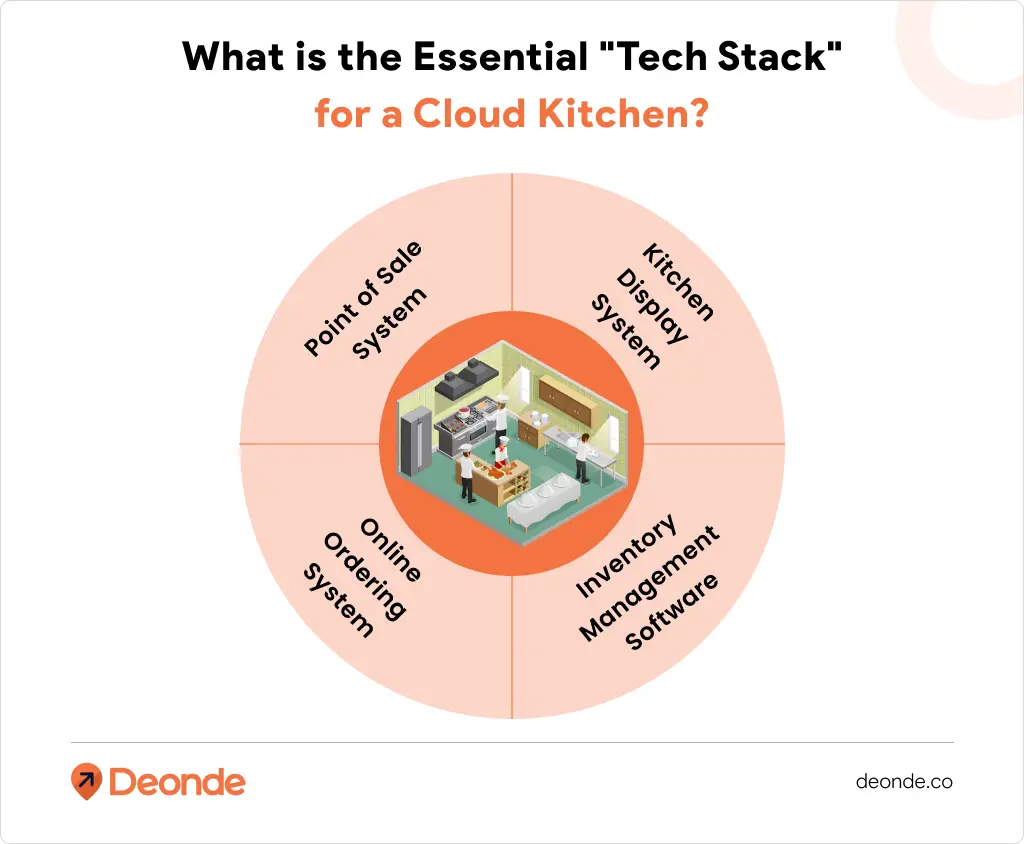
Your essential tech stack should include:
- Point of Sale (POS) System: This is the hub where all orders are processed. Modern cloud-based POS systems designed for restaurants are essential.
- Kitchen Display System (KDS): This replaces paper tickets with digital screens, displaying orders directly to your kitchen staff. It reduces errors and improves order prep time.
- Online Ordering System: While third-party apps are necessary for discovery, having your own ordering system on your website or app is critical. It allows you to capture orders commission-free and build a direct relationship with your customers.
- Inventory Management Software: This software tracks your stock levels in real-time, helps you manage supplier orders, and reduces food waste by providing data on what’s being used.
What Are The Key Performance Metrics?
To succeed, you need to track your performance meticulously. Data, not guesswork, should drive your decisions. Here are the key performance indicators (KPIs) every cloud kitchen owner must monitor:
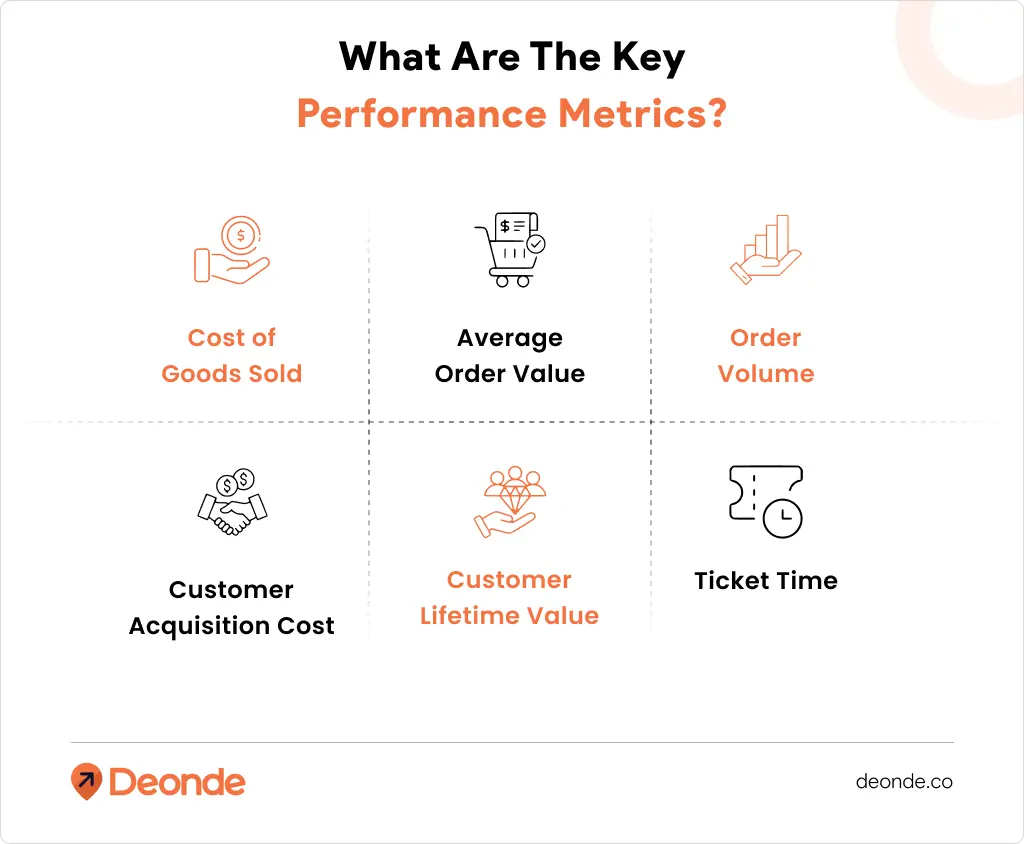
- Cost of Goods Sold (COGS): This is the total cost of your ingredients for the food you sell. Aim to keep this between 25-40% of your revenue.
- Average Order Value (AOV): The average amount a customer spends per order. You can increase AOV through upselling, combos, and smart menu pricing.
- Order Volume: The total number of orders you process daily, weekly, and monthly. This is a primary indicator of growth.
- Customer Acquisition Cost (CAC): The amount of money you spend on marketing to get one new customer. It’s crucial to ensure this is lower than your Customer Lifetime Value.
- Customer Lifetime Value (CLV): The total profit you can expect to make from a single customer over the entire course of their relationship with your brand.
- Ticket Time: The time it takes from when an order is received to when it’s ready for pickup by a delivery driver. Efficiency here is key to customer satisfaction.
What Are The Disadvantages Of Cloud Kitchens?
While the model is powerful, it’s not without its challenges. Being aware of the downsides is crucial for building a resilient business strategy.
- Intense Competition: The low barrier to entry means the market is crowded. Your brand and food quality must stand out.
- Dependence on Delivery Aggregators: The high commission fees (often 20-35%) charged by third-party delivery platforms can severely impact your profit margins. Building your own direct ordering channel is vital for long-term health. This is why leveraging a commission-free ordering system like the one offered by Deonde is a critical strategy for protecting your profitability.
- Marketing is Everything: With no physical storefront, you have zero visibility from foot traffic. Your success depends entirely on your digital marketing prowess—SEO, social media marketing, and online advertising are not optional.
- Building Brand Trust: Without a physical space for customers to see and experience, creating a strong, trusted brand identity online takes more deliberate effort and a focus on consistency and customer service.
- Logistical Challenges: You are at the mercy of delivery drivers and logistics. A late delivery or a cold meal, even if it’s not your fault, reflects poorly on your brand.
Is a Cloud Kitchen Worth the Investment in 2026?
Starting a cloud kitchen in 2026 is one of the most promising ventures for food entrepreneurs — especially with flexible SaaS tools and digital ordering solutions.
True success, however, comes from smart financial planning to manage your cloud kitchen startup costs and mastering your digital operations. While the initial investment is lower than a traditional restaurant, the complexity of managing orders, inventory, and delivery can quickly become overwhelming.
This operational complexity is the single biggest challenge. You need more than just a basic Cloud Kitchen delivery management software; you need a complete command center.
Instead of juggling multiple disconnected tools, Deonde provides everything you need to launch and scale your food brand from a single dashboard. Stop guessing and start growing with a system designed for maximum efficiency and profitability.