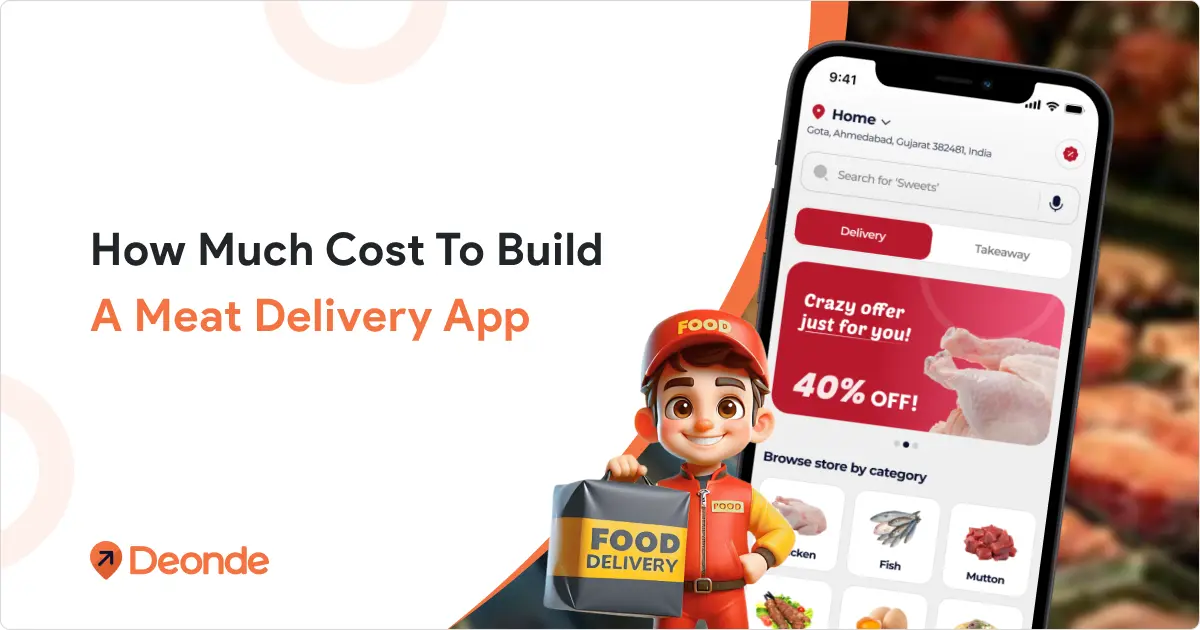
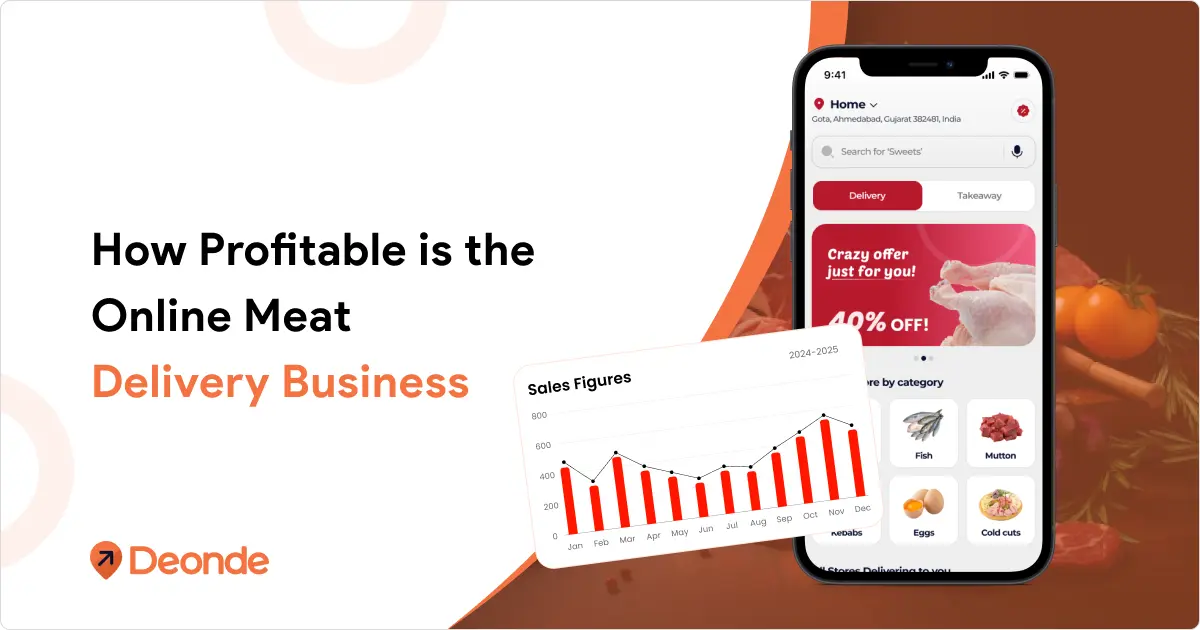
The way consumers buy their food is rapidly changing, with a huge shift towards online shopping.
This trend is especially powerful in the fresh meat industry, where the global market for online delivery continues to see sustained double-digit growth.
For entrepreneurs and local butchers, this digital wave presents a massive opportunity to reach more customers than ever before.
But the central question is simple: can you build a truly profitable meat business in this competitive online space?
Small meat shops and startups can benefit from this trend, especially by combining quality products with efficient online operations.
Why Is Online Meat Delivery Booming in 2026?
Busy professionals and families want premium cuts without the hassle of butcher shops. Online meat delivery fills this gap.
The India Edible Meat Market size is estimated at 14.72 billion USD in 2025, and is expected to reach 16.42 billion USD by 2030, growing at a CAGR of 2.21% during the forecast period (2025-2030).
The opportunity is clear: tap into convenience-driven demand. Offer traceable, sustainable meat, and you’ll build a loyal base fast.
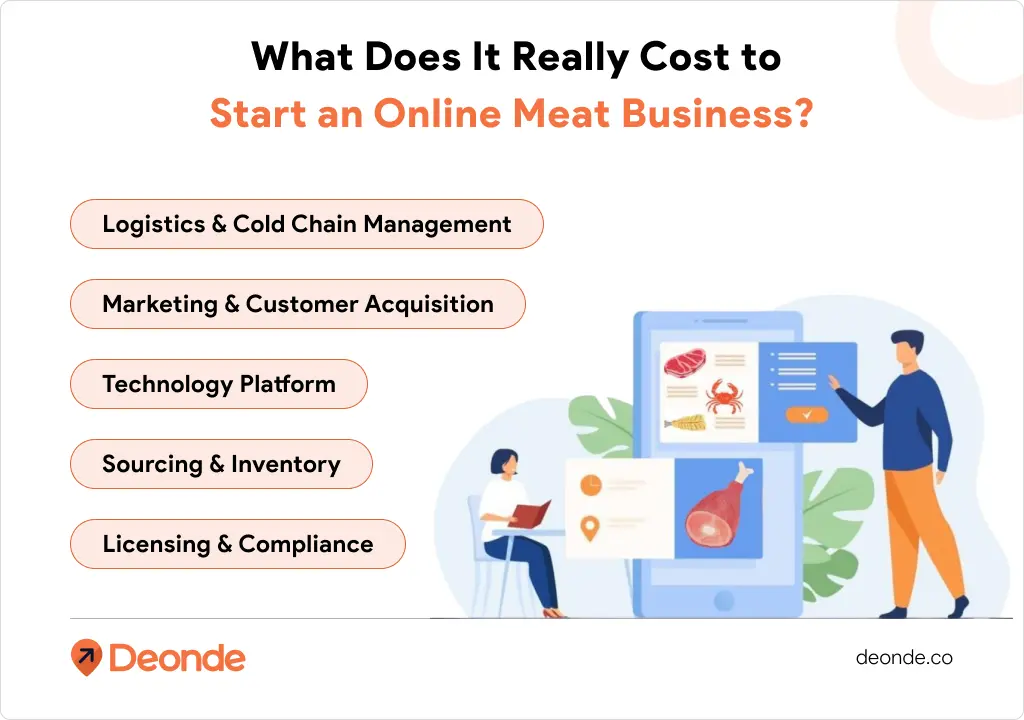
What Does It Really Cost to Start an Online Meat Business?
Before calculating profits, you must understand the initial and ongoing expenses. A clear budget is the first step toward building a sustainable and profitable meat business.
Technology Platform (Your Digital Storefront)
Your website and mobile app are your modern-day butcher shop. Custom-building an e-commerce platform from scratch can be incredibly expensive, often running into tens of thousands of dollars, plus ongoing maintenance costs. This is a significant barrier for many startups.
Sourcing & Inventory
The quality of your product is paramount. You’ll need to establish relationships with reliable farms or suppliers. Initial costs include purchasing stock, but remember that meat is a perishable item, making efficient inventory management crucial to avoid waste and protect your online meat margins.
Logistics & Cold Chain Management
This is non-negotiable and one of the most critical operational costs. You need a “cold chain,” a temperature-controlled supply chain. This involves refrigerated vehicles for delivery and specialized, insulated packaging with ice packs to ensure the meat stays fresh and safe from your facility to the customer’s doorstep.
Licensing & Compliance
Operating a food business requires adherence to strict health and safety regulations. Costs will include business registration, food handling licenses, and local health department permits. While these vary globally, they are a mandatory expense for legal operation.
Marketing & Customer Acquisition
No one will buy from you if they don’t know you exist. Your marketing budget is crucial for attracting and retaining customers, and this initial spending can be significant. Be sure to budget for a complete strategy, including:
- Digital advertising (social media ads, search engine marketing).
- Branding, content creation, and social media promotion.
- Initial launch promotions, such as first-order discounts or special bundles, which are a key cost for acquiring your first wave of customers.
How Will Your Online Butcher Shop Actually Make Money?
A key factor in determining meat delivery startup profits is the diversity of your revenue streams. Relying solely on one-off orders limits your potential. The most successful online butchers build multiple ways to generate income.
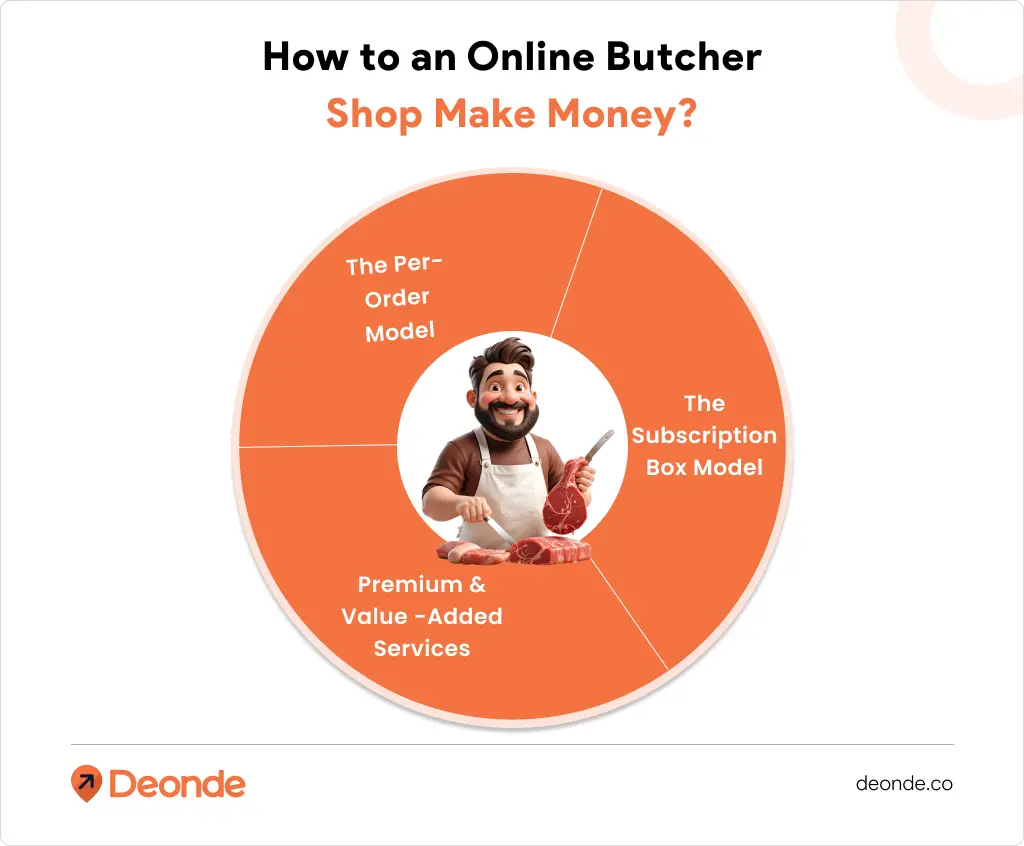
These are the core revenue models for a meat business in the digital age:
The Per-Order Model
This is the traditional e-commerce model. A customer visits your site, selects their cuts of meat, and pays for their order. It’s the foundation of your business, driven by product variety, quality, and a user-friendly shopping experience.
The Subscription Box Model
This is where profitability really scales. Customers subscribe to receive a curated box of meat weekly, bi-weekly, or monthly. This model provides predictable, recurring revenue, improves customer lifetime value (LTV), and allows for better inventory planning, which directly boosts your online meat margins.
Premium & Value-Added Services
Increase your average order value (AOV) by offering more than just raw cuts. Consider selling pre-marinated meats, ready-to-cook meal kits, high-quality spice rubs, or artisanal sausages. Offering premium selections like organic, grass-fed, or dry-aged meats can also command higher prices and attract a discerning clientele.
The Bottom Line: How to Calculate Your Real Profit Margins
So, let’s talk numbers. How much can you actually make?
Gross profit margins in the meat industry can typically range from 20% to 40%, depending on your sourcing costs and pricing strategy. However, gross margin is not your take-home profit.
Your net profit is what’s left after all operating expenses are deducted. Here’s a simplified look:
- Revenue: Total sales from all orders.
- Minus Cost of Goods Sold (COGS): The direct cost of the meat you sold = Gross Profit
- Minus Operating Expenses: This includes logistics, payment processing fees, marketing, packaging, software costs, and salaries = Net Profit
To make this tangible, here’s a simple numerical example.
For a $50 order with a 30% gross margin, you make $15 in gross profit. After deducting $8 for delivery, packaging, and marketing for that order, your final net profit is $7, which is a 14% net margin.
This is where efficiency becomes the key to a profitable meat business. High operational costs, especially from expensive custom technology or inefficient delivery routes, can quickly erode your margins, leaving you with very little net profit.
How Can Technology Turn High Costs into Higher Profits?
This is where you turn high operating costs into a competitive advantage. Instead of juggling spreadsheets and customer calls, a dedicated SaaS platform like Deonde acts as your central command center. It automates the most critical and time-consuming parts of your business.
Here’s how it directly impacts your profit margins:
- Slash Food Waste: Real-time analytics show you exactly what’s selling. This allows you to stock smarter, reduce spoilage, and protect your inventory investment.
- Build Customer Loyalty: A professional, branded app and automated delivery tracking build trust. This leads to happier customers, fewer complaints, and can increase repeat orders by 30% or more.
- Grow Your Business, Not Your Workload: The platform handles the grunt work of order management and logistics, freeing you to focus on sourcing great products and marketing your brand.
The best part is that this power is accessible. Instead of a huge upfront investment, you leverage a cost-effective subscription solution designed to deliver a significant return—often up to 3x ROI in the first year. It’s like having a digital operations manager working for you 24/7.
Your Future is Digital: Why Now is the Time to Start
The online meat delivery business is a proven winner in 2026. With efficient operations, well-run startups can achieve healthy net profit margins of up to 20% and revenues hitting $3M, showcasing the massive potential.
Deonde makes it simple. A SaaS platform launches your branded app in days, with zero coding. Manage orders, deliveries, and customers while keeping costs low.
Ready to start? Try Deonde. Turn your meat shop into a digital powerhouse. Let’s build your profitable meat business today.
The Future is Fresh, Digital, and Profitable
The demand for online meat delivery is undeniable and set to grow. While the business comes with unique challenges like cold chain logistics and inventory management, the potential for high returns is significant.
The difference between a struggling startup and a thriving, profitable meat business in 2026 will be the ability to manage costs effectively and scale efficiently. The era of needing massive upfront capital for technology is over.
Ready to build your own profitable meat business? The tools and the market are waiting for you

FAQs
1. How much does it cost to start an online meat delivery business?
Startup costs vary depending on your scale. On average, expect to spend $10,000–$30,000 for inventory, licenses, packaging, and a technology platform. Using a SaaS solution can reduce tech expenses significantly.
2. What is the average profit margin in online meat sales?
Most online meat businesses earn 20–40% gross profit margins. With efficient operations, net profits can reach 10–20%.
3. Do I need a license to sell meat online?
Yes. You’ll need food handling licenses, business registration, and health permits to legally operate and ensure food safety compliance.