The most effective pizza marketing ideas combine a strong local SEO presence, a direct online ordering system, a loyalty program, and consistent social media activity. Independent pizzerias that stop relying on third-party platforms and own their customer relationships see the highest long-term growth in repeat orders and profit margins.
Running a pizza business is competitive. Chains dominate on ad budgets. Aggregators take 20–30% of every order. Independent pizzerias and growing pizza brands need smarter marketing — not bigger budgets.
This guide covers proven pizza marketing ideas that work across markets, whether you run one location or ten.
Top 10 Pizza Marketing Ideas to Attract More Customers
Stop paying 30% commissions to third-party apps and start owning your customer relationships. These ten proven strategies focus on high-margin growth, local SEO dominance, and digital automation to help your independent pizzeria outshine the big chains.
1. Build a Direct Online Ordering System Before Anything Else
Every pizza marketing strategy depends on one thing: where does the customer actually place the order?
If your answer is “DoorDash” or “Uber Eats,” you are not marketing your brand. You are marketing theirs.
Third-party platforms charge 15–30% commission per order. On a $20 pizza, that is up to $6 gone before you cover ingredients or rent.
A direct online ordering system means customers order from your website or your app. You keep the full margin. You own the customer data. You can run your own promotions without platform restrictions.
This is the foundation of any working pizza restaurant marketing strategy. Every other tactic — loyalty programs, email campaigns, retargeting ads — requires customer data you only get from direct orders.
Pizza delivery software gives independent pizzerias a branded ordering system without the commission overhead. The money you save on fees becomes your marketing budget.
Real-world example: Pieology, a US-based fast-casual pizza chain, shifted its digital investment toward direct ordering infrastructure in 2022. Within 12 months, the brand reported a 25% lift in repeat order frequency among customers who ordered directly versus through aggregators — a gap driven by the ability to run personalised follow-up campaigns on an owned customer list.
2. Claim and Optimise Your Google Business Profile
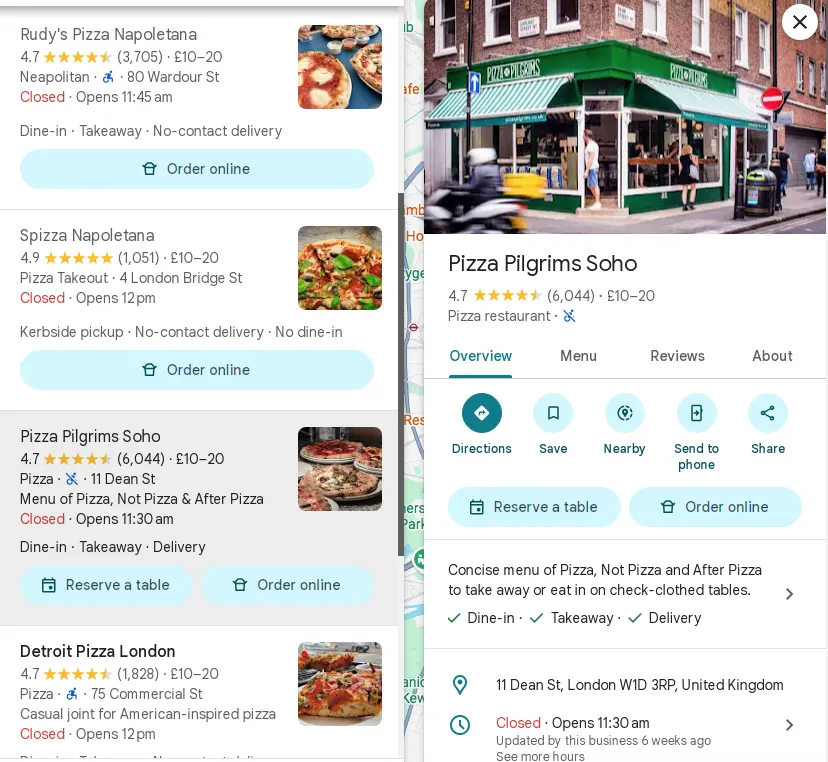
When someone searches “pizza near me,” the first three results shown are Google Business Profile listings — not websites, not ads.
If your profile is incomplete, you are invisible to the most high-intent customers in your area.
Here is what your profile needs:
- Accurate business hours — wrong hours mean lost orders
- Menu linked or uploaded — customers decide before they click
- At least 100 photos — businesses with 100 or more photos see up to 520% more direction requests and 2,717% more phone calls than those with fewer than 10 (BrightLocal Local Business Photo Study, 2025)
- Responses to every review — especially negative ones
Post an update on your Google Business Profile at least once per week. Announce a weekend special, a new crust, or a limited offer. Google rewards active profiles with higher placement.
This is one of the highest-ROI pizza promotion ideas available — and it costs nothing but 20 minutes a week.
Try this week: upload 10 new photos to your Google Business Profile — interior, pizza close-ups, box packaging — and track your direction requests over the next 14 days.
3. Use Instagram and TikTok to Show the Pizza, Not Just Sell It
People do not share ads. They share food they wish they were eating.
Your social media content should make someone stop scrolling and think “I need that right now.”
What works in 2026:
- Short-form video of the cheese pull or pizza stretch — Reels and TikTok videos consistently generate 3–5x the reach of static posts for food brands. The format rewards authenticity over production quality
- Behind-the-scenes oven footage — authenticity builds trust faster than polished ads
- Customer reposts (UGC) — when a customer tags you, repost immediately with credit. Run a monthly “tag us for a chance to win a free pizza” campaign. User-generated content costs nothing and reads as more credible than brand-produced content
- Local partnerships — partner with nearby schools, sports teams, or offices for co-branded content. A post featuring “Official Pizza of [Local High School Football Team]” reaches an entirely new audience organically
Gen Z note: For audiences under 25, TikTok outperforms every other channel for pizza content. Short, unpolished videos — staff jokes, dough-tossing fails, “what our $5 slice actually looks like” — perform better than branded posts. Authenticity is the currency.
Platform nuance for 2026: While TikTok and Instagram Reels dominate for reach and discovery, Facebook still edges out Instagram in direct conversion for established pizzerias with older customer bases, according to several 2025 independent pizzeria surveys. Run both — do not abandon Facebook if your core audience is over 35.
Post at least 4 times per week on Instagram. Aim for 3–5 Reels or TikTok videos per week. Tag your location in every post.
4. Build a Pizza Loyalty Program That Rewards the Right Behavior
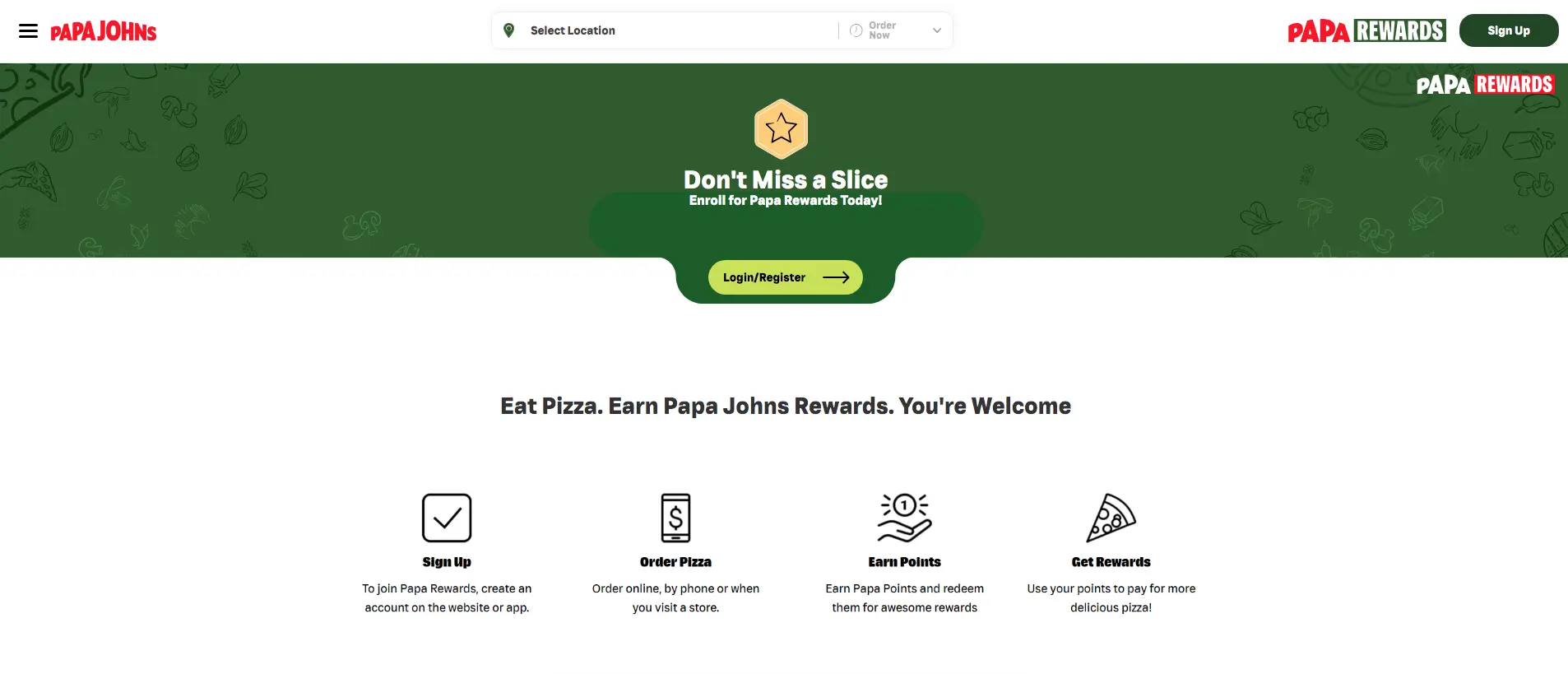
A pizza loyalty program is one of the most direct ways to increase pizza sales from your existing customer base.
Most programs make a simple mistake: they reward spending, not behavior.
A better approach:
- Reward customers for ordering directly — not through aggregators
- Give bonus points for first-time app or website orders
- Offer a free pizza after 8 orders — not after $100 spent
Why the distinction matters: if you reward spend equally across all channels, you are funding loyalty for orders that cost you 25% in platform commission. Reward direct orders specifically.
This trains customers to use your channel — and direct-order customers consistently show higher average order value and repeat frequency than aggregator customers.
Practical step: Set up your loyalty program before you run any paid campaign. Every ad you run should drive customers to a channel where they earn points — not to a third-party app where they earn nothing from you.
5. Run a “Pizza of the Month” Campaign With Scarcity Built In
Limited-time menu items (LTOs) drive more orders than permanent menu additions. Scarcity is a real psychological trigger — and LTOs are one of the top revenue drivers for pizza brands in 2026.
Current flavour trends worth building LTOs around: swicy profiles (spicy-sweet combinations are the dominant flavour trend across QSR in 2025–2026), specialty crusts (focaccia-base, sourdough, and charred thin-crust are growing), and passport-style international pies (Korean BBQ, birria, and butter chicken pizzas are performing well as LTOs in North American and UK markets).
Here is a repeatable campaign structure:
- Announce a new specialty pizza for the month — give it a name, a story, and a photo
- Set a hard end date: “Available only in March”
- Send an email and push notification in the final 3 days: “Last chance to order the Spicy Mango Paneer before it is gone”
This campaign creates three order windows: the launch, the middle of the month, and the final-days urgency push.
Track which month’s pizza sells best. Run that flavour again at the end of the year as a “fan favourite return.” You have now created a fourth marketing moment from the same campaign.
6. Collect and Respond to Customer Reviews Strategically
Reviews are not just reputation management. They are a direct ranking factor for local SEO.
Restaurants with more recent, positive reviews rank higher in Google’s local pack — the map results that show up above organic search results.
Ask for a review at the right moment:
- After a successful delivery: send an automated message with a direct Google review link
- At the point of order completion: include a review prompt in the order confirmation email
- On the pizza box itself: a simple printed QR code linking to your Google review page
Respond to every review — positive and negative. For negative reviews, respond within 24 hours. Acknowledge the issue, offer a resolution, and move the conversation offline. A well-handled negative review often converts a disappointed customer into a loyal one.
This is a core part of how to attract customers to your pizzeria — because potential customers read reviews before they order.
7. Set Up Email and Push Notification Campaigns Around Peak Order Times
Pizza has predictable peak hours: Friday evening, Saturday afternoon, Sunday lunch. Use this to your advantage.
Send a push notification or email at 4:30 PM on a Friday: “What’s the plan for tonight? Order by 6 PM and we’ll have it hot at your door.”
This works because it interrupts the decision-making moment. Most people decide what to eat within an hour of eating. If your message arrives during that window, you win the order.
What to automate:
- Welcome email for every new customer who orders directly
- Win-back campaign for customers who have not ordered in 30 days
- Friday 4:30 PM push every week without exception
Deonde’s push notification and chat system lets you automate these touchpoints without manual work each week.
8. Create a Referral Program With a Real Incentive

Word of mouth is how most independent pizzerias grow. A referral program formalises that process.
A simple structure that works:
- “Refer a friend. They get 10% off their first order. You get a free garlic bread on your next one.”
- Both parties get something — this doubles the motivation to share
Promote the referral program in three places: the order confirmation page, the post-delivery email, and the loyalty program dashboard.
The incentive needs to feel immediate and tangible. A discount on a future order is weaker than a free item. Free items feel like a gift. Discounts feel like a coupon.
9. Target Nearby Offices and Workplaces for Bulk Orders
Lunch orders from offices and corporate teams are a high-value, repeatable revenue stream. One corporate account can mean 10–20 pizzas every Friday.
How to target them:
- Identify office buildings, coworking spaces, and business parks within your delivery radius
- Create a “Team Lunch” package with a bulk discount and a dedicated ordering link
- Reach out directly via email or LinkedIn to office managers and executive assistants
This is one of the most underused pizza promotion ideas in the market. Most pizzerias wait for customers to come to them. Proactively targeting corporate accounts flips that dynamic.
10. Use QR Codes to Turn Your Packaging Into a Marketing Channel
Every pizza box you send out is a touchpoint. Most pizzerias waste it with a blank lid.
Add a QR code to your box that links to:
- Your direct ordering page (“Order again in 30 seconds”)
- Your loyalty program signup
- Your Google review page
A customer eating your pizza is your most captivated audience. They are literally holding your product. That is the moment to ask for a review, a follow, or a repeat order — not three days later.
Deonde’s QR code ordering system makes it easy to generate branded QR codes linked to your direct ordering flow.
How to Increase Pizza Sales: The Margin-First Marketing Approach

Here is a framework that ties all these tactics together.
Most pizzerias spend on marketing before fixing where orders are going. They run Instagram ads that send customers to Uber Eats — then wonder why profits do not grow.
The correct sequence:
- Set up direct online ordering first — protect your margin
- Build your loyalty program — start collecting customer data
- Run email and push campaigns to that owned list
- Use social media to fill the top of the funnel
- Add referrals and corporate targeting to scale
Every marketing tactic above works harder when you own the customer relationship. The commission you stop paying third-party apps is the budget you reinvest into the tactics on this list.
A pizzeria doing $30,000 in monthly delivery orders through aggregators pays roughly $6,000–$9,000 in commission. That money, redirected into direct ordering infrastructure and a loyalty program, compounds over time. Marketing gets cheaper. Margins improve. Customer lifetime value increases.
The Bottom Line
There is no shortage of pizza marketing ideas. The gap is execution and sequencing.
Own your ordering channel first. Build your customer list. Then run the campaigns on that list. Every idea in this guide gets more effective when you are not handing 25% of every order to a third-party platform.
For operators running multiple locations or a pizza delivery network, Deonde’s driver management tools and delivery zone management give you full operational control alongside your marketing stack.
Frequently Asked Questions
1. How Do I Attract Customers To My Pizza Restaurant On A Small Budget?
Start with your Google Business Profile and direct online ordering system. Both are low-cost and directly impact how customers find you and where they order from. Add a loyalty program once you have 50+ direct customers.
2. What Social Media Platform Works Best For Pizza Marketing?
Instagram and TikTok deliver the highest engagement for food businesses because both platforms prioritise visual content. Short videos of your pizza — pulls, slices, bake shots — consistently outperform static images.
3. How Can An Independent Pizzeria Compete With Large Pizza Chains?
Chains win on ad budget. Independent pizzerias win on authenticity, speed, and local relationships. Focus on owning your direct ordering channel, building a genuine loyalty program, and creating local community connections that a chain cannot replicate.
4. What Is The Best Pizza Promotion Idea To Drive Repeat Orders?
A points-based loyalty program tied to direct orders — with a free pizza milestone — consistently drives higher order frequency than one-off discount campaigns. Customers return to earn the reward, not just to save money once.
5. Does Email Marketing Still Work For Pizza Restaurants?
Yes — especially when the email is timed to peak order windows (Friday afternoon, Sunday morning). A small direct email list of 500 customers converts better than a large social media following with no ordering intent.