Multi-vendor grocery delivery app and software

Deonde’s multi-vendor grocery delivery app lets supermarkets, produce sellers and corner stores sell through one app you own. Stores upload catalogs with stock and weights, and substitutions happen only with the customer’s approval.

  • Unlimited stores on every plan
  • Catalogs with stock and weights
  • No warehouse needed

Where grocery delivery breaks, and the fix

Grocery baskets are big, stock moves all day and half the produce is sold by weight. Each problem below has a setting in Deonde.

Common grocery delivery problems and the Deonde setting that handles each
ProblemWhat it costs youThe Deonde setting
Item sold out after the orderRefunds and unhappy customersStore suggests a replacement; customer approves
Loose fruit, vegetables and cheeseWrong prices on weighed goodsItems sold by weight or size
Thousands of products per storeWeeks of manual data entryCatalog upload from a spreadsheet
Small baskets far awayDeliveries that lose moneyMinimum basket per store and per zone
Nobody home for frozen foodFailed drops and wasteCustomer picks a delivery date and time
Slow packing at busy hoursLate ordersStore accepts with a prep time
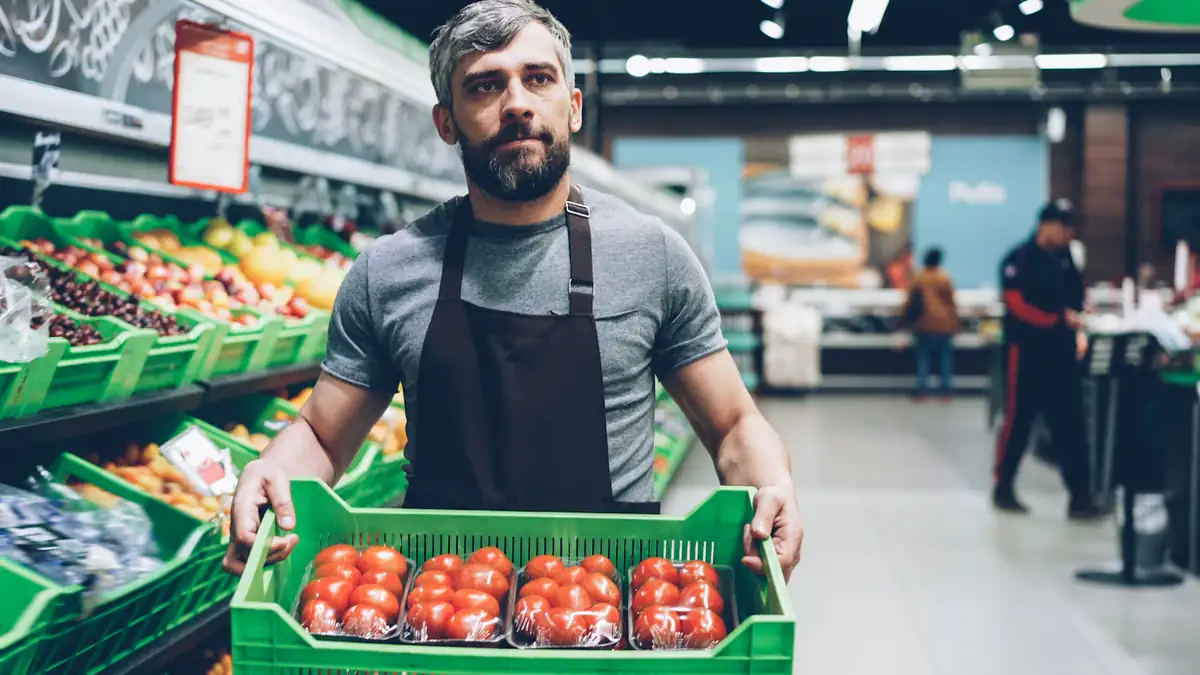
Fresh produce in a grocery store

Grocery delivery app features for every store

Built for catalogs with stock, not for restaurant menus.

Categories, search and filters

Customers search across stores and filter by category, from dairy to cleaning.

Bulk catalog import

Stores load thousands of products from a spreadsheet, then edit them in the Store Partner App.

Weighed and sized items

Sell 500 g of tomatoes, a 1 kg bag of rice or a 6-pack of water, each priced correctly.

One-tap out of stock

Staff switch an item off the moment the shelf is empty, and back on when it returns.

Substitutions with consent

When an item is missing, the store proposes another and the customer approves it in the app.

Delivery time at checkout

Customers order now or schedule a later date and time for the weekly shop.

Minimum basket per store

Each store sets its minimum order value, so small baskets still make sense.

One-tap reorder

Customers repeat last week’s basket from their order history.

How a grocery order is packed and delivered

The steps a store and driver follow for each basket in your app.

  1. 1

    Order lands at the store

    A sound alert reaches the store, and staff accept with a packing time.

  2. 2

    Picker fills the basket

    Missing items are marked, and a replacement is proposed for each one.

  3. 3

    Customer approves

    The customer accepts or refuses each substitution in the app.

  4. 4

    Driver collects

    Auto-assignment sends a nearby driver, who sees the store’s ready time before arriving.

  5. 5

    Delivered on time

    The bags arrive at the chosen time, with proof of delivery recorded.

Three ways to run grocery delivery

Deonde runs the multi-vendor model: many stores, one app, no stock of your own.

Single-store grocery app, multi-vendor grocery marketplace and quick commerce compared
One store’s own appMulti-vendor marketplace (Deonde)Quick commerce dark stores
Who holds the stockThe storeEach store in your appYou, in your own warehouses
Range for customersOne shop’s shelvesMany shops, plus restaurantsA fixed range you buy
Money needed to startLowLow: software, stores and driversHigh: rent, stock and staff
How you earnMargin on goodsCommission and delivery feesMargin on goods

Planning dark stores instead? See quick commerce software.

Grocers and shops you can sign

Each one gets its own store page and Store Partner App login, next to your restaurants.

Supermarkets

Large catalogs and full weekly baskets, the backbone of the range.

Fruit and vegetable sellers

Fresh produce sold by weight, often the most reordered store.

Butchers and fishmongers

Cuts by weight and cut style. See the meat delivery app.

Organic and specialty shops

Health foods, imported goods and products the supermarket lacks.

Corner stores

Milk, bread and essentials for small top-up orders.

Household and baby stores

Cleaning supplies, nappies and toiletries in the same basket.

Launching in the Gulf? See our page on delivery software in the United Arab Emirates, with multi-language and multi-currency settings.

Grocery delivery software pricing

Every store and every order type runs on one plan. Pro is $99 a month for 2,000 orders, Premium $249 for 5,000 and Growth $399 for 9,000, with extra orders at $0.10. You keep the commission you agree with each grocer.

Calculate your monthly cost

What business owners say about Deonde

Real marketplaces built on Deonde, in their business owners’ own words.

One app for food, grocery and more — with EcoCash built in

Launched a multi-store marketplace for food and grocery, with EcoCash at checkout.

“In Zimbabwe, if you don’t support EcoCash you’re not in the game. Deonde got that integration right from day one.”

Tatenda JakarasiFounder, Munch Read story

100,000+ downloads for food, grocery and rides in one app

Launched food delivery, grocery ordering and rides under one brand.

“Deonde helped us bring our vision to life with a complete platform for food delivery, grocery ordering, and transportation.”
Thevathasan MayuranFounder, Savari Food Read story

50,000+ downloads, launched in under a week

Launched a restaurant and home chef marketplace in Itanagar.

“We launched in less than a week, and our sales have grown significantly since then.”
Doni RibaCEO, HungryJi Read story

See all customer stories

Grocery delivery software questions

Do I need my own warehouse or stock?

No. In a multi-vendor grocery app each store sells and stocks its own products. You run the app, the drivers and the marketplace.

How are out-of-stock items handled?

Stores switch sold-out items off in one tap. If an item runs out after an order comes in, the store proposes a replacement and the customer approves or refuses it.

Can stores sell fruit and vegetables by weight?

Yes. Items can be sold by weight or by size, such as 500 g or 1 kg, and the price follows the option the customer picks.

How do stores add thousands of products?

They upload the catalog from a spreadsheet, then update prices and stock in the Store Partner App.

Can grocery stores and restaurants sell in the same app?

Yes. Restaurants get menus with add-ons and grocers get catalogs with stock, in one customer app served by one driver team.

Can I build an app like Instacart?

Yes. Instacart runs a multi-store grocery model, which is how Deonde works. See our Instacart clone app page.

Let’s build the delivery app your customers will open every day.

In a free 30-minute demo we show you the real apps, explain the costs and sketch a launch plan for your market.

Free · No commitment · Your launch plan included